When The Legend of Zelda: Tears of the Kingdom launched, it delivered a climactic showdown against Ganondorf that immediately cemented itself among the franchise's most memorable final encounters. The duel against Demon King Ganondorf and the subsequent sky-spanning chase against his draconified form, the Demon Dragon, is a visual and mechanical spectacle packed with emotional weight. Yet, even as players celebrate this conclusion years after release, the game's own internal narrative seems to whisper about a far larger conflict\u2014one that would have reshaped Hyrule itself yet inexplicably remained absent from the final product.
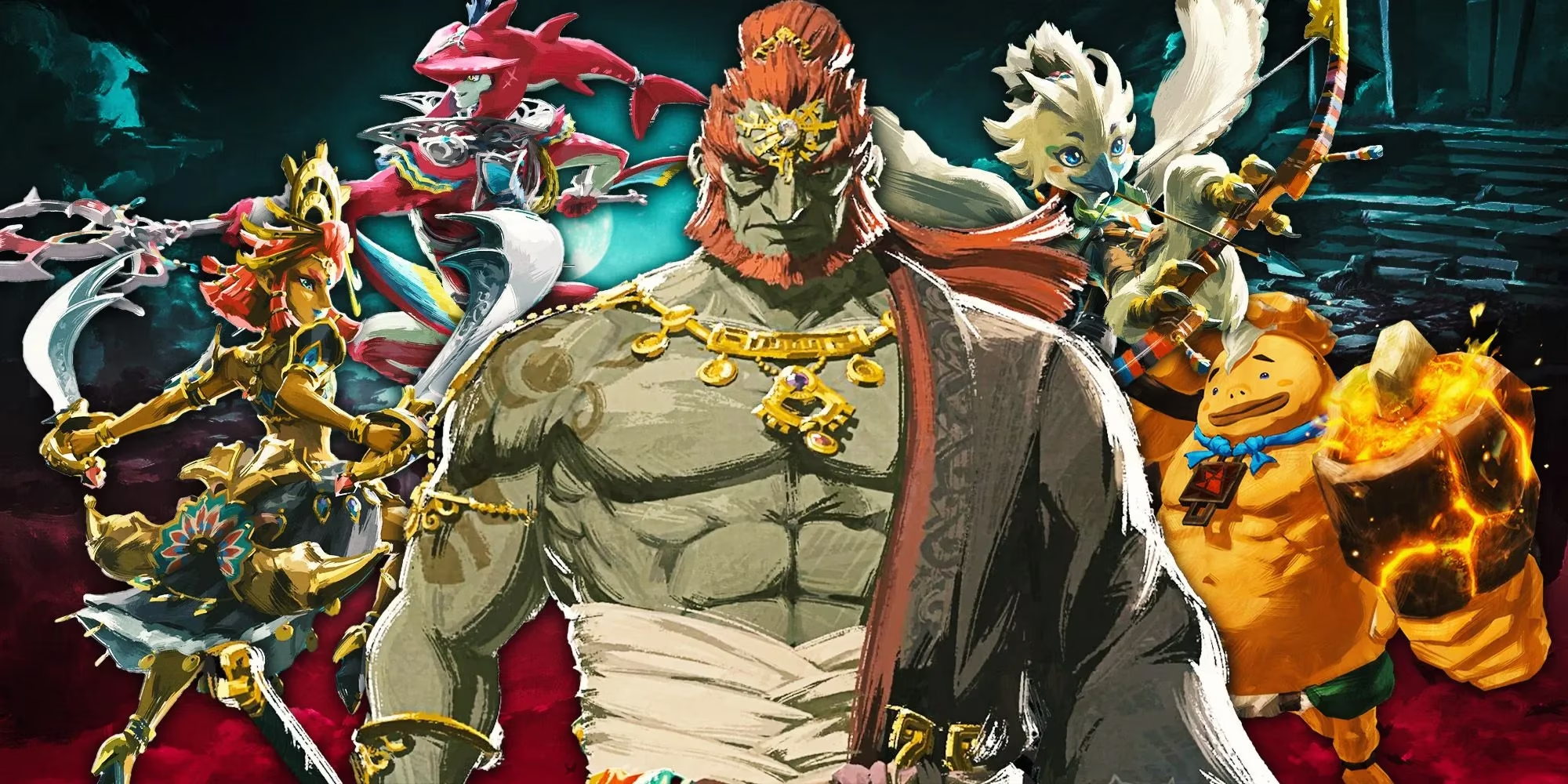
The battle players actually receive is undeniably stunning. Demon King Ganondorf arrives with a massive health pool, a flurry of gloom-based attacks that erode Link's maximum hearts, and an aggressive cadence that demands precise dodging and creative use of Sage abilities. After depleting his health twice, the confrontation transitions into a breathtaking aerial sequence against the Demon Dragon, where Link rides the Light Dragon and plunges his Master Sword into the corrupted beast. This two-phase gauntlet is more mechanically demanding and narratively satisfying than the underwhelming Calamity Ganon encounter in Breath of the Wild. Many longtime fans argue it overcompensates beautifully, offering the definitive Zelda final boss experience. However, the nagging feeling that something grander was promised never fully subsides. Numerous story elements scattered throughout the adventure persistently tease an invasion of the surface world, a literal war for Hyrule that simply never occurs.
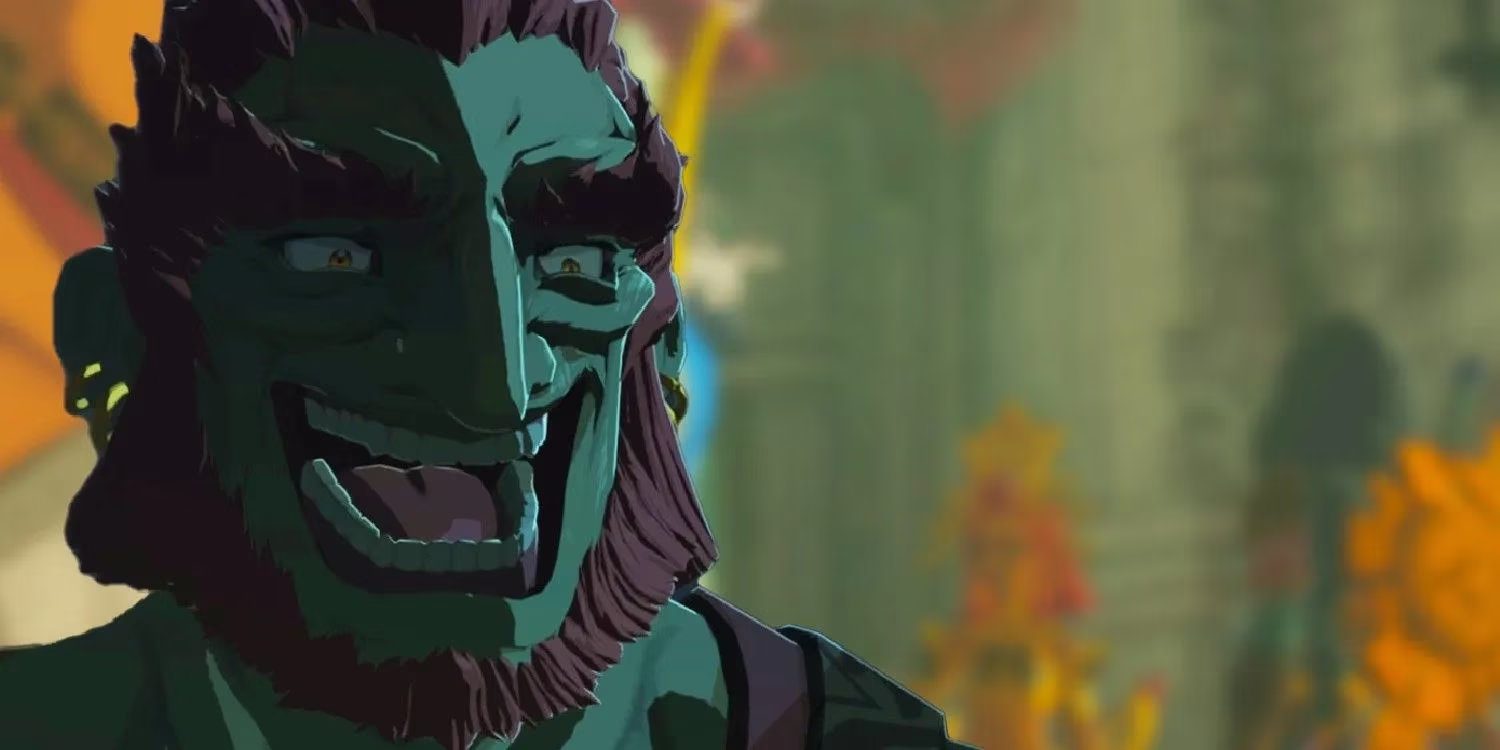
Memory sequences unlocked via the Dragon's Tears questline repeatedly depict Ganondorf at the height of his power marshaling armies of monsters against the Kingdom of Hyrule. One vivid recollection shows the Demon King laughing as his forces sweep across the land, establishing a sense of scale entirely absent from the final game\u2019s actual climax. These visions aren\u2019t just ancient history; they function as dramatic foreshadowing that conditions players to expect a contemporary equivalent. The storytelling implication is clear: history will repeat itself, and this time Link must rally the modern peoples of Hyrule to survive a similar cataclysm. By the time the endgame approaches, certain character dialogues amplify these expectations.
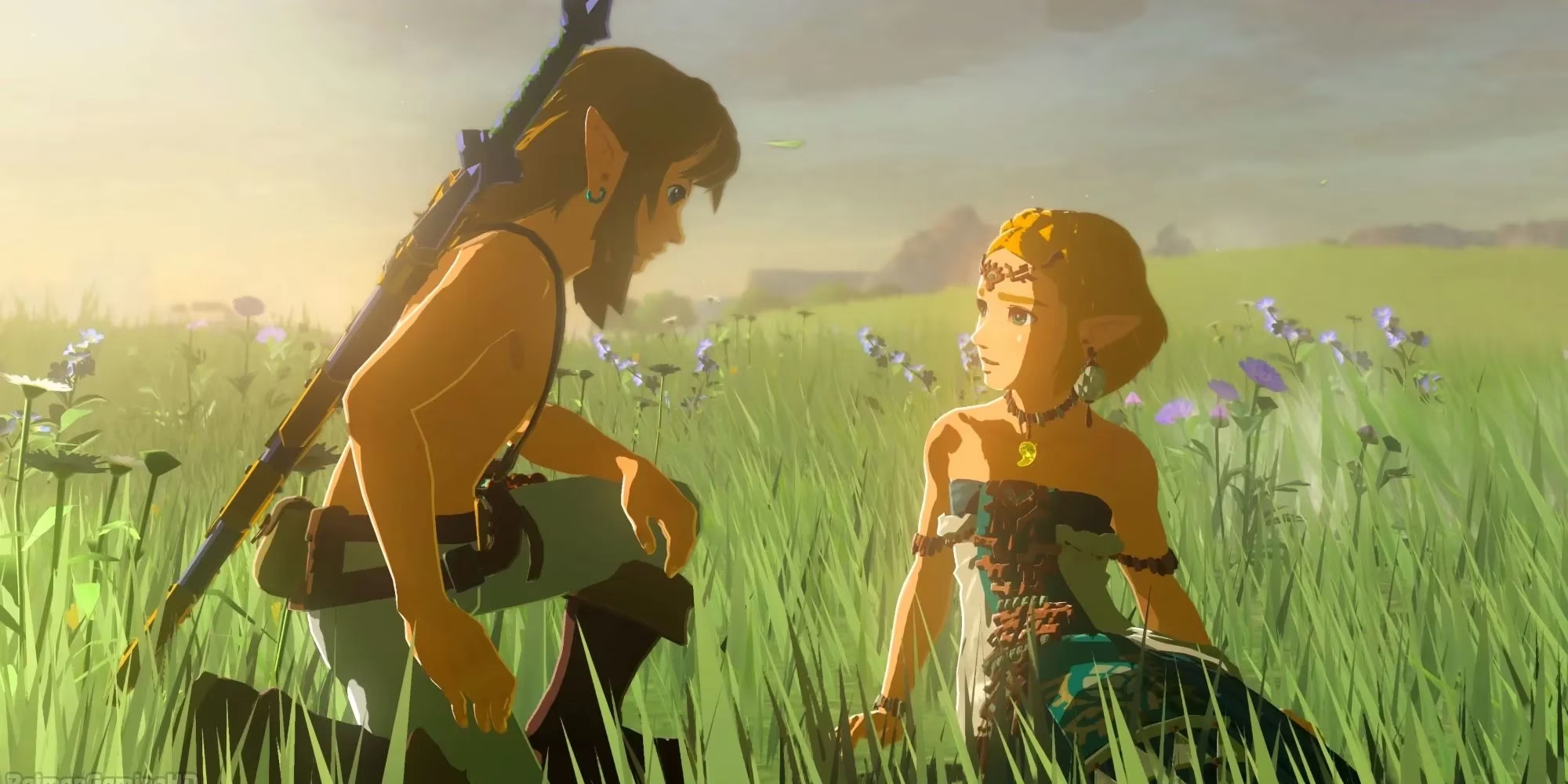
Yunobo, the Goron Sage, directly states that he does not believe Ganondorf will simply wait underground to be discovered. He explicitly warns Link that Goron City is preparing for a direct, all-out assault, reinforcing the notion that the Demon King will once again bring war to the surface. Similar sentiments echo across other settlements as the sages consolidate their forces. The buildup points toward a finale where Link, the four sages, and perhaps even the citizens of Hyrule fight side by side against an invading horde in the sprawling fields of Central Hyrule. The game positions this prospective conflict as the ultimate test of the bonds Link forged across the regions, transforming the lonely warrior\u2019s journey into a collective stand against annihilation.
Instead, the actual final confrontation takes place deep within the cavernous Depths beneath Hyrule Castle. While the environment is appropriately eerie and isolated, it sidelines the very people the game spent dozens of hours teaching players to care about. The sages appear briefly as temporary allies, but their presence feels incidental rather than integral. There is no grand army, no desperate defense of settlements, and no sweeping battlefield that mirrors the flashbacks. The entire conflict is compressed into a series of underground chambers, making the apocalyptic warnings feel like red herrings.
Community analysis over the years has tried to rationalize this discrepancy. A popular theory initially proposed by a Reddit user known as IrishSpectreN7 suggests that the developers originally envisioned a finale involving Ganondorf launching a renewed surface invasion, but hardware limitations on the Nintendo Switch forced a scaled-down implementation. Rendering dozens of enemy actors, allied NPCs, and dynamic destruction across Hyrule Field would inevitably cause performance dips, so the team may have relocated the showdown to the less resource-intensive Depths. While this remains speculative, the technical rationale aligns with observable frame rate struggles during larger skirmishes elsewhere in the game.
Other fans have proposed that the hints were deliberate misdirection designed to subvert expectations, making the quiet, one-on-one confrontation feel more intimate and fated. Yet the sheer density of the foreshadowing makes this interpretation feel like an after-the-fact justification rather than intentional design. No matter the reason, the unfulfilled promise leaves a bittersweet aftertaste. The finale that exists is excellent\u2014a tightly choreographed, visually sumptuous duel worthy of the Zelda legacy\u2014but the phantom of what might have been continues to haunt discussions. Imagining Link galloping across Hyrule Field with a retinue of sages, engaging in a dynamic, multi-phased conflict where every liberated village contributes to the fight, conjures a version of Tears of the Kingdom that could have transcended its already lofty achievements. The gap between the game\u2019s whispered ambitions and its delivered finale remains one of the most fascinating \u201cwhat if\u201d narratives in modern gaming, a reminder that even masterpieces sometimes dream larger than they can realize.