Looking back from the vantage point of 2026, the sheer avalanche of unforgettable titles that stormed storefronts in 2023 still feels almost surreal. Early in the year, a fresh wave of digital tar pits opened up, dragging players into worlds of starships, haunted bunkers, and pastoral fields. By the time December rolled around, everyone’s backlog was an embarrassing monument to must-play triple-A releases and breakthrough indies. Yet three years later, the same names keep surfacing in every \u201cbest of\u201d discussion, proving that the real winners of 2023 weren\u2019t just fleeting obsessions\u2014they were games built to last.
What makes a game outlive its launch hype? Is it raw mechanical polish, a clever twist on a tired genre, or that rare alchemy of risk and reward that even seasoned studios struggle to pull off? The following titles, each a standout in its own way, continue to answer that question.
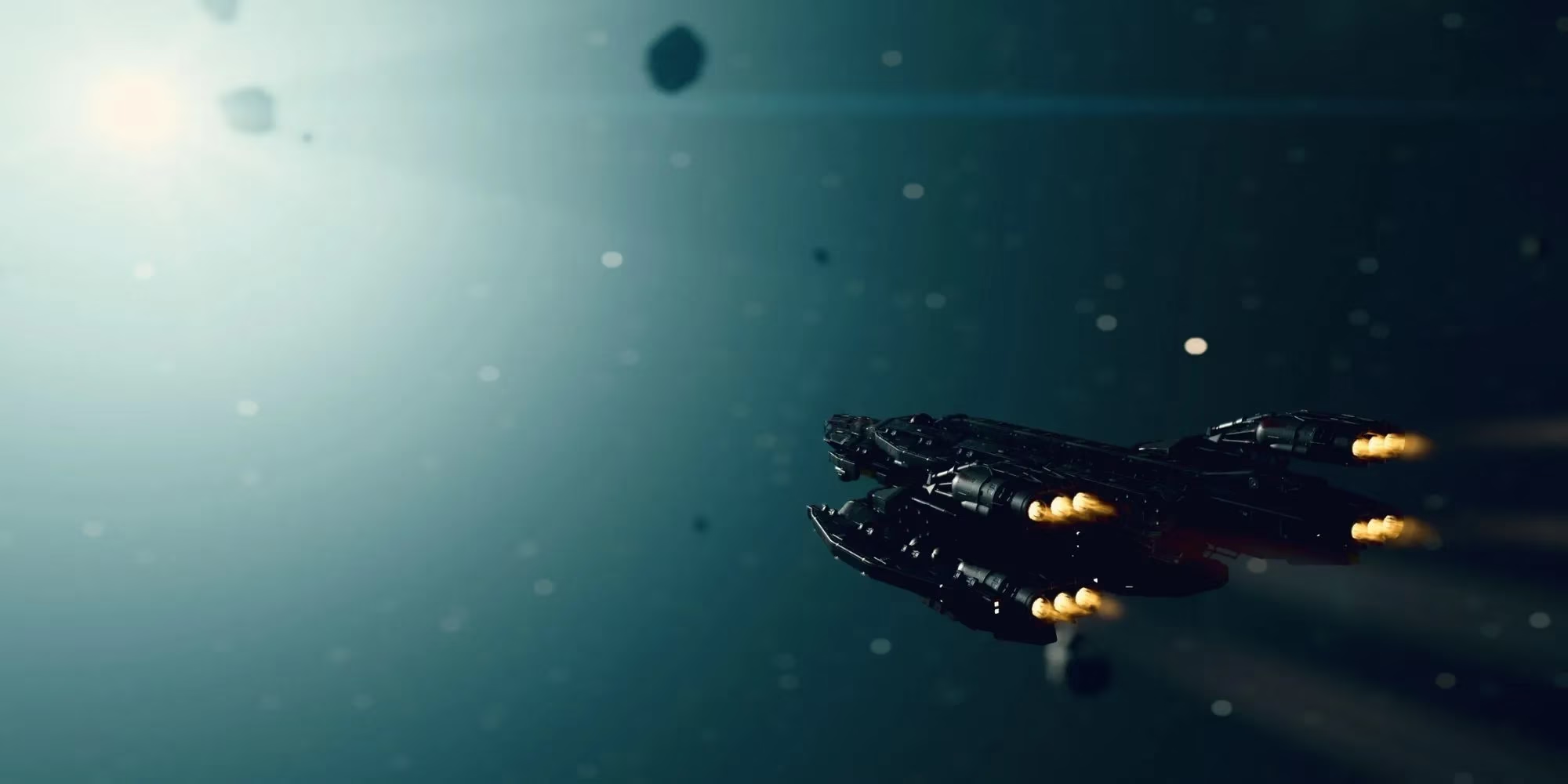
Starfield threw Bethesda\u2019s usual formula into orbit and watched it scatter into a galaxy of new ideas. The sheer scope was dizzying: outpost construction, spaceship hijacking, and faction quests that rewarded moral ambiguity rather than straightforward heroism. Not every experiment gelled perfectly\u2014planetary exploration sometimes felt more like a loading-screen safari\u2014but the joy of flipping a pirate cruiser into a scrap-hauling freighter never got old. How many games let you treat an entire spaceship as a DIY project while simultaneously unraveling a conspiracy that questions the nature of human ambition? Three years, several updates, and a thriving modding scene later, Starfield\u2019s universe still hums with the energy of a Bethesda classic that dared to aim higher than the sky.
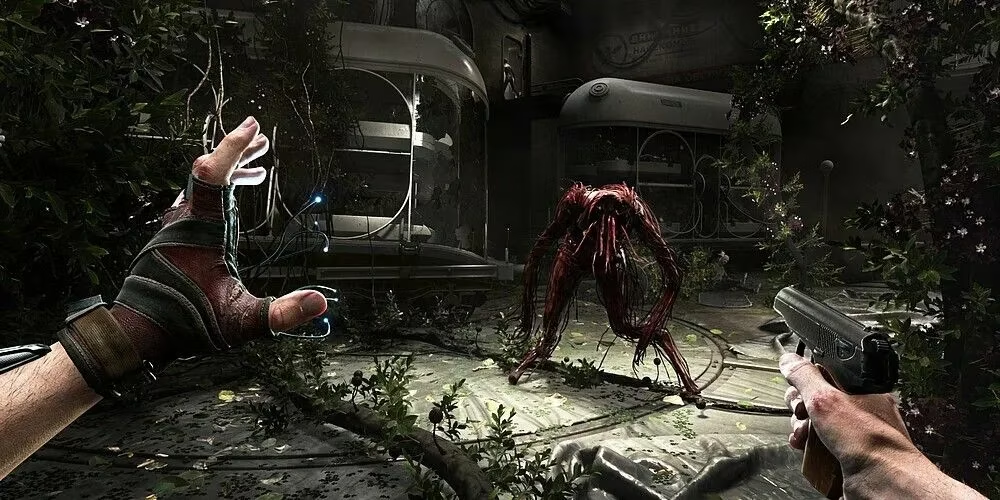
Then there\u2019s Atomic Heart, a game that provoked a fascinating split in the community. At release, its alternate-history Soviet utopia and ultra-polished first-person combat felt like a breath of fresh, chemically tainted air. The art direction alone\u2014a grotesque ballet of robotic limbs and propaganda posters\u2014deserved a standing ovation. But what lifted Atomic Heart above a simple shockfest was its narrative cunning. Beneath the surface of a straightforward \u201ckill the robots\u201d premise lurked a story that twisted expectations with every corporate broadcast. Could a game be both a mechanical masterpiece and a lightning rod for criticism? Absolutely, and the fact that debates still rage about its themes proves that it did something right.
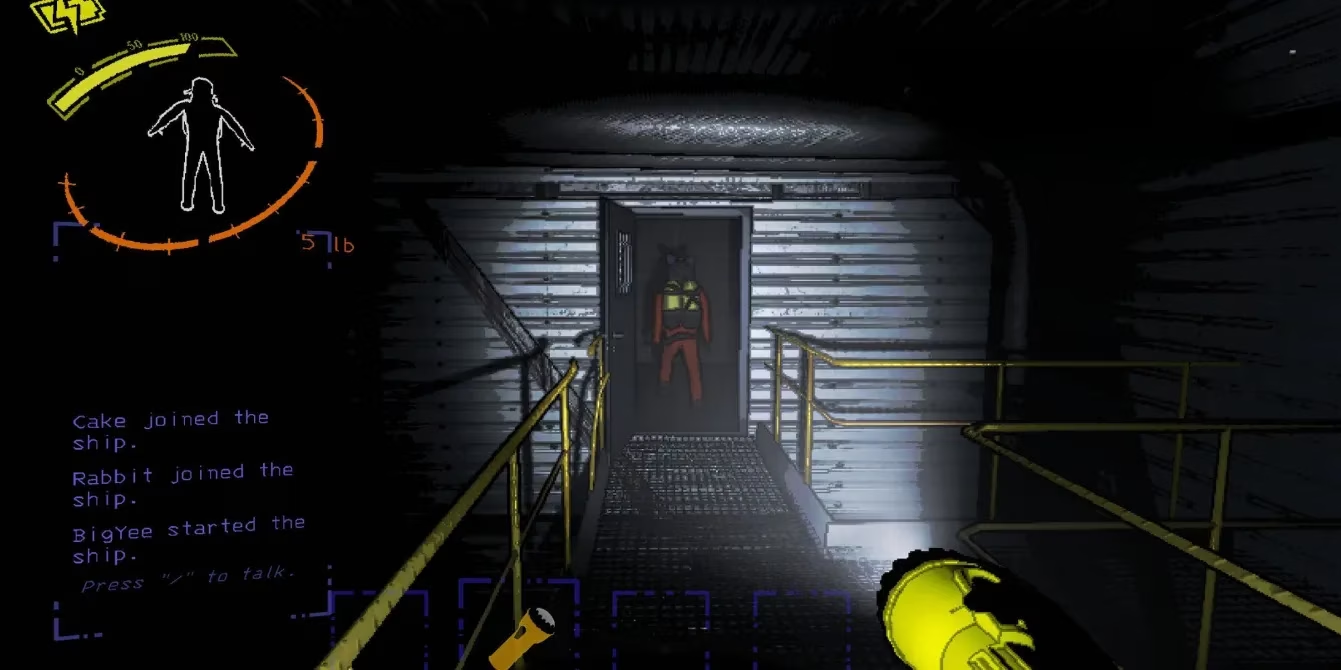
Co-op horror found its ultimate expression in a pair of games that turned terror into a team sport. Lethal Company understood that the line between screaming and laughing is often a friend\u2019s panicked yell. The game perfected the ratio of genuine dread and chaotic coordination, pitting crews against abandoned moonscapes where one wrong move could lure a swarm of angry bees straight into the ship. Few sounds are as simultaneously infuriating and hilarious as a full party cursing someone\u2019s name because they \u201cjust wanted to grab the last piece of scrap.\u201d Setting up proximity voice chat and watching a plan dissolve into hysterics remains a core memory for countless friend groups.
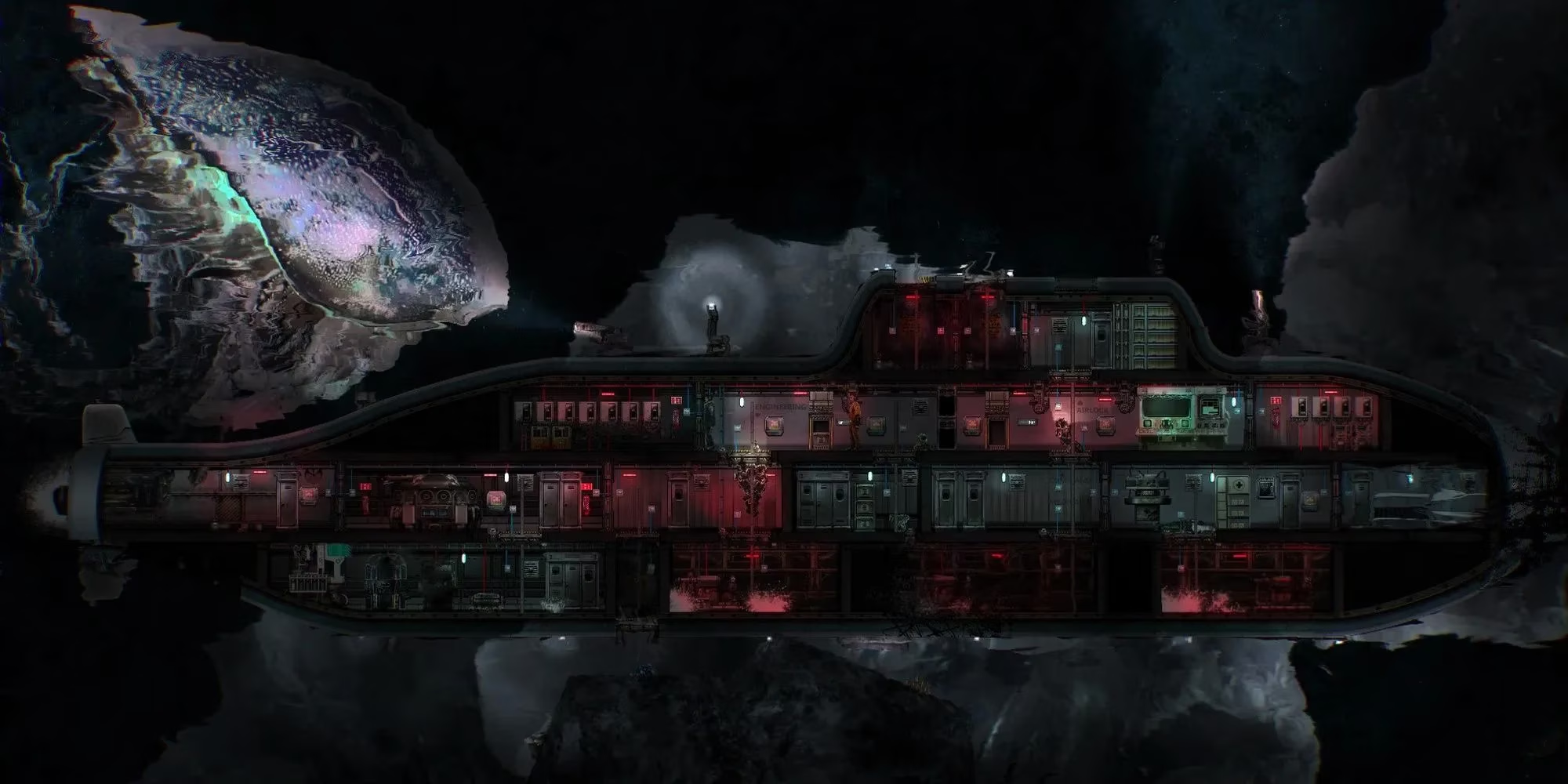
Then Barotrauma took the same cooperative panic and submerged it in kilometers of ink-black ocean. Managing a submarine\u2019s reactor, sonar, and hull integrity while something enormous thumps against the outer hull creates a tension that few other games can match. Instead of slapstick hijinks, Barotrauma demands a level of procedural seriousness that only makes the inevitable breaches more catastrophic. The deep sea has never felt so alive and so merciless, and the game\u2019s modding community has kept those waters teeming with new horrors to the present day.
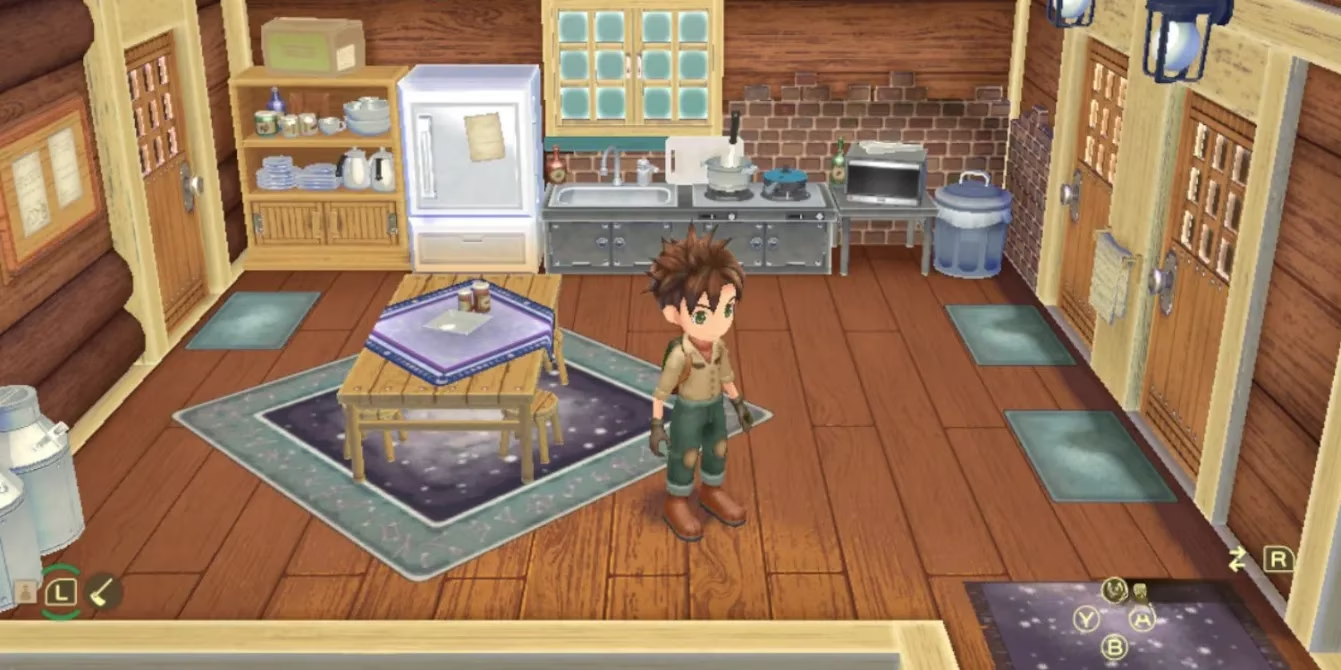
A palette cleanser from the abyss came in the form of Story of Seasons: A Wonderful Life. Originally a GameCube darling in 2003, the 2023 remake proved that a great farming life simulator doesn\u2019t age\u2014it just grows more charming. The cycle of seasons, the quirks of the townsfolk, and the slowly deepening relationships offered a quiet haven from the noise of giant blockbusters. Why does a game about planting turnips and milking cows still hold such power? Because it taps into something timeless: the satisfaction of watching a small patch of land turn into a life, one deliberate choice at a time. That appeal hasn\u2019t dimmed in the three years since its refreshed release; players still return to Forget-Me-Not Valley to watch their child grow up, just as they did two decades ago.
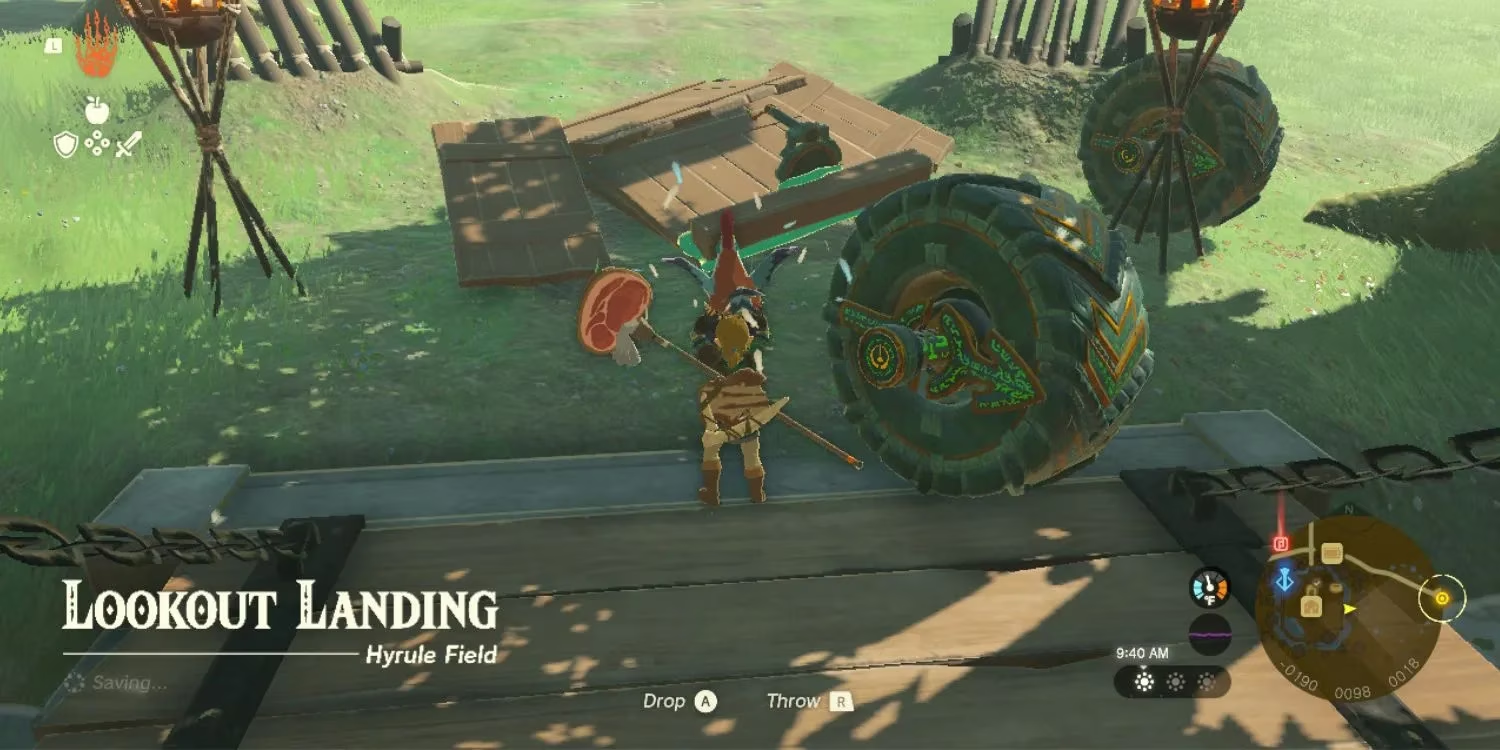
No retrospective would be complete without acknowledging the titles that were already being hailed as instant classics before the year ended. The Legend of Zelda: Tears of the Kingdom accomplished the impossible: it took the expansive canvas of Breath of the Wild and layered a physics-defying creative toolkit on top. Constructing a flying meat launcher from green Zonai goo and a blatant disregard for safety felt like Nintendo gave players a key to Hyrule\u2019s engine room. The game resolved nearly every minor nitpick of its predecessor and threw in the vehicle-building glee of Banjo-Kazooie: Nuts & Bolts for good measure. Even now, the sheer volume of engineering marvels uploaded daily to social feeds proves that its version of Hyrule remains an infinite playground.
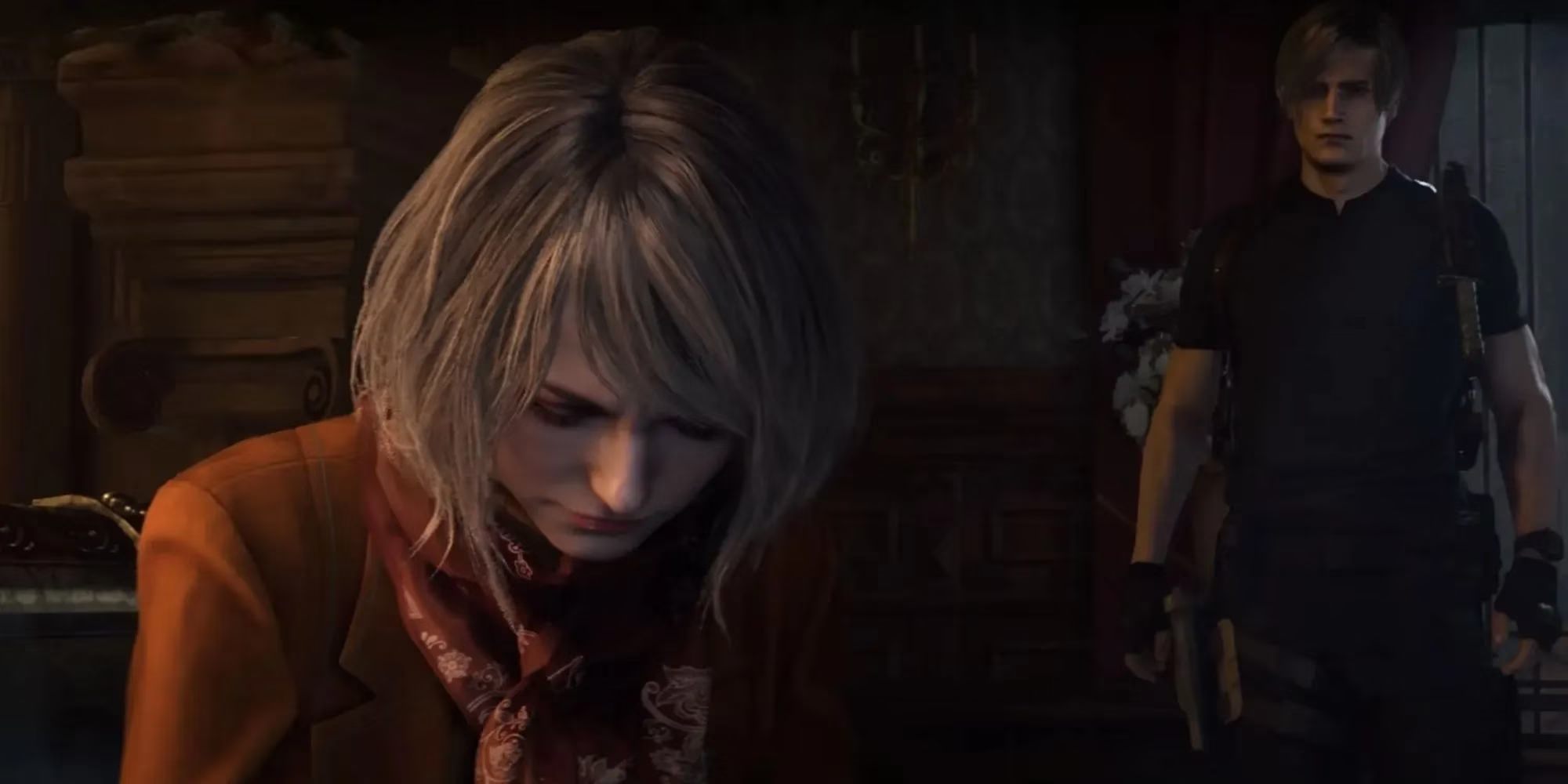
The Resident Evil 4 Remake taught the industry how to honor a beloved original without being chained to it. It was a survival horror experience that knew exactly when to lean into campy thriller territory. Leon\u2019s roundhouse kicks, the cult-like chants of the Ganados, and the relentless pace of set-pieces combined into a GOTY blueprint that few action games have since matched. Did anyone expect a remake to feel so essential? Probably not, but the proof is in every replay that still surprises with a new hidden detail or a newly mastered parry.
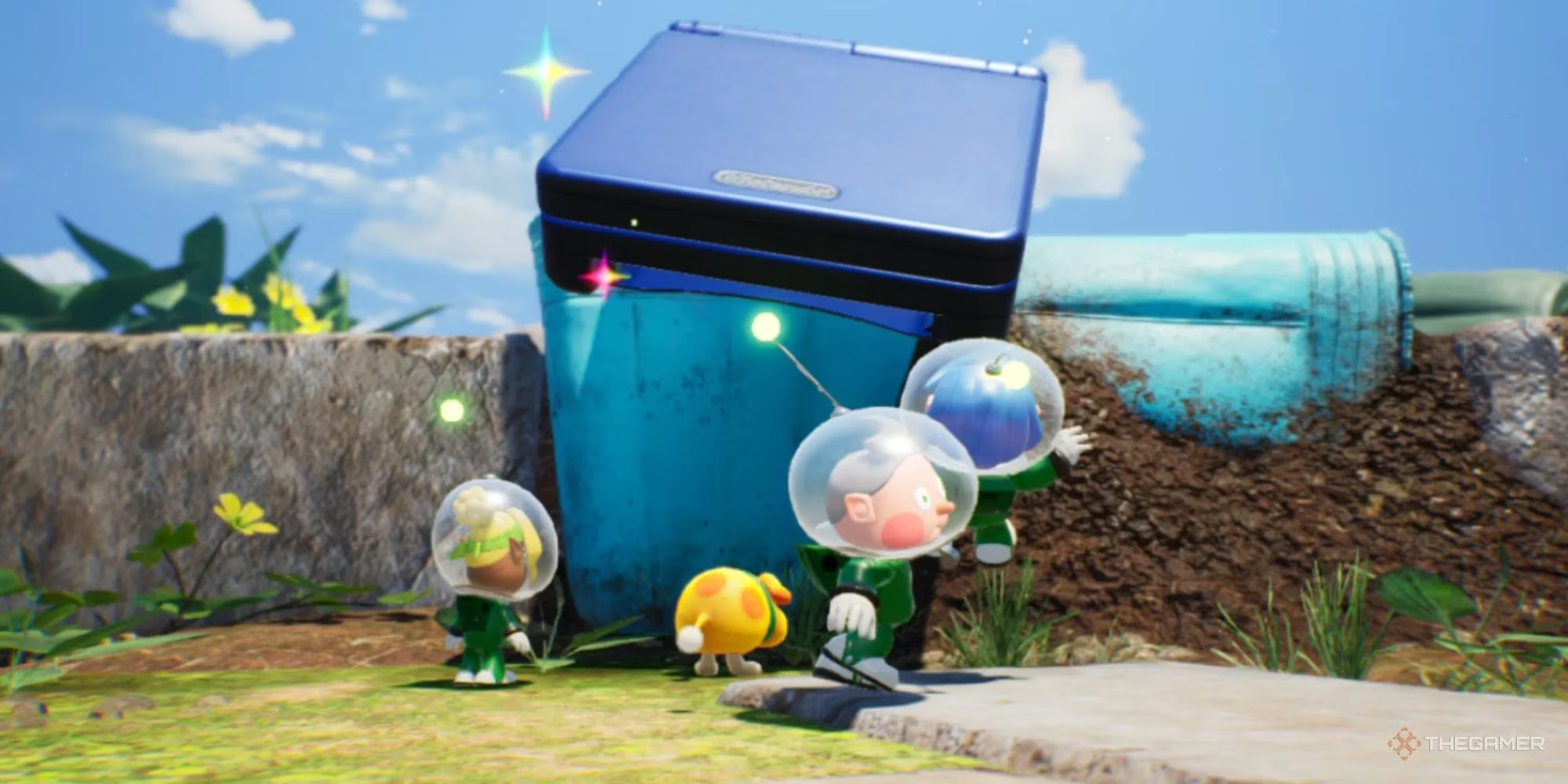
Pikmin 4 proved that the perspective of a diminutive captain never loses its magic. The series has always captured the monumental scale of a backyard from the eyes of sprout-sized explorers, but the fourth entry polished that vision to a sunny shine. Leading an army of colorful Pikmin through muddy puddles and across garden furniture felt both epic and adorable. The attention to naming every creature and trinket added a layer of whimsy that still delights returning players. Has any other game made the simple act of retrieving a discarded Game Boy Advance feel so heroic?
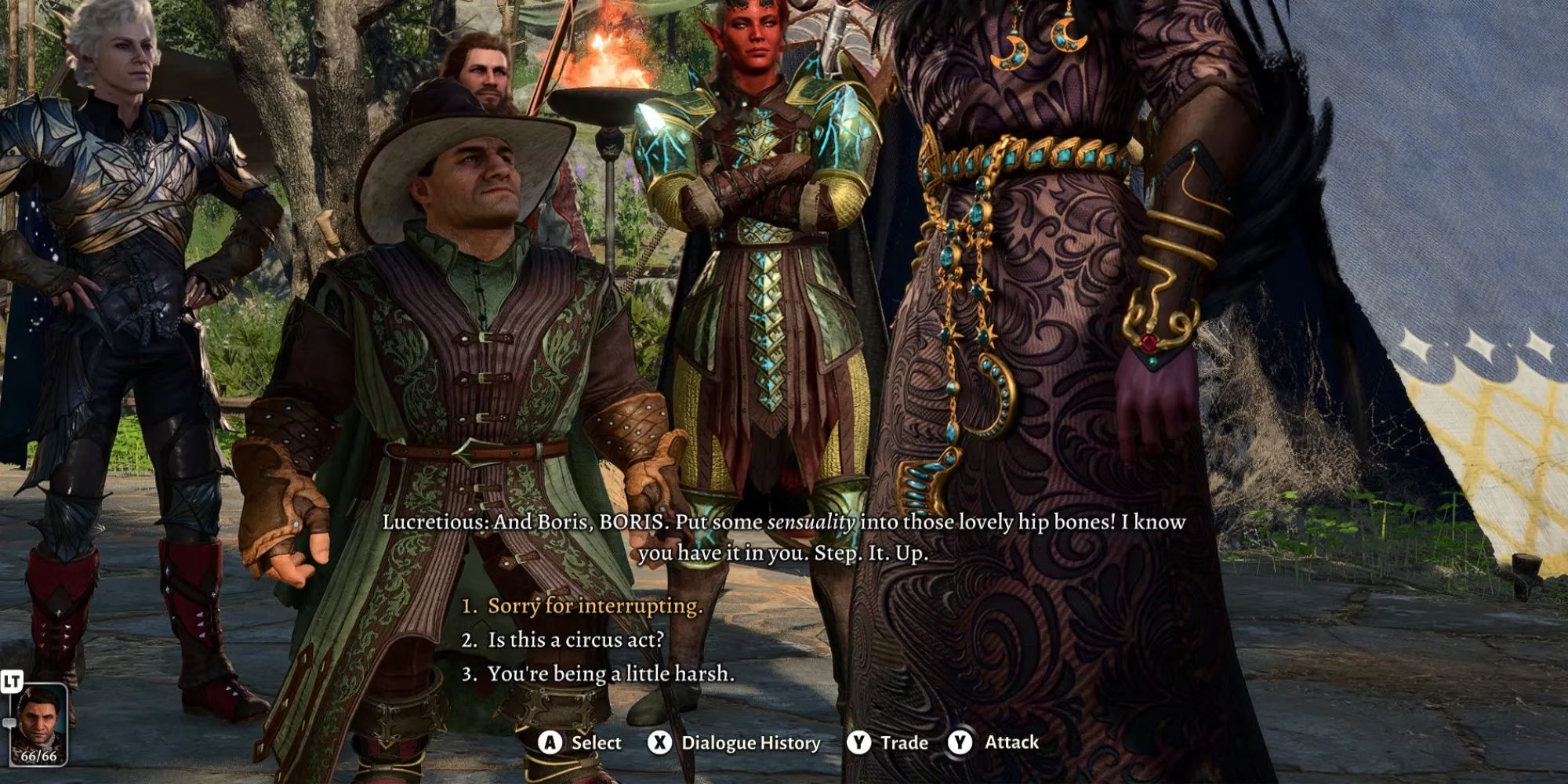
Baldur\u2019s Gate 3 reshaped the very definition of a AAA role-playing game. Larian Studios didn\u2019t just faithfully adapt the 5th Edition D&D ruleset; it weaponized player choice to a degree that still feels staggering. A branching narrative that reacts to even the most unlikely decisions, combat encounters that reward creativity over brute force, and a cast of companions worth the emotional investment\u2014how could this not dominate conversations years later? Entire months were lost to its launch in 2023, and the multiplayer campaigns that sprouted from it are still weaving new stories. It remains the gold standard against which all future CRPGs are measured.
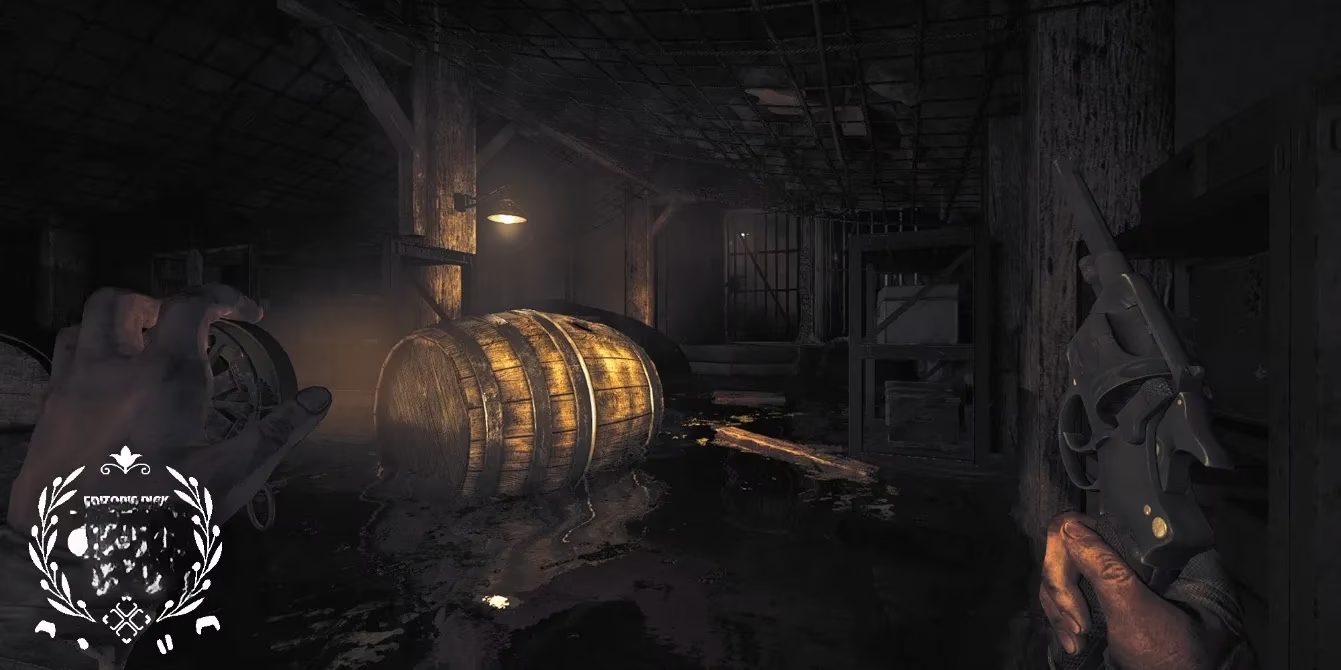
Finally, Amnesia: The Bunker distilled horror into its purest, most oppressive form. The semi-open bunker, with its randomly placed resources and multiple solution paths, transformed survival into a cerebral duel. Instead of memorizing jump scares, players learned to outthink a monster that learned from them. The cat-and-mouse dread slowly gave way to rivalry\u2014a feeling of \u201cthis is my hellscape now.\u201d Emerging from that bunker filthy and exhausted, yet hungry for round two, was a testament to Frictional Games\u2019 mastery of the genre. Even in 2026, when horror titles have pushed boundaries further, The Bunker\u2019s absolute command of tension remains a benchmark.
Why do these games still anchor so many \u201cbest of\u201d lists? Perhaps because 2023 wasn\u2019t just a year of quantity\u2014it was a year of games that respected player intelligence and agency. Whether through building a ship, managing a submarine, wooing a farmer, or surviving a nightmare, each title offered a world worth losing oneself in, long after the initial rush had passed. And in 2026, with even more spectacular releases vying for attention, that enduring quality is what separates a flash in the pan from a genuine classic.