As a dedicated player who has spent countless hours traversing digital landscapes, I can confidently say that The Legend of Zelda: Tears of the Kingdom has fundamentally reshaped what we expect from this legendary series. Forget the old, segmented formula; the game’s sprawling, nonlinear open world isn't just a playground—it's a living, breathing society. The real game-changer, the one element that has me buzzing with excitement for the franchise's future in 2026, is the deliberate and beautiful mingling of Hyrule's diverse races. It’s no longer a world of checkboxes where you visit the Zora Domain, tick it off, and move on to the Goron City. Now, the cultures breathe, interact, and collaborate, making the kingdom feel like a unified whole for the first time. This isn't just a design tweak; it's a paradigm shift that could save future narratives from feeling predictable.
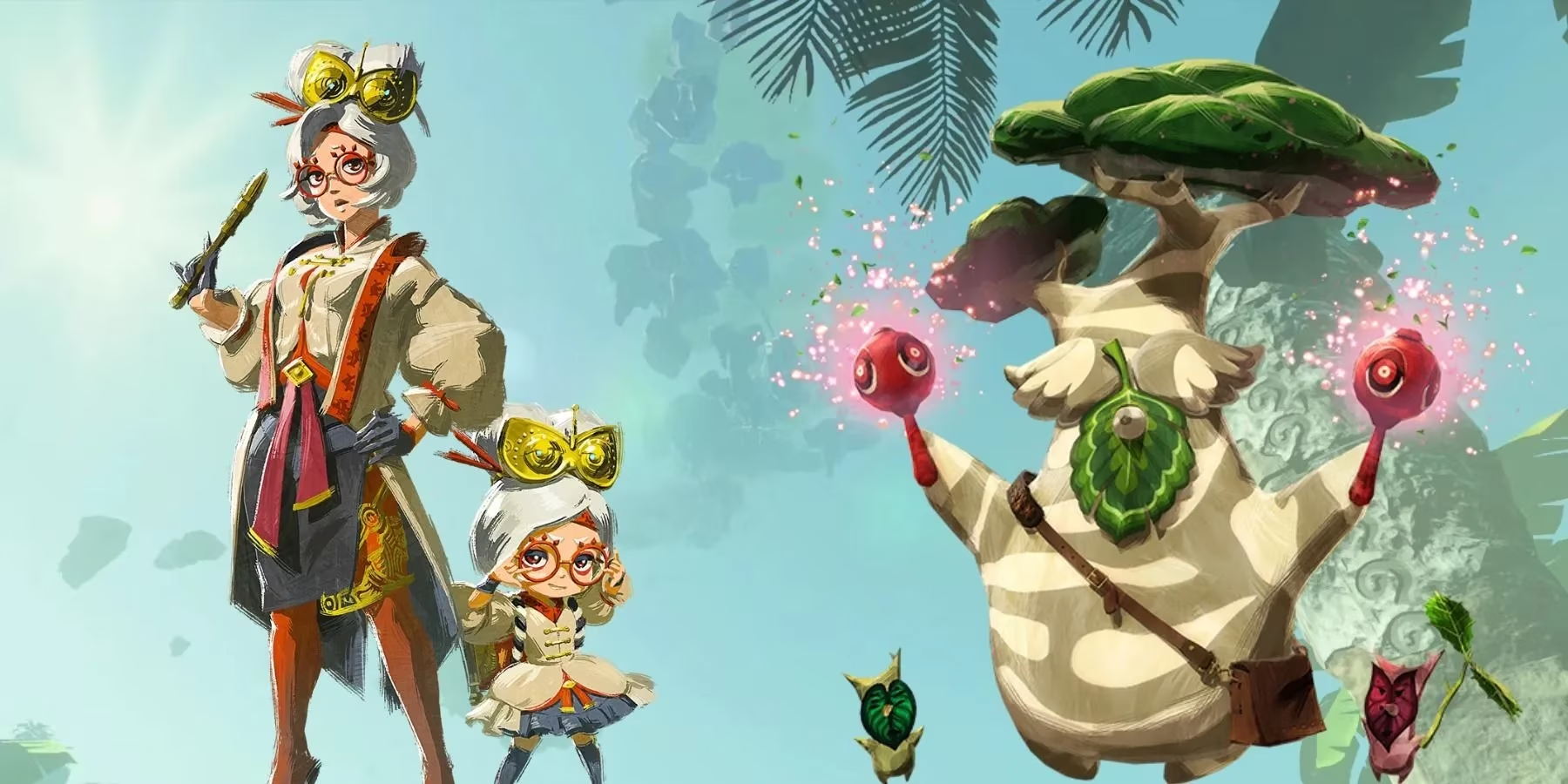
Let's be real, the old Zelda blueprint was a classic for a reason. For decades, the series used its distinct races—Gerudo, Zora, Goron, Rito—as a neat narrative device. Each race was essentially locked to its themed zone, a storytelling tool to match the environmental shift. You got your desert lore with the Gerudo, your aquatic politics with the Zora, and so on. Breath of the Wild began to crack this mold, presenting Hyrule as one continuous space, but Tears of the Kingdom has completely shattered it. The genius move? It shows us the races coexisting outside their traditional homelands.
The Heart of Unity: Lookout Landing
The crown jewel of this new philosophy is Lookout Landing. This isn't just another settlement; it's a melting pot, a true safe haven in the shadow of Hyrule Castle where everyone, from researchers to soldiers, gathers.
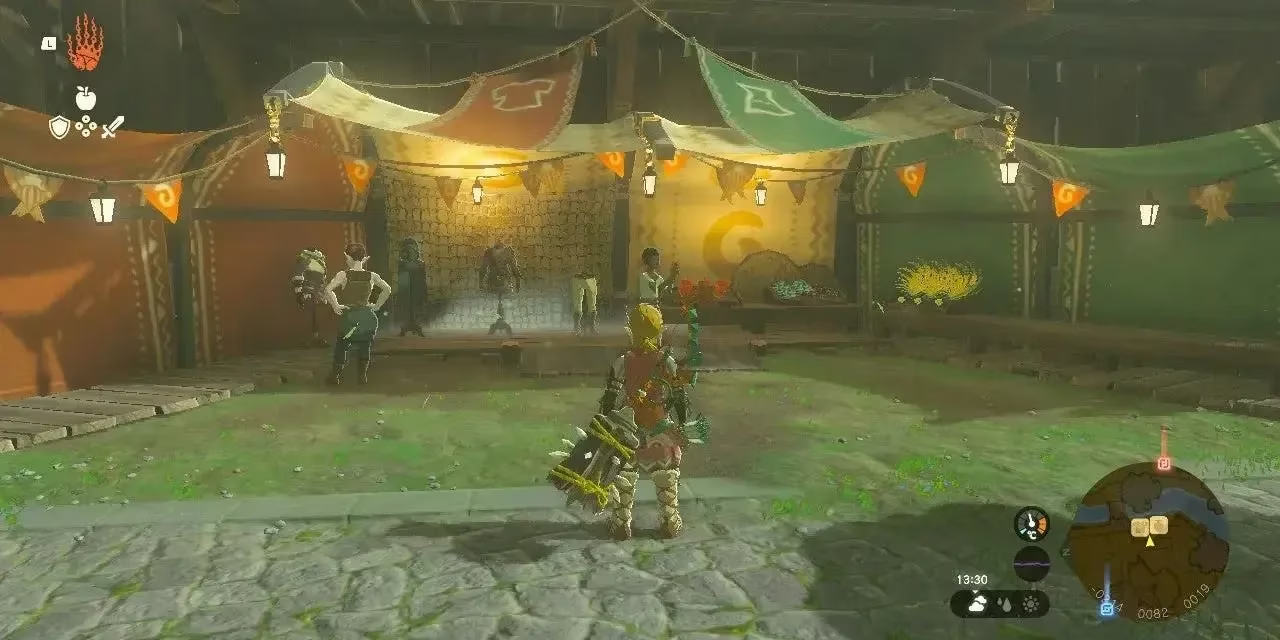
Here’s what you’ll find there, and why it matters:
-
A Mixed Population: It’s not just Hylians. You’ll see Gorons discussing construction, Zora sharing intel, and Rito scouts delivering reports. This visual cocktail of cultures screams "unity" louder than any cutscene.
-
A Narrative Hub: It serves as the central nervous system for the resistance against Ganondorf, proving that cooperation isn't just possible—it's essential for survival.
-
The "Bigger Picture" Feeling: Lookout Landing is the physical proof that the story isn't about Link helping isolated tribes one by one; it's about uniting a fractured kingdom.
This approach makes the world feel less like a theme park with segregated rides and more like a real, interconnected continent. You’re not just completing zones; you’re fostering alliances that have tangible effects across the entire map.
The Potential Challenge: Pacing and Progression
Now, I gotta play devil's advocate for a sec. This new, blended world isn't without its potential pitfalls. The old, segmented structure served a crucial purpose: it controlled the pacing. Guiding the player from one distinct civilization to the next provided a clear, steady rhythm of discovery and accomplishment. If future games return to a more linear structure while keeping races totally intermingled, they might struggle with that classic Zelda progression feel. The risk? The story could feel aimless or lacking in those signature "chapter" milestones.
But here’s the silver lining, and it's a big one. Tears of the Kingdom proves that nonlinearity and player agency can mitigate this. When players can tackle challenges at their own pace, the need for rigid, race-specific story gates diminishes. The future of Zelda might not need to "go back." Instead, it can move forward by finding new ways to drive the plot.
The Road Ahead: Unleashing Hyrule's Full Potential
So, where does the series go from here in 2026 and beyond? The foundation laid by Tears of the Kingdom is incredibly fertile ground. Blurring the racial lines of progression is a risk, but man, is it a risk worth taking.
Here are a few ideas bouncing around the community that I'm totally on board with:
| Opportunity | How It Could Work | Why It's Exciting |
|---|---|---|
| Bring Back Forgotten Races | Reintroduce the Kikwi, Picori, or even the Twili. Have them integrated into the larger society, not stuck in one hidden village. | Expands lore, offers fresh character designs & abilities, deepens world history. |
| Race-Specific Team-Ups | Main quests that require a mixed team—e.g., a Zora and a Goron to solve a puzzle involving water and lava. | Makes gameplay mechanics reflect narrative unity, fosters deeper character bonds. |
| Cultural Exchange Side-Quests | Quests focused on resolving misunderstandings or facilitating trade between races outside their zones. | Makes the world feel alive and dynamic, with stories that evolve beyond "fix the divine beast." |
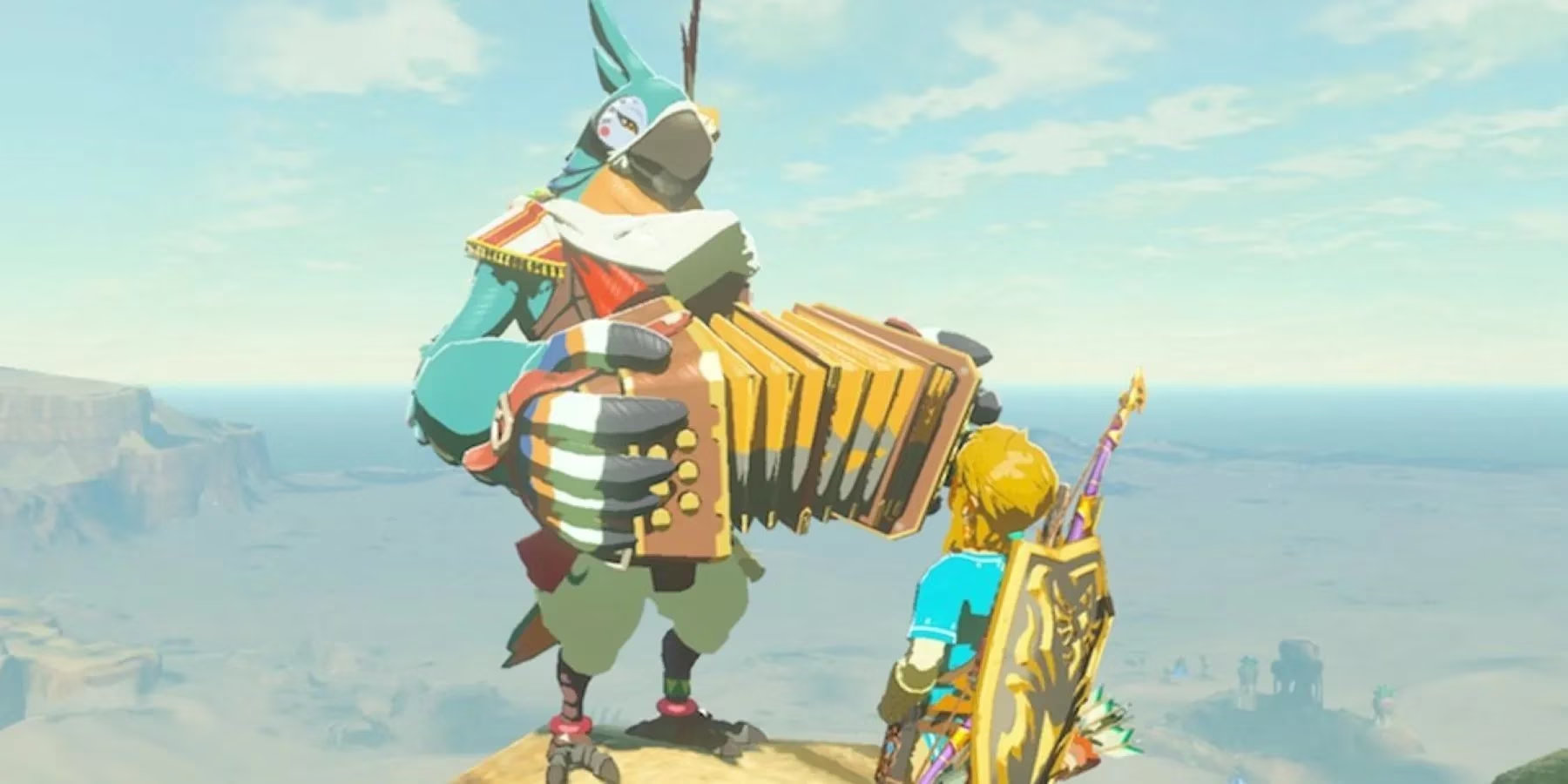
Look, the bottom line is this: Tears of the Kingdom showed us a Hyrule where the final victory wasn't just Link's. It belonged to the united peoples of the kingdom. That feeling of togetherness against a common threat was pure magic. The game left Hyrule in a state of genuine harmony, and future titles shouldn't reset that just for the sake of familiar structure. The mingling of races shouldn't be a one-off feature; it should be the catalyst. Imagine a Zelda story where the conflict isn't about visiting separate tribes for help, but about managing the complex politics and relationships of a fully integrated, post-calamity society. Now that would be a next-level adventure. The future is wide open, and for the first time in a long time, it feels like all of Hyrule is marching into it together. Let's hope Nintendo has the guts to follow this thread. The payoff could be legendary. \ud83c\udfaf