The glow of the screen is a campfire in our modern living rooms, and the controller, a talking stick passed between friends. I've come to realize that the most profound gaming memories aren't always forged in the heat of online battle or the coordinated chaos of couch co-op. Sometimes, they are born in the shared silence of watching a story unfold, in the collective gasp at a jump scare, or in the heated debate over a narrative-altering choice in a game designed for one. The single-player experience, far from being a solitary confinement, has become my favorite theater for group connection.
The Joy of Shared Struggle & Triumph
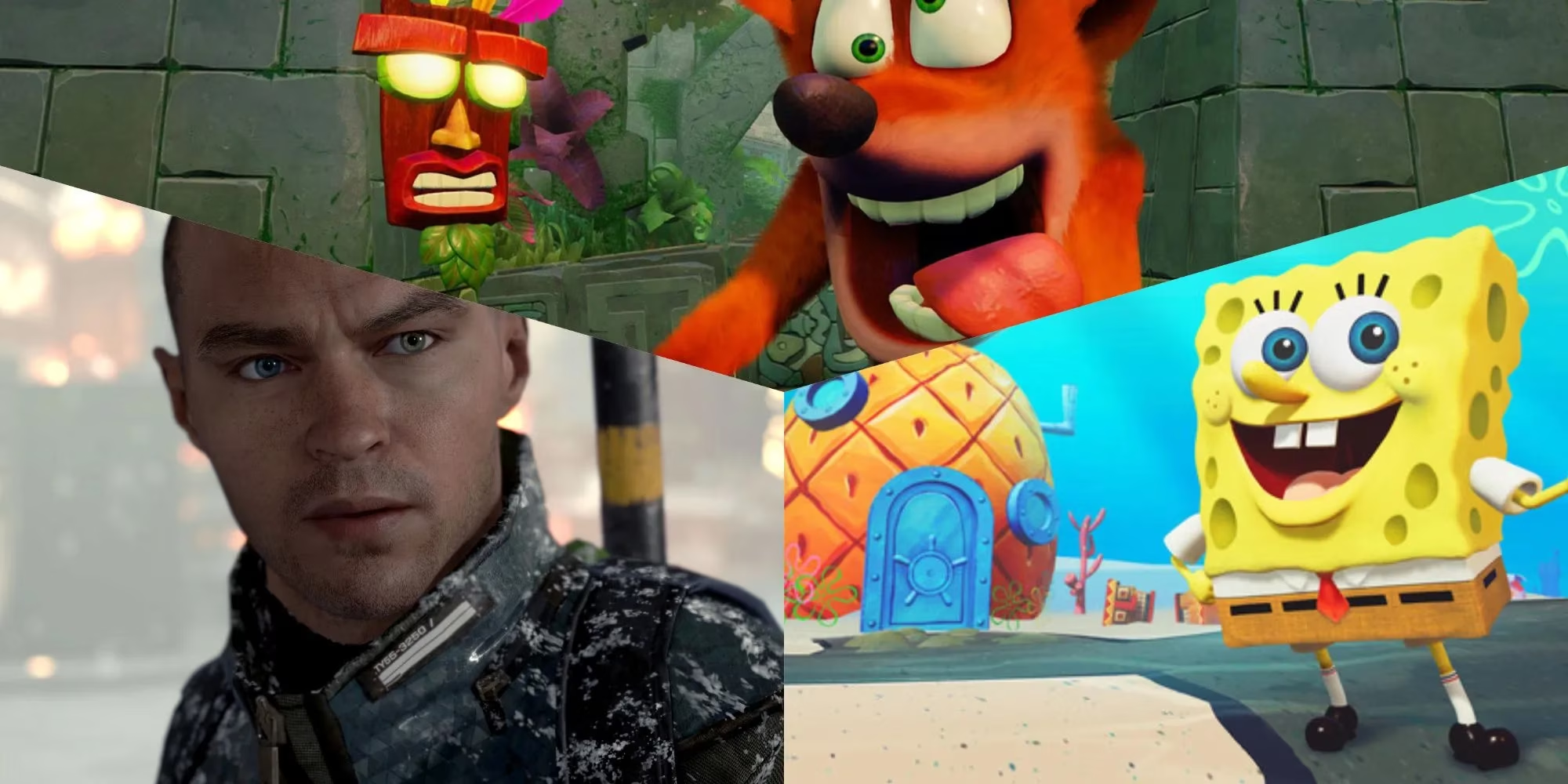
There is a unique, almost tribal rhythm to passing a controller after a failed jump. I remember nights filled with laughter and mock frustration as my friend and I took on the role of Crash Bandicoot. The trilogy’s design, with its clear levels and frequent checkpoints, created a perfect rhythm for our game night.
-
The frantic run from a giant boulder became a group spectacle.
-
The pit filled with spikes was a communal obstacle.
-
That one jump sequence that seemed impossible? It became a challenge we tackled together, cheering louder with each attempt until finally, triumphantly, we made it.
It wasn't about one person's skill, but about our shared perseverance. The game's structure invited us in, saying, "Take a turn, share the burden, celebrate the win."
Cinematic Evenings & Narrative Journeys
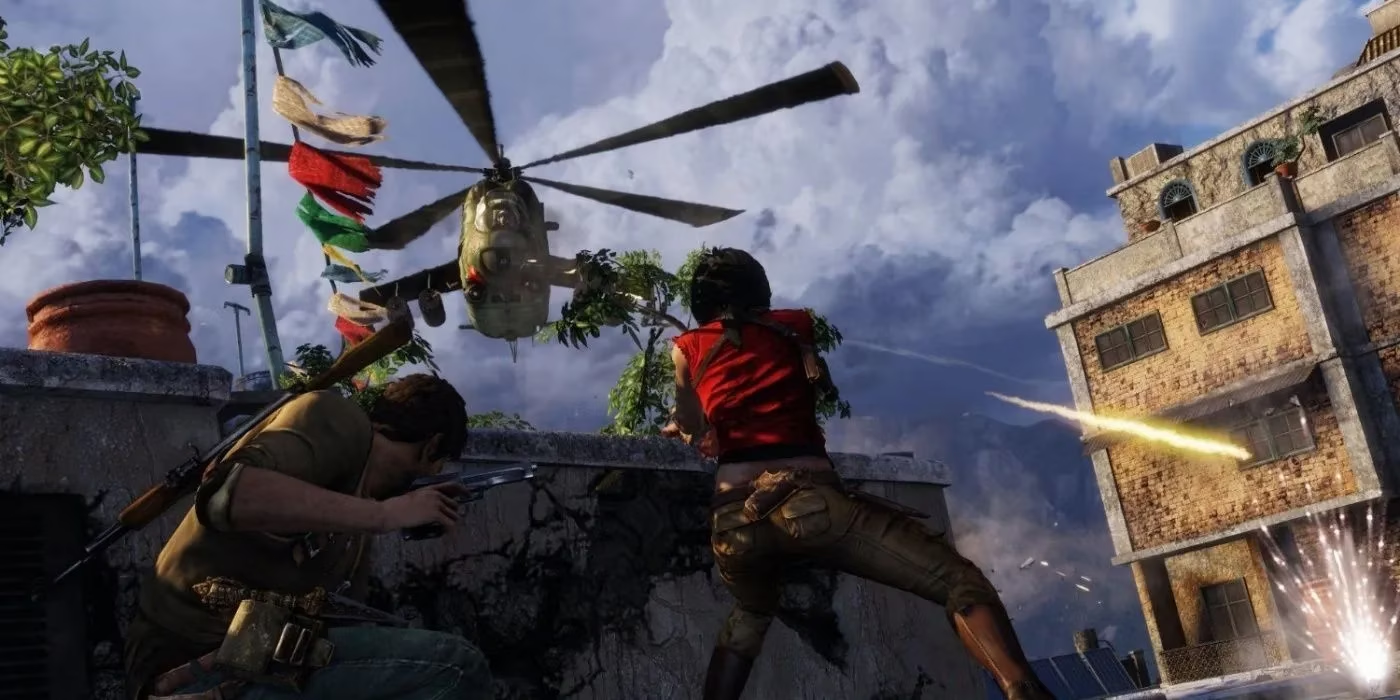
Other games transformed our couch into a cinema. We didn't just play Uncharted; we watched Nathan Drake's adventures unfold, collectively holding our breath during a precarious climb or erupting during a chaotic shootout. The cinematic quick-time events and cutscenes weren't interruptions to gameplay; they were the scheduled intermissions where we could discuss theories, predict betrayals, and simply marvel at the spectacle. Similarly, the epic, emotional saga of Red Dead Redemption 2 became our weekly Western series. We'd order food, settle in, and let Arthur Morgan's story wash over us. The sprawling narrative was too vast for one person to hold alone; it needed an audience to appreciate its scale, to debate its moral complexities, and to feel the weight of its ending together.
Conquering Fear & Shaping Stories
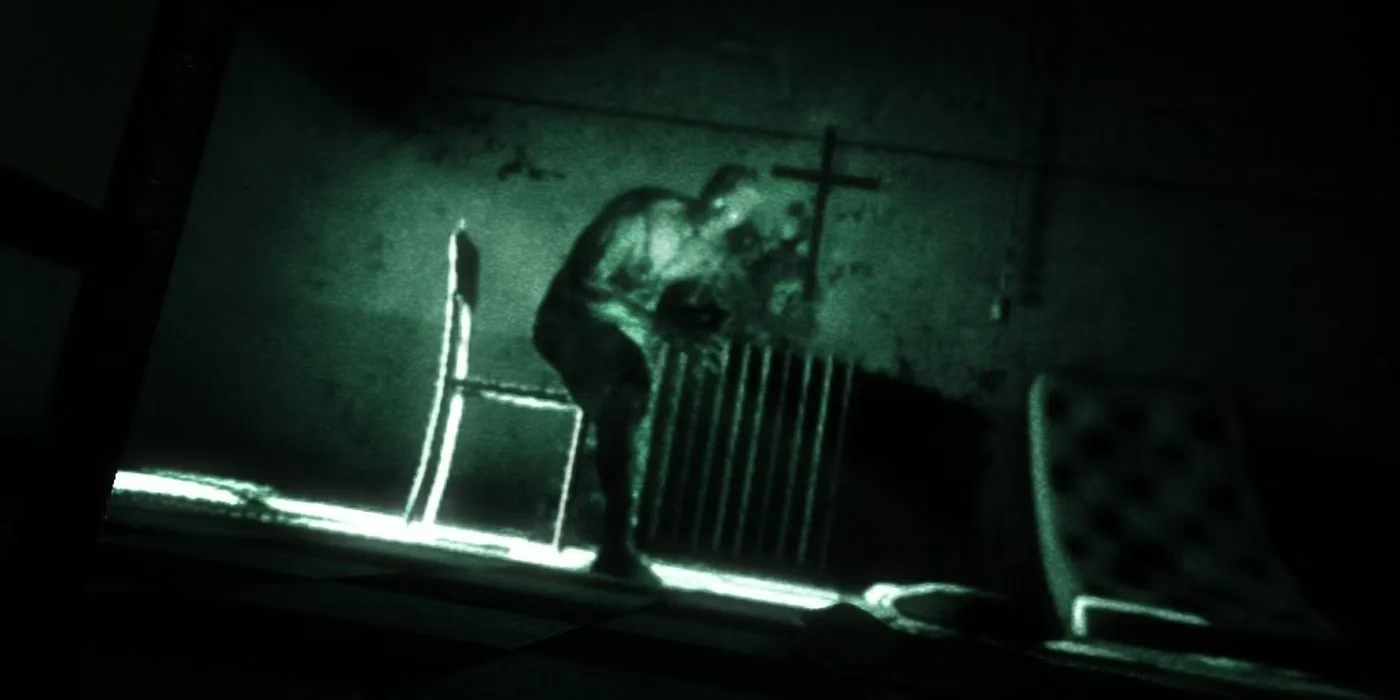
Then there are the games that require moral support. I am not brave enough to face the darkened halls of Mount Massive Asylum alone. But with Outlast, the fear became a shared commodity. The dread was halved, and the jump scares became moments of collective, screaming catharsis. Whether holding the camcorder or hiding behind a cushion, we were in it together, our shared anxiety making the experience thrilling rather than paralyzing.
The power of choice took center stage with games like Detroit: Become Human and The Walking Dead. These weren't games we played for each other, but with each other. Every dialogue choice, every life-or-death decision, became a group debate.
"Should Connor remain a machine or become deviant?"
"Do we save this character or that one?"
Our living room became a war room of ethics and consequence. The branching narratives meant our playthrough was uniquely ours, a story we authored together, mistakes, tragedies, and all. The episodic nature of The Walking Dead made it perfect for weekly sessions, each episode ending on a cliffhanger that fueled our discussions until we could reconvene.
The Legacy of Shared Adventures
Some experiences are pure nostalgia, a portal back to simpler times. Taking turns in Super Mario 64 isn't about efficiency; it's about ritual. It's about watching a friend struggle with the same cursed penguin race you did, offering (often unhelpful) advice, and feeling that surge of vicarious joy when they finally snag that Power Star. It’s a shared language from a shared past.
Meanwhile, modern titles like Dead Cells have perfected the art of the shared run. The roguelike structure—where death resets the world—creates a beautifully democratic playing field. Every run is a fresh, unpredictable adventure. Passing the controller isn't a concession; it's an invitation for a friend to write the next chapter in a never-ending, ever-changing story. The quick, intense runs are perfect for a lively, rotating group.
The Unseen Player
This is the magic they don't advertise on the box. Games like Until Dawn and SpongeBob SquarePants: Battle for Bikini Bottom - Rehydrated understand this implicitly. One holds the controller, but everyone is playing. In Until Dawn, we all voted on every split-second decision, collectively responsible for the teenage cast's gruesome (or lucky) fate. In the sunny waters of Bikini Bottom, the second player isn't just a spectator; they're a co-navigator, a collectible spotter, a vital part of the journey.
| Game | Shared Experience Style | Group Vibe |
|---|---|---|
| Crash Bandicoot N. Sane Trilogy | Controller-Passing Platforming | Energetic, Competitive & Supportive |
| The Walking Dead | Interactive Narrative & Choice Debates | Thoughtful, Emotional, & Conversational |
| Outlast | Collective Survival Horror | Tense, Cathartic, & Scream-Filled |
| Dead Cells | Rotating Roguelike Runs | Fast-Paced, Unpredictable, & Addictive |
In the end, these single-player worlds become more vibrant when populated by the imaginations of a group. The loneliness of the lone hero is an illusion broken by the laughter, gasps, and debates of friends gathered around. The save file might have one name, but the memory belongs to all of us. We are not just playing a game; we are sharing a world, weathering its storms, and celebrating its vistas together. In an age of constant digital connection, there is a profound beauty in this analog, shared focus—a handful of people, one screen, and a story we experience as one.