Looking back on my journey through Hyrule in The Legend of Zelda: Tears of the Kingdom, I am still in awe of the world Nintendo crafted. The game truly raised the standard for open-world adventures, building upon the groundbreaking foundation of Breath of the Wild by granting me unprecedented freedom and making every discovery feel like a personal triumph. It was a landmark title in a year filled with incredible games, advancing the formula in almost every conceivable way. However, as I reflect on the experience, one element stands out as a potential area for growth in the future: the portrayal of its central antagonist, Ganondorf. While the game delivered an epic confrontation, I couldn't help but feel that the journey to understand the man behind the malice was left frustratingly incomplete.
The Visual Pinnacle of a Legendary Villain
From the moment I first glimpsed him, I knew this iteration of Ganondorf was visually distinct. 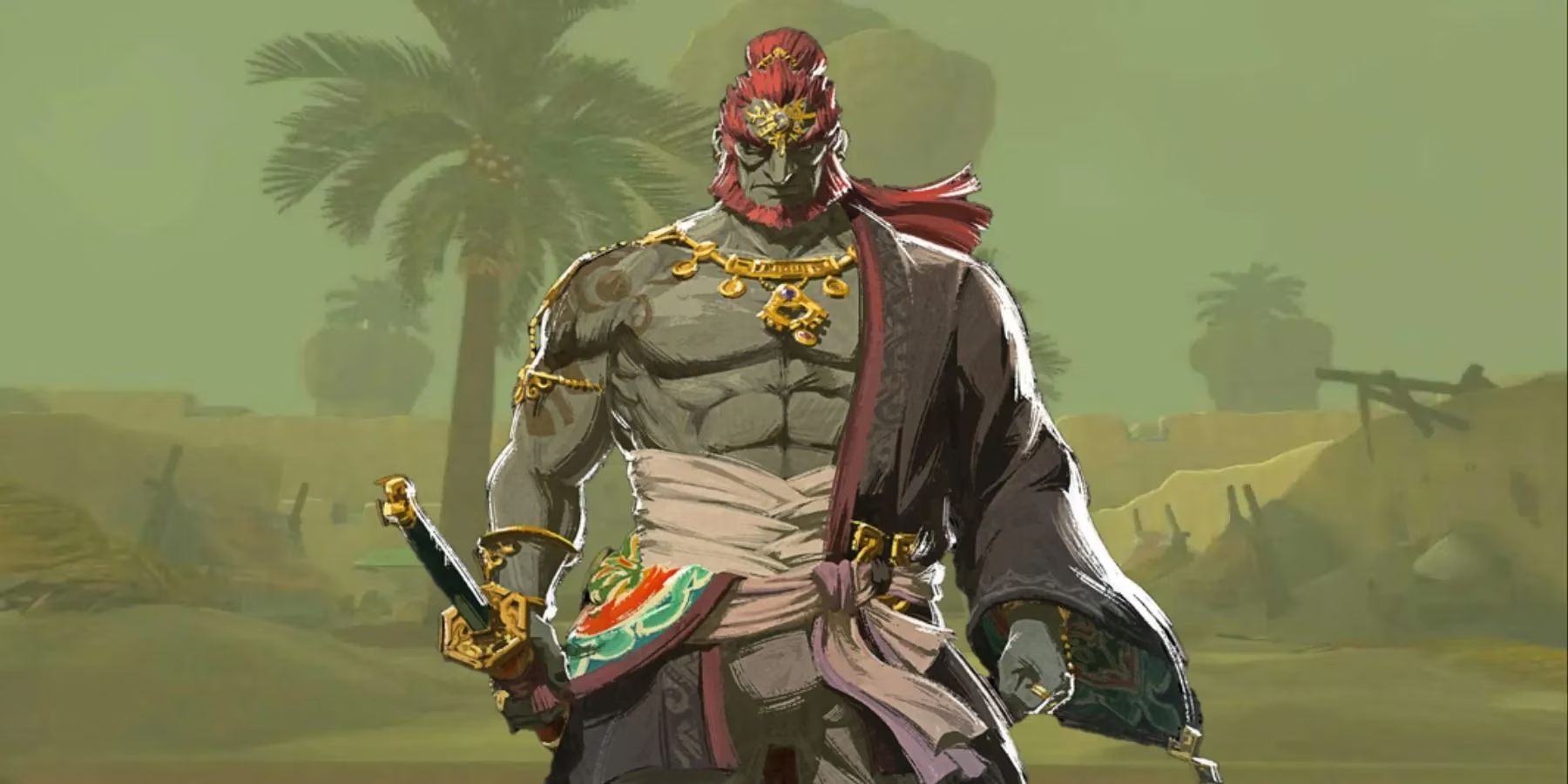
He is, without a doubt, one of the most iconic adversaries in all of gaming. Whether appearing in his humanoid Gerudo form or his terrifying bestial incarnation as Ganon, his presence defines the conflict. In Tears of the Kingdom, the developers gave him what I consider his most striking and formidable design yet. His signature features—the intense scowl, the flowing mane of crimson hair—were masterfully integrated into a new, imposing samurai-inspired aesthetic. This visual presentation immediately communicated a sense of ancient power and ruthless determination, setting the stage for a climactic battle. It was a design that perfectly captured his legacy while feeling fresh and menacing.
The Compelling Nature of a Humanoid Foe
Throughout my adventures across various Zelda titles, I've always found Ganondorf to be a more engaging and complex adversary than his monstrous alter ego. His humanoid nature allows for a different kind of storytelling. He isn't just a mindless force of destruction; he is a character with presence, ambition, and a will that can be understood, if not condoned. I remember the chilling, regal aura he projected in The Wind Waker, which made Link's eventual victory feel so profoundly earned. Similarly, his role in Twilight Princess was layered with a grim dignity. These portrayals suggested a depth of character that made the conflict feel personal and thematically rich. 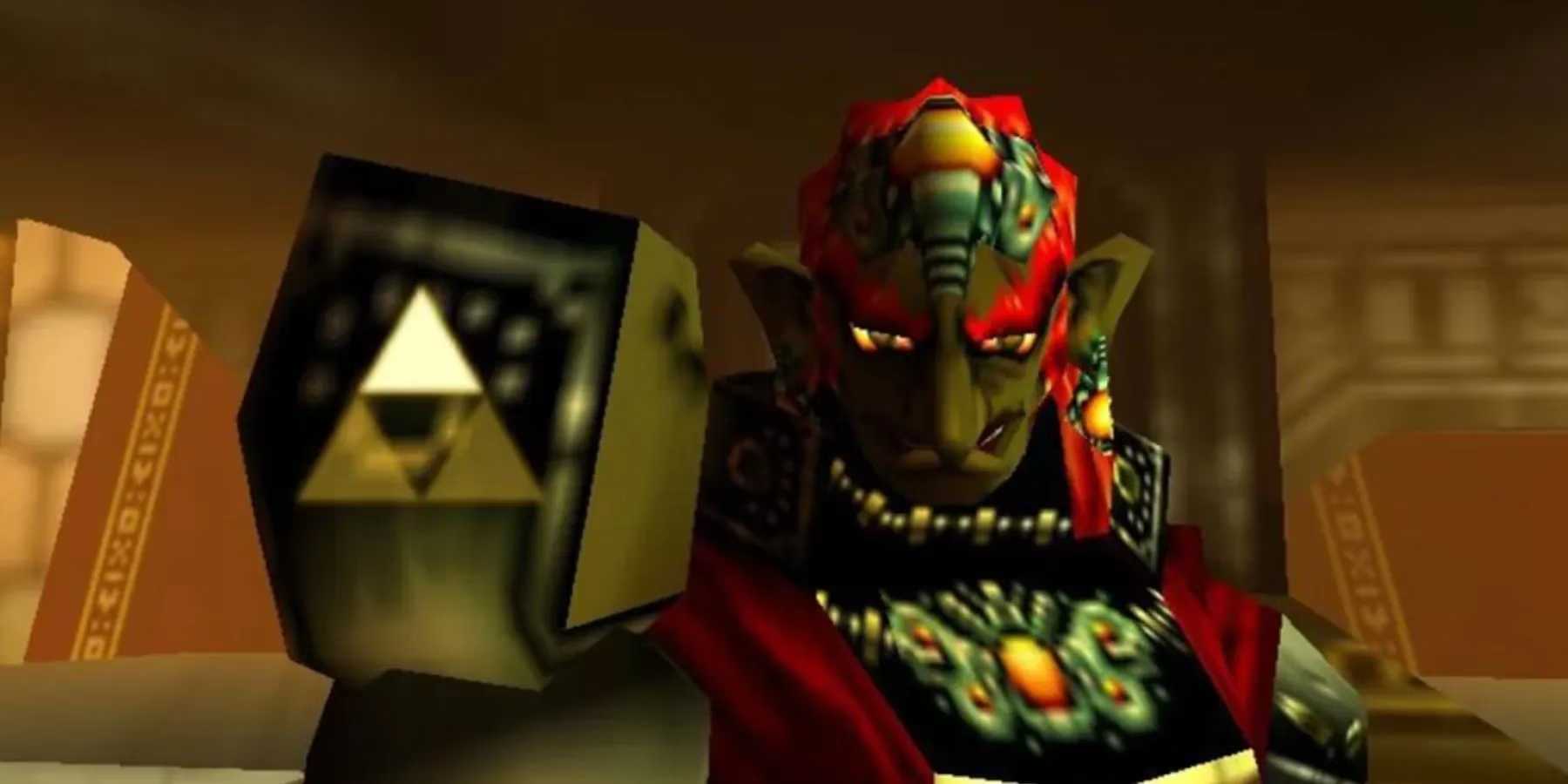
The Narrative Shortfall in Tears of the Kingdom
This is where my experience with Tears of the Kingdom left me wanting more. Despite his breathtaking visual design and central role in the calamity befalling Hyrule, Ganondorf himself felt curiously hollow. The story provided scant insight into his psyche, his history, or his concrete motivations. He desires power and dominion over Hyrule, but the why remains shrouded in mystery. We learn little about:
-
His life among the Gerudo: How was he viewed by his people? What shaped him within their unique matriarchal society?
-
The source of his ambition: Is it born from resentment, a twisted sense of destiny, or something else entirely?
-
His connection to the deeper lore: The game touches on ancient history, but Ganondorf's specific place in it feels underexplored.
He seems to want power purely for power's sake, which is a disappointingly simplistic motivation for such a legendary figure. This narrative approach made him feel more like a formidable obstacle—a force of nature—than a fully realized character with relatable, if evil, drives. In many ways, it felt as though any powerful villain could have occupied his role, which is a strange thing to say about Ganondorf.
A Rich Culture, An Unexplored Connection
This lack of development is especially poignant given how wonderfully the Gerudo people themselves are fleshed out across both Breath of the Wild and Tears of the Kingdom. I spent hours in Gerudo Town, engaging with its vibrant culture, its strong characters, and its unique customs. It's one of the most vividly realized societies in all of Hyrule. Yet, the connection between this rich culture and its most (in)famous son is relegated to a few passing remarks and ominous legends. There was a vast, untapped potential to explore the tragedy of a Gerudo king who fell from grace, to delve into how his actions reflect upon or contradict the values of his people. That deeper cultural and personal context was missing, making his evil feel disconnected from the world it sought to conquer.
The Climax: Epic Spectacle, Thin Foundation
Do not misunderstand me; the final confrontation with Ganondorf was an absolute masterpiece of gameplay and spectacle. 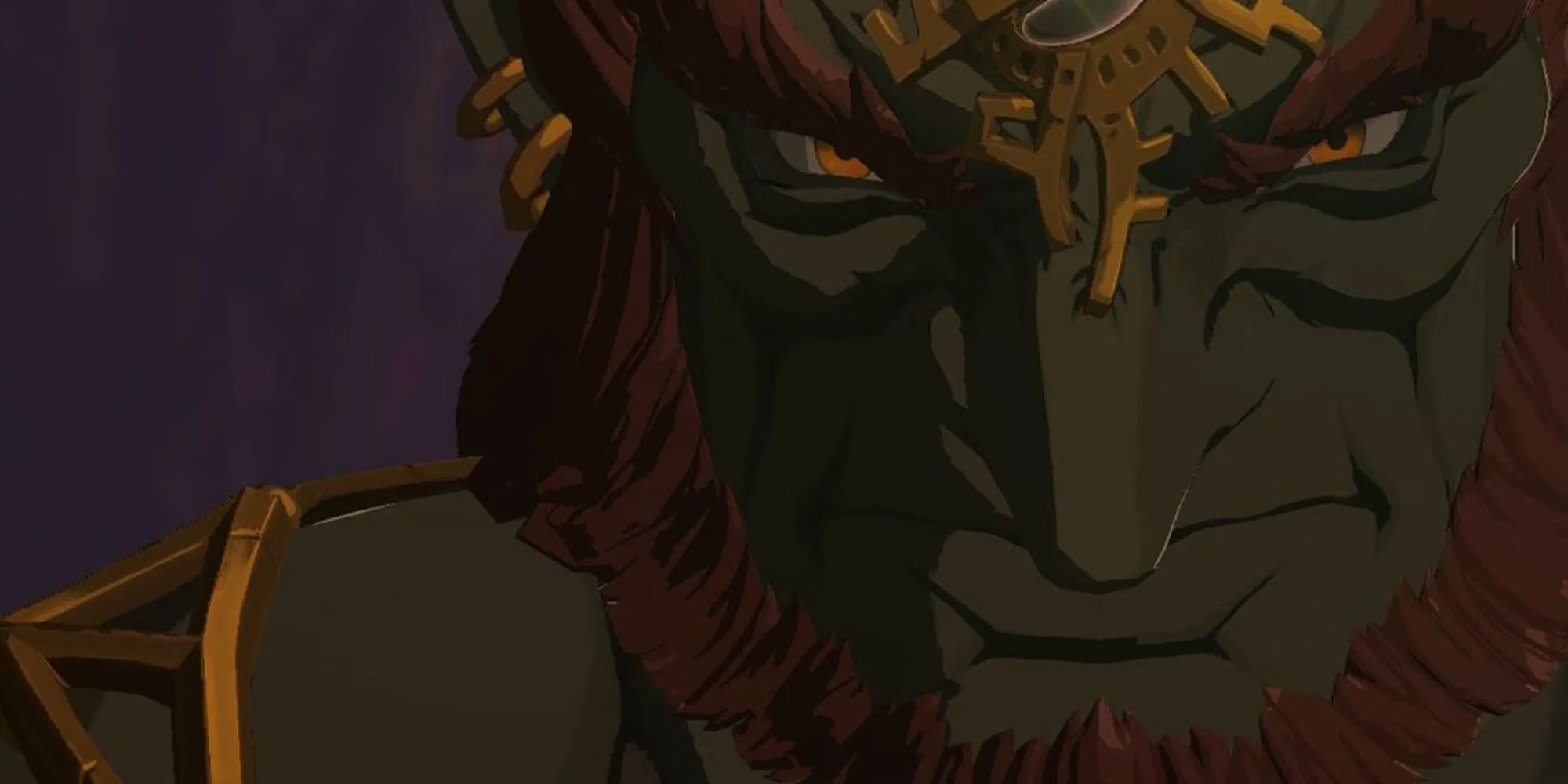
The multi-stage battle was challenging, cinematic, and immensely satisfying—a true capstone to the adventure. It stands as one of the most profound moments in the game. However, the narrative road leading to that climax felt somewhat formulaic. The emotional weight of the fight was carried almost entirely by the player's investment in protecting Hyrule and its inhabitants, not by a nuanced understanding of the adversary they faced. The fight was epic despite the thin characterization, not because of it. For a villain with decades of history and such a stunning new design, Tears of the Kingdom represented a perfect opportunity to offer the deepest look yet into Ganondorf's soul. Matching that incredible visual design with equally rich narrative depth would have elevated the entire experience from phenomenal to truly transcendent.
As I look to the future of the series, I hope the developers build upon this incredible foundation. Tears of the Kingdom proved they can create a world of unparalleled freedom and challenge. My wish for the next chapter is that they apply that same ambition to their storytelling, especially for the central antagonist. A Ganondorf with motives as complex and compelling as his character design would not just be a great villain; he would be the perfect foil for Link's heroism, creating a conflict that resonates on every level long after the final blow is struck.