Even in 2026, six years after its initial release, Red Dead Redemption 2 continues to captivate players with its staggering depth and immersive details. A testament to Rockstar Games' meticulous world-building, the game still yields fresh discoveries for veterans and newcomers alike. The latest example to capture the community's imagination involves a seemingly mundane item: the pocket watch. Long considered simple loot to be sold for a few dollars, players have recently highlighted its functional, immersive purpose—telling the in-game time without relying on the heads-up display (HUD). This finding underscores the game's philosophy of subtle, player-driven immersion, a quality that has cemented its status as a benchmark for open-world design.
The Functional Pocket Watch: A Tool for Immersion
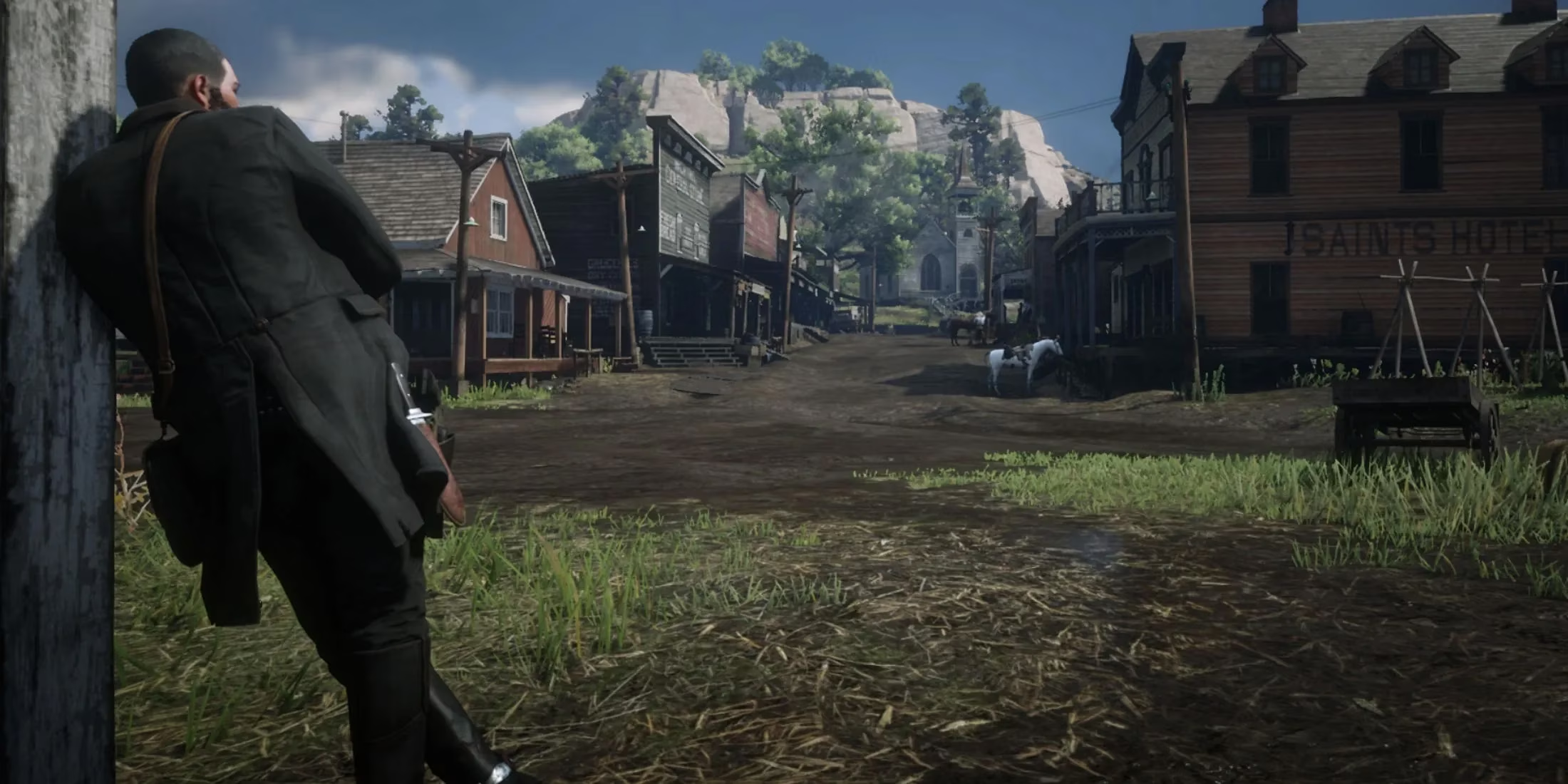
The discovery, popularized by players online, revolves around the pocket watches scattered throughout the world of Red Dead Redemption 2. While players can always check the time by pressing a button to bring up the HUD, using a pocket watch offers a diegetic alternative. This means the action happens within the game's world, not through a meta-game interface. For players who prioritize role-playing and immersion, this small action—having Arthur Morgan physically pull out a watch, open it, and check the time—adds a profound layer of authenticity. It transforms a common inventory item from mere vendor trash into a purposeful tool for living within the game's reality. This detail wasn't widely advertised but was built into the game's systems, waiting for players to find and appreciate it organically.
A Culture of Discovery and Replayability
This is far from an isolated incident. The Red Dead Redemption 2 community has a rich history of uncovering hidden interactions years after launch. Consider these notable examples:
-
1,400-Hour Revelation: Another dedicated player discovered a completely new character interaction after logging over 1,400 hours of playtime.
-
Environmental Storytelling: From changing camp dialogue based on Arthur's actions to subtle wildlife behaviors, the game is packed with unscripted moments.
-
Working Clocks: As players noted, the functional clock in the Emerald Ranch general store is another diegetic way to tell time, consistent with the pocket watch logic.
This culture of discovery is a direct result of Rockstar's design philosophy, which densely packs the world with interactable elements and hidden narratives. It creates a powerful sense of replayability, as no two playthroughs can uncover every secret. The game respects the player's curiosity and rewards thorough exploration, ensuring that even in 2026, forums and social media are alight with players sharing "new" finds.
The Immersive Toolkit: Beyond the Watch
The pocket watch is just one tool in an arsenal of immersive techniques employed by dedicated players. The community has shared various methods to experience the world without "breaking" the fourth wall with menus and HUDs:
| Immersive Method | How It Works | Immersion Level |
|---|---|---|
| Pocket Watch | Open from the item wheel for a diegetic time check. | ⭐⭐⭐⭐⭐ (Fully in-world) |
| Asking NPCs | Use the Greet/Antagonize system; Arthur can randomly ask for the time. | ⭐⭐⭐⭐ (Social, but random) |
| Sun Position | Estimating time based on the sun's location in the sky. | ⭐⭐⭐ (Requires observation) |
| Store Clocks | Checking working clocks on walls in buildings like Emerald Ranch. | ⭐⭐⭐⭐⭐ (Environmental) |
Some players adopt the simple "sun is out, it's daytime" philosophy, while others meticulously plan in-game activities around the time shown on their character's watch. The ability to ask NPCs for the time, though inconsistent, adds a layer of social realism. These practices show how the game's systems support a spectrum of playstyles, from casual exploration to hardcore simulation.
The Legacy and Future of the Red Dead Series
The enduring fascination with Red Dead Redemption 2's details exists within a peculiar context for the franchise. As of 2026, the monumental development focus on Grand Theft Auto VI means the immediate future of the Red Dead series resides in a state of limbo. The critical and commercial triumph of the second game makes a third installment a near certainty... eventually. However, projections suggest fans may need to wait until the turn of the decade for a new chapter, highlighting the lengthy, quality-driven production cycles of Rockstar Games.
Yet, the news isn't all about waiting. The past year has brought a significant development for PC gamers: after 14 years, the original Red Dead Redemption has finally seen an official release on PC platforms. This has ignited excitement within the modding community, who are now poised to bring their creative talents to the 2010 classic, potentially remastering textures, adding features, and expanding its life much like its sequel. This move ensures the legacy of the series remains vibrant and accessible while the future is being crafted.
Conclusion: A Masterpiece Defined by Details
In the final analysis, the humble pocket watch detail is a microcosm of what makes Red Dead Redemption 2 a perennial masterpiece. Six years on, it isn't just the epic story or stunning visuals that hold players, but the countless whispered secrets woven into its fabric. The game empowers players to craft their own level of immersion, whether they are a bandit checking the time before a train robbery or a hunter gauging the sunset. This commitment to a living, reactive world—where items have purpose beyond currency and the environment consistently rewards attention—is why the game continues to be dissected and adored. It stands as a high-water mark for immersive simulation, proving that in a world of ever-faster gaming cycles, depth and detail have a timeless appeal. As the community looks to the future of the franchise, the present remains richly rewarding for those willing to slow down, pull out their pocket watch, and truly live in the world Rockstar built.