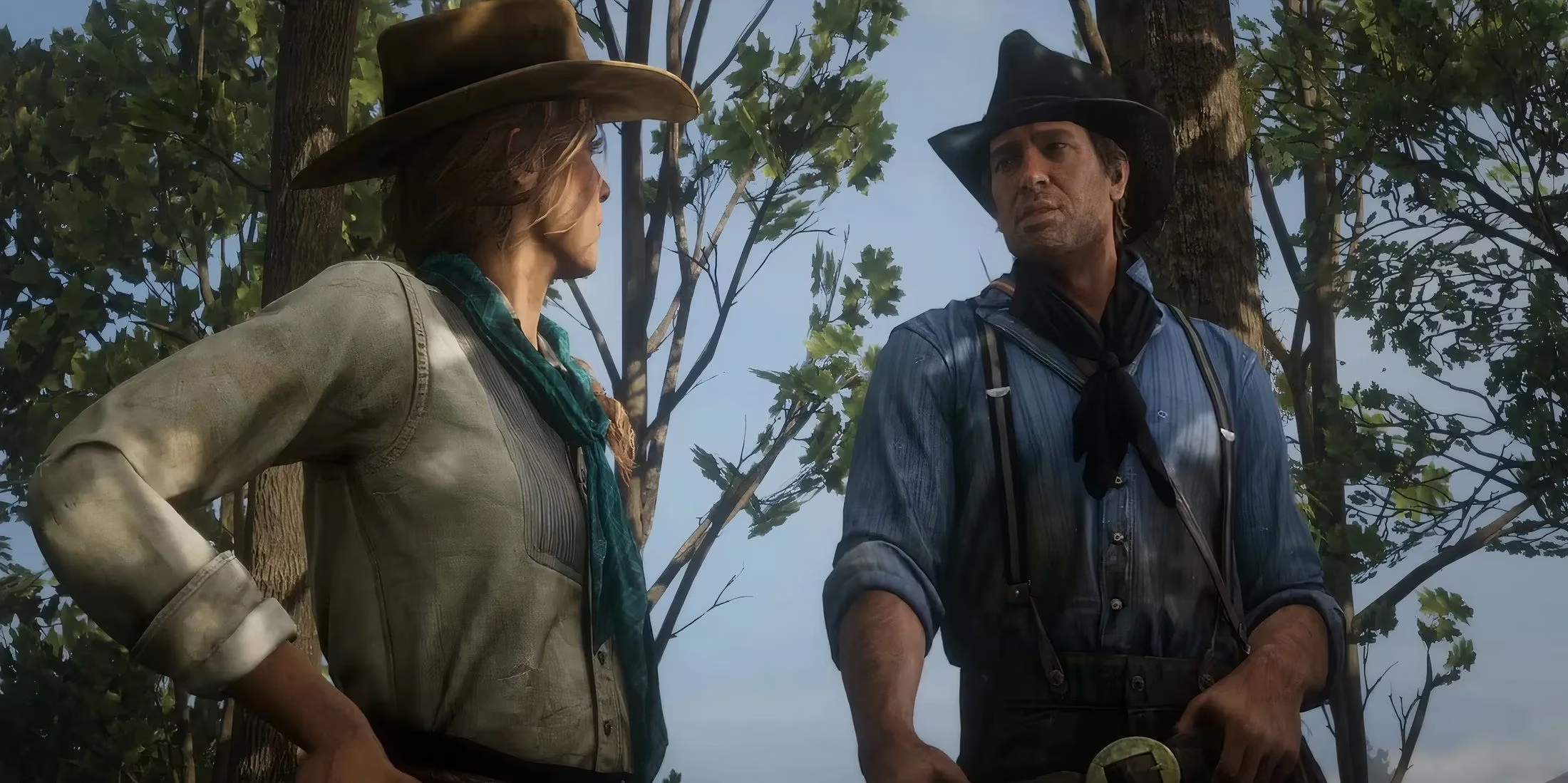
The vast, untamed wilderness of Red Dead Redemption 2 serves not just as a breathtaking backdrop but as a constant, living threat, a character in its own right whose teeth and claws are bared at every turn. Rockstar Games' magnum opus, set against the dying embers of the 19th-century American frontier, masterfully wove its emphasis on stark realism into the very fabric of its ecosystem. The game’s fauna, from the majestic to the malevolent, became a primary source of both wonder and white-knuckle terror for players navigating the world as Arthur Morgan and the beleaguered Van der Linde gang. These harrowing encounters with the natural world established a chilling template, one that a hypothetical future installment in the series could—and should—expand upon with even greater, more sophisticated dread.
The Current Pantheon of Predators and Perils
RDR2's approach to wildlife was revolutionary, moving beyond simple enemy spawns to create a believable, functioning food chain where animals behaved with startling authenticity. This commitment to ecological verisimilitude directly fueled some of the game's most memorable and frightening moments. The terror often stemmed from the unpredictability and realism of these encounters:
-
The Ambush Artists: Certain creatures specialized in stealth and surprise. The cougar, with its tawny, camouflaged fur, was a master of the stalk, often revealing itself only in the split second before a lethal pounce. Similarly, snakes presented a pervasive, low-to-the-ground hazard. Their sudden, vibrating strike from the underbrush was a jump-scare that trained players to watch their every step, transforming a simple walk through the grass into a tense exercise in vigilance.
-
The Brute Force Encounters: Not all dangers were subtle. The grizzly bear announced its presence with a thunderous roar before charging, a massive, overwhelming force that demanded quick thinking. Interestingly, the game embedded a realistic behavioral quirk: standing one's ground could sometimes intimidate the bear, a small nod to animal psychology amidst the chaos.
-
The Exotic Exception: The pinnacle of these wildlife threats was arguably the lion encountered in the "He's British, Of Course" stranger mission. This vicious, non-native predator was a brutal anomaly, a boss-like encounter that emphasized raw power and resilience, requiring every ounce of the player's skill to survive.
These interactions worked because they felt earned by the game's systems; the fear was a product of the world's rules, not just scripted events.
A Blueprint for Amplified Anxiety: The Next Frontier of Fear
Given the technological leaps expected by 2026, a future Red Dead Redemption title has the potential to deepen this immersive horror exponentially. The foundation laid by RDR2 points to several clear avenues for intensifying the fear factor through its fauna.
1. Diversifying the Venomous Threats:
While snakes were a constant nuisance, the next game could broaden the scope of toxic terrors. Imagine the dread of navigating a cave network buzzing with aggressive hornets or a swamp where stepping on a camouflaged scorpion leads to a debilitating, panicked scramble for antidote. The inclusion of creatures like:
-
Black Widow Spiders in dark barns and outhouses.
-
Brown Recluse Spiders in abandoned cabins.
-
Africanized 'Killer' Bees (historically plausible through importation narratives) threatening whole areas.
This would make the environment itself feel more poisonous and demanding of respect.
2. Claiming the Night for the Carnivores:
RDR2's nights were atmospheric but could be made truly perilous. Nocturnal predators should rule the darkness, leveraging advanced AI and lighting tech to hunt the player. Picture the glowing eyes of a mountain lion reflecting in the moonlight just before it vanishes into the shadows, or the eerie, chattering growl of a pack of coyotes closing in from all sides in pitch-black woods. The night could become a time to truly fear travel, where sound cues and fleeting glimpses are all that stand between safety and a grisly end.
3. Enhanced Environmental Storytelling & Behavior:
Next-gen tech could allow for more complex animal behaviors that feed into ambient horror. Vultures circling not just as scenery, but actively leading the player to recent kill sites or mass graves. Wolf packs that test and probe defenses before a coordinated attack. Diseased animals acting erratically and aggressively, posing a dual threat of injury and illness. The world would feel more reactive and intelligently hostile.
The Lingering Hope for a New Saga
As of 2026, Rockstar Games remains publicly focused on the continued evolution of its other flagship universe. However, the critical and commercial triumph of the Red Dead Redemption series, particularly its unparalleled achievement in crafting a living, breathing, and often threatening world, leaves a persistent demand for its return. The stories of the Van der Linde gang's era may be concluding, but the vast, untamed American frontier is ripe with untold narratives. By leveraging future technology to turn the screw on the natural horrors it so brilliantly introduced, a new chapter could redefine open-world immersion once again, making every rustle in the bushes and every distant howl a potential trigger for heart-pounding, authentic fear. The wilderness is waiting, and it could be more terrifying than ever.