As a dedicated player who's been roaming the stunning yet unforgiving world of Red Dead Redemption 2 since its release, I'm still constantly amazed by the layers of detail Rockstar Games wove into this masterpiece. It's 2026, and while many games have come and gone, the sheer depth of RDR2's living, breathing world remains largely unrivaled. Just when I think I've seen it all, the community uncovers another microscopic, mind-blowing detail that changes how I view a scene I've played through a dozen times. The latest one? It's all about the subtle, unspoken language of the honor system, perfectly demonstrated in a single moment with Dutch van der Linde.
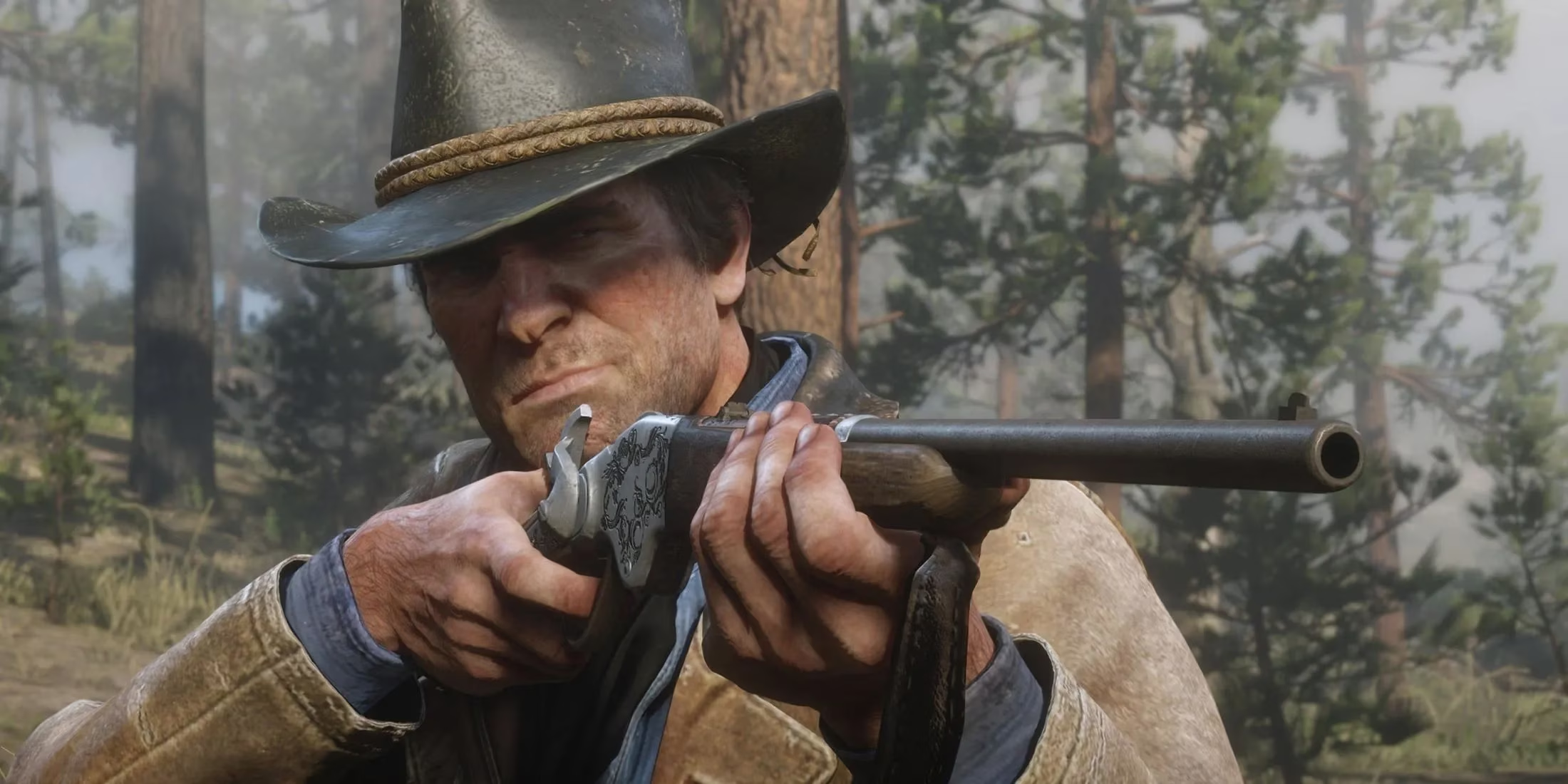
The Moment That Says It All: Chapter 4, Saint Denis
Let's set the scene. You're in Saint Denis, the bustling, grimy heart of the game's version of 1890s America. You're about to walk into a saloon for a mission, and Dutch, your charismatic but increasingly volatile leader, is with you. In a moment of dark, brotherly humor, he raises his revolver and playfully points it at Arthur's head. It's a tense, character-defining beat. But here's the kicker—what happens next is dictated entirely by your honor.
🔫 Low Honor Arthur: If you've been living the life of a true outlaw, robbing, killing, and generally being a menace, Dutch approaches with his finger firmly on the trigger, the gun cocked and ready. The threat, even in jest, feels real and loaded with the violence of your shared path.
🤠 High Honor Arthur: If you've chosen the path of the reluctant gunslinger, helping strangers, being kind, and seeking redemption, Dutch's gesture changes. The gun is pointed, but his finger is off the trigger, and the hammer is not cocked. The action reads more as a theatrical, almost affectionate joke between brothers-in-arms, devoid of that chilling undercurrent of real danger.
This isn't some grand, branching cinematic. It's a split-second animation difference most players would never consciously notice on their first, or even fifth, playthrough. But once you see it, it recontextualizes the entire relationship dynamic in that moment. It's storytelling through pure environmental and behavioral nuance.
Why This Tiny Detail is a Masterstroke 🎯
Rockstar's genius here is in making the honor system tangible and reactive in the world, not just a number on a screen. It's not just about getting a discount in shops or a different ending; it's about how the world and the people who know you best perceive and interact with you. This detail accomplishes so much with so little:
-
Character Perception: It shows that Dutch, despite his own descent, is acutely aware of Arthur's moral state. A low-honor Arthur is met with the expectation of violence; a high-honor Arthur is treated with a shred of... respect? Or at least a different kind of familiarity.
-
Environmental Storytelling: It reinforces that your choices have weight in the micro-moments, not just the macro plot. The game is watching you, and it remembers.
-
Immersion Multiplier: These are the details that transform a game from a series of missions into a lived-in experience. You're not just playing a character; you're shaping how that character exists in the eyes of others.
The RDR2 Legacy: A Benchmark in Nuance
As we look back from 2026, Red Dead Redemption 2 stands as a high-water mark for detail-oriented game design. Its world feels alive because of a million tiny, interconnected systems:
-
NPC Routines: Townsfolk have full daily cycles—jobs, meals, leisure. They remember if you've been rude or helpful.
-
Physical Realism: Arthur's weight, hair growth, and even dirt accumulation affect how NPCs react to him. Eating is animated, not just a health bar refill.
-
Animal Behavior: The ecosystem is brutally realistic. Predators hunt, prey flees, and everything leaves tracks.
This Dutch gun-cocking detail is a perfect microcosm of that philosophy. It asks: How would this character, in this specific relationship, act based on a lifetime of shared experiences and recent behavior? And then it delivers that answer visually, without a single line of dialogue.
The Future: Will GTA 6 Follow Suit? 🚗
With the monumental success and critical praise for RDR2's immersive details, all eyes are on Rockstar's next epic, Grand Theft Auto 6. The question on every fan's mind is: Will this obsessive attention to behavioral and systemic nuance carry over?
While the satirical, neon-drenched chaos of a modern GTA game is a different beast from the melancholic Western realism of RDR2, the core principle remains. Players now expect worlds that react and remember. We don't just want a bigger map; we want a deeper, more responsive one.
Imagine if in GTA 6:
-
NPC drivers react differently to your driving style (reckless vs. cautious).
-
Store clerks remember if you've been a frequent (and polite) customer.
-
Your character's reputation in different city districts alters how gangs or police initially engage with you.
RDR2 proved that players cherish these subtle, systemic storytelling elements. They create those "did that just happen?" moments that fuel endless discussion and replayability, even years later. The legacy of Arthur Morgan's journey isn't just in its epic story, but in these quiet, profound details that made him feel real. And that's a standard I, for one, hope defines the next generation of open-world games. 🤠✨