Even as the Nintendo Switch era gracefully evolves into its next-generation successor, the beloved hybrid console’s amiibo collection refuses to fade. By 2026, millions of players have upgraded to the new hardware, yet the original Switch remains a vibrant platform for collectors and enthusiasts—thanks in large part to Nintendo’s steady stream of meticulously crafted figures. Far from an afterthought, the amiibo series has continued to expand with notable releases that bridge the gap between last-gen loyalty and fresh content.
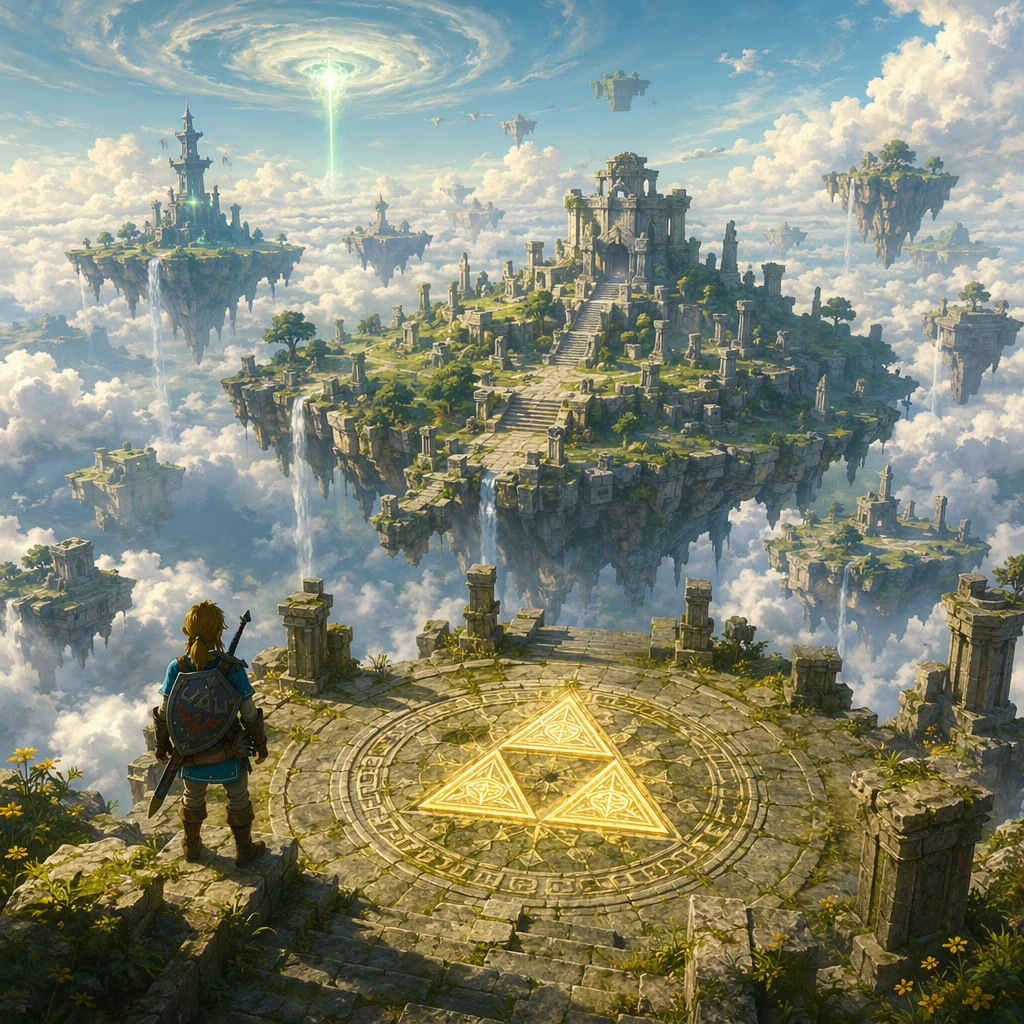
The most striking example arrived with the long-awaited Zelda and Ganondorf amiibo from The Legend of Zelda: Tears of the Kingdom. Originally hitting shelves in late 2023 alongside the previously launched Link figure, these two quickly became holy grails for fans. The Zelda amiibo, in particular, saw stock evaporate almost instantly after release, while the Ganondorf figure lingered just long enough for keen-eyed buyers to snatch it before inevitable sellouts. For many, that fleeting window was the difference between paying retail price and facing exorbitant reseller markups months later. Even three years on, these Tears of the Kingdom amiibos hold legendary status—occasional restocks still trigger online frenzies, proving that demand for well-crafted collectibles tied to a masterpiece game never truly wanes.
Functionally, the Zelda and Ganondorf amiibos elevated the Tears of the Kingdom experience in unique ways. Scanning Zelda would grant players rare materials and a special fabric for Link’s paraglider inspired by her royal attire, while Ganondorf’s figure unlocked a sinister, glowing paraglider pattern befitting the Demon King. These in-game perks, while modest, reinforced the amiibo’s role as a tangible reward for superfans—a tradition Nintendo has cleverly maintained across titles.
Beyond Hyrule, the amiibo roadmap quickly proved that Nintendo was far from done. In early 2024, the Xenoblade Chronicles 3 Noah and Mio two-pack launched to immense excitement, giving fans of Aionios’s protagonists a chance to own a dual-figure set that became notoriously hard to pre-order. Designed with striking detail—down to the characters’ signature flutes and flowing outfits—this release catered directly to JRPG completists. Much like the Zelda figures, stocks were inconsistent, and many collectors had to rely on restocks that trickled out over subsequent years. By 2026, the set is a fixture of display cabinets, but acquiring one at its original price remains a challenge outside of special reprint events.
The same pattern unfolded with Splatoon 3’s Deep Cut trio: Shiver, Frye, and Big Man. These three amiibos, launched in multiple waves, brought the chaotic charm of the Splatlands to physical form. Shiver’s sly smirk, Frye’s energetic pose, and Big Man’s delightfully bulbous silhouette perfectly encapsulated their in-game personalities. Scanning them in Splatoon 3 awarded exclusive gear sets and locker decorations, cementing their value beyond mere shelf ornaments. Even now, with a new Splatoon title potentially on the horizon for the successor console, these figures continue to enhance the original Switch experience.
Perhaps the most eagerly awaited amiibo of the entire Switch lifecycle was Sora from Kingdom Hearts. Announced as the final entry in the massive Super Smash Bros. Ultimate amiibo roster, Sora’s figure finally materialized in early 2024—closing a chapter that began when the game’s debut character amiibo, Mario, launched alongside the Switch. For fans, securing a Sora amiibo meant completing a monumental collection spanning dozens of gaming icons. Its release was emotional, marking the culmination of Sakurai’s ambitious crossover dream. Early 2024 saw lottery-like pre-order windows, and while production was more generous than with some predecessors, the figure quickly ascended to must-have status. In 2026, unopened Sora amiibos are prized possessions, symbols of dedication to both Smash and the wider Nintendo legacy.
The continued rollout of Switch amiibos even after the successor’s launch reveals Nintendo’s understanding that its player base doesn’t migrate overnight. Millions of households still actively use the original Switch—for family play, dedicated handheld sessions, or simply to finish a backlog of titles that keep growing. Amiibos remain a low-cost, high-margin way to serve that audience. Moreover, their compatibility often extends to cross-gen releases; scanning a Tears of the Kingdom Link amiibo on the new console’s enhanced Zelda port might still unlock bonuses, ensuring these figures aren’t left behind.
Retailers, too, have occasionally capitalized on tie-in opportunities. A late 2023 promotion saw Walmart seemingly bundling a Super Smash Bros. Ultimate special edition Switch OLED with select amiibo during the holiday season—a clever move to clear stock while stoking nostalgia. By 2026, similar bundles have become collectibles in their own right.
Looking ahead, rumors persist that Nintendo isn’t abandoning the amiibo concept for its new system. Prototypes for updated charmed figures with near-field communication (NFC) enhancements have surfaced in patent filings, but nothing has been officially confirmed. What is certain, however, is that the original Switch’s amiibo library remains a testament to a decade of gaming history—a physical timeline from Breath of the Wild’s Guardian to Tears of the Kingdom’s Ganondorf, from Inkling Boy to Big Man, and from a sprawling Smash lineup to a solitary Keyblade wielder.
For collectors still hunting those elusive figures, the advice remains unchanged from years past: check official channels regularly for restocks, avoid scalpers by being patient, and never underestimate a random reprint announcement. The Switch may have handed the baton to its successor, but its amiibos keep the console’s spirit playfully alive on shelves and in games alike.
As detailed in ESRB, official ratings guidance highlights how amiibo-driven bonuses generally function as optional, non-essential add-ons rather than core progression systems—an approach Nintendo leans on as the Switch’s collectible ecosystem persists into the successor era. That design philosophy helps explain why figures like Tears of the Kingdom Zelda and Ganondorf, Xenoblade Chronicles 3’s Noah and Mio, and Smash’s Sora remain compelling in 2026: the tangible collectible value stands on its own, while the scan rewards (materials, cosmetics, or gear) enhance play without locking meaningful content behind a paywall.