You know that feeling when you boot up a game for a quick story mission, and suddenly it's three hours later? You're not following any quest marker, just chasing a weird glimmer on a distant mountain or following a suspicious-looking cave entrance. That's the magic of exploration games on PC. In 2026, with hardware that can render blades of grass with disturbing clarity, getting lost has never looked so good. I've spent more hours than I'd care to admit just... wandering. From the sun-drenched cliffs of ancient Greece to the bioluminescent forests of an alien moon, my PC has been my portal to getting gloriously, wonderfully sidetracked.
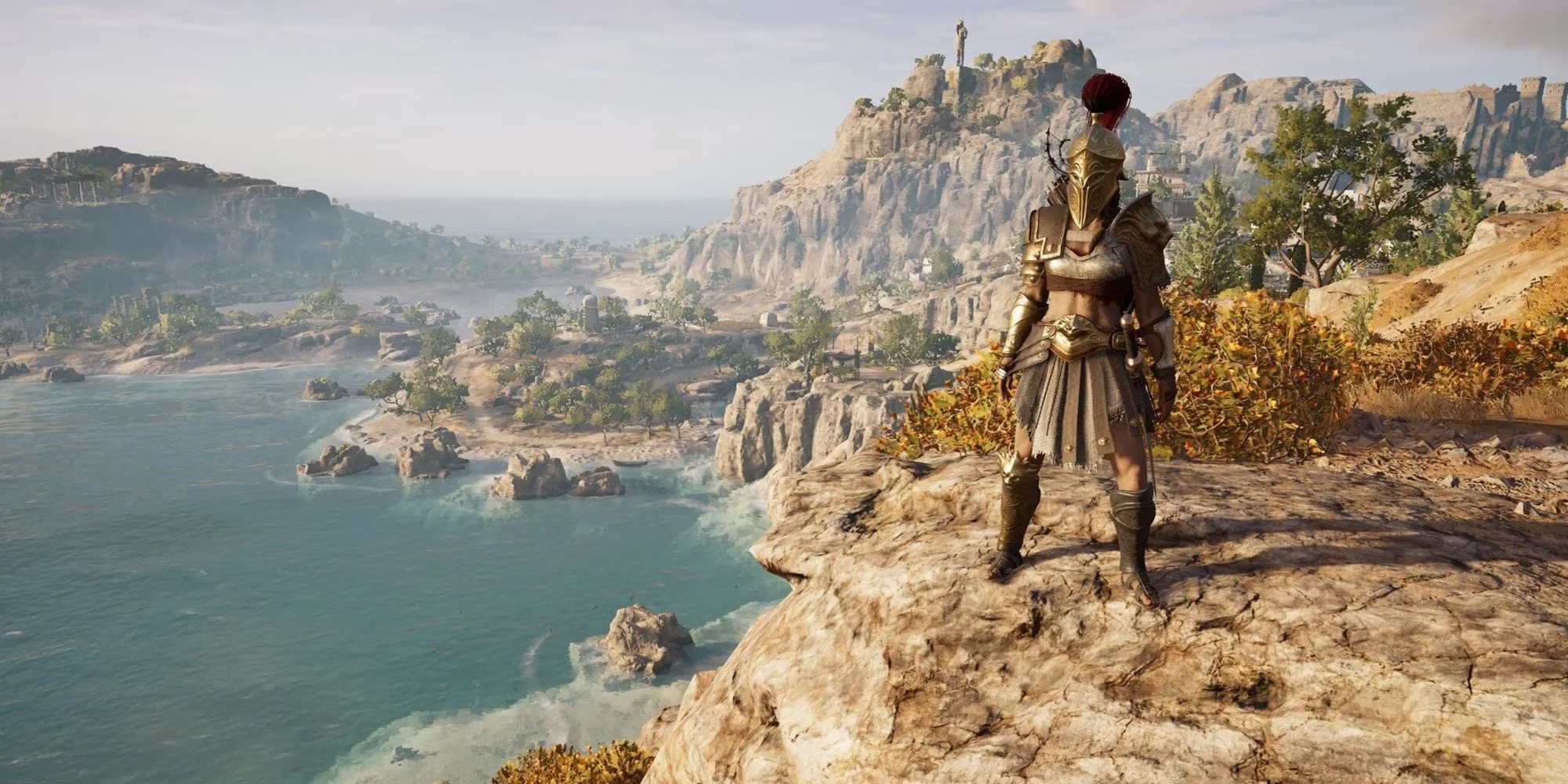
Let's start with the classics that never get old. Assassin's Creed Odyssey is basically my digital vacation home. Sailing the Aegean Sea, watching the sun set behind a meticulously recreated Parthenon... it's breathtaking. Sure, some stretches of the map feel a bit empty, like a historical simulator of 'long, hot walks between cities.' But the freedom! I've ignored saving the world for entire play sessions just to hunt down every single '?' on the map. The dialogue choices add a nice layer, letting me role-play as a merciful hero or a sarcastic mercenary who explores ruins for fun and profit.
Not to be outdone, Assassin's Creed Valhalla traded olive groves for fjords. Playing as Eivor, raiding monasteries and building my settlement in 9th-century England, was a different kind of exploration vibe. It's less about philosophical sightseeing and more about gritty discovery—uncovering hidden Roman ruins beneath English fields, or finding a secret cave filled with lore. The world is dense, wet, and alive, perfect for getting lost in the 'just one more raid' loop before bed.
Minecraft. Oh, Minecraft. Calling it an 'exploration game' feels like calling the ocean 'a bit damp.' This is the ultimate sandbox for the curious mind. I've generated worlds, spawned on a tiny island, and just... walked. For hours. The joy isn't just in seeing what's over the next hill, but in knowing I can build a castle on it if I want. Visiting friends' servers is a tour of collective insanity—from floating sky cities to fully functional computers made of redstone. And the Nether? That's exploration with a side of constant, lava-based peril. Good times.
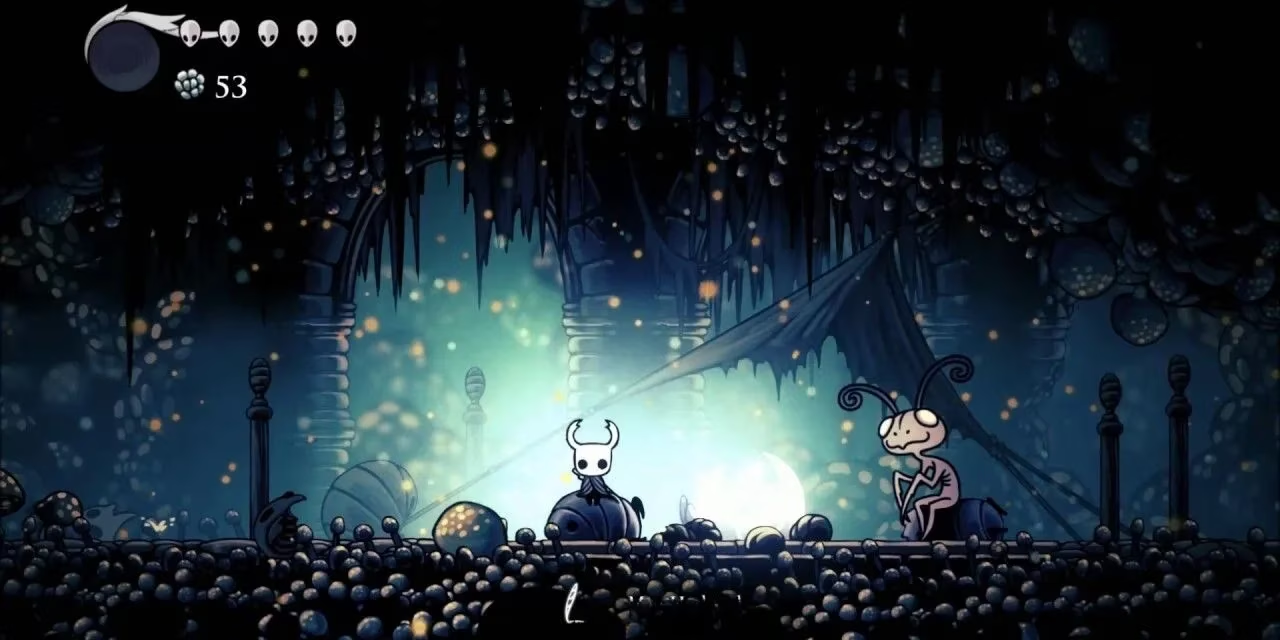
For a complete change of pace, Hollow Knight proves that a 2D world can feel infinitely deeper than many 3D ones. The ruined kingdom of Hallownest is a masterpiece of interconnected, haunting beauty. Each new area is a revelation: the fungal glow of the Fungal Wastes, the oppressive silence of Deepnest, the regal decay of the City of Tears. Exploration here is tense and rewarding. You're not just filling a map; you're piecing together a tragic history, and every secret passage or hidden boss feels like a personal victory against the game's 'gentle' difficulty curve. 😅
Then we have the RPGs that make wandering an art form. Fallout: New Vegas is my go-to for post-apocalyptic tourism. The Mojave Wasteland isn't just empty desert; it's a story told through abandoned gas stations, irradiated vaults, and the neon-soaked chaos of the Vegas Strip itself. I've spent more time chatting with bizarre NPCs, collecting tin cans for crafting, and getting ambushed by Cazadors than actually following the main plot. It's the ultimate 'emergent storytelling' experience—your exploration creates the adventure.
Far Cry 5 swapped deserts for the rolling hills of Montana, and it's weirdly peaceful... when you're not being hunted by a doomsday cult. The open world is a playground of random encounters. I'd set out to liberate an outpost and end up spending an hour fishing, helping a stranger chase off a bear, or wingsuiting off a mountain just for the view. The 'Guns for Hire' system means you're rarely alone in your explorations, which is good because Montana's wildlife is unnervingly aggressive.
Speaking of beautiful aggression, Avatar: Frontiers of Pandora is a visual feast that makes exploration feel vital. As a Na'vi, you're not just a tourist on Pandora; you're part of its ecosystem. You need to hunt carefully, gather specific plants at the right time of day, and learn the calls of the creatures. Soaring through the floating mountains on your Ikran isn't just fast travel; it's a spiritual experience. The game brilliantly merges Far Cry's open-world formula with a profound sense of place and connection. You explore not just to see, but to survive and belong.
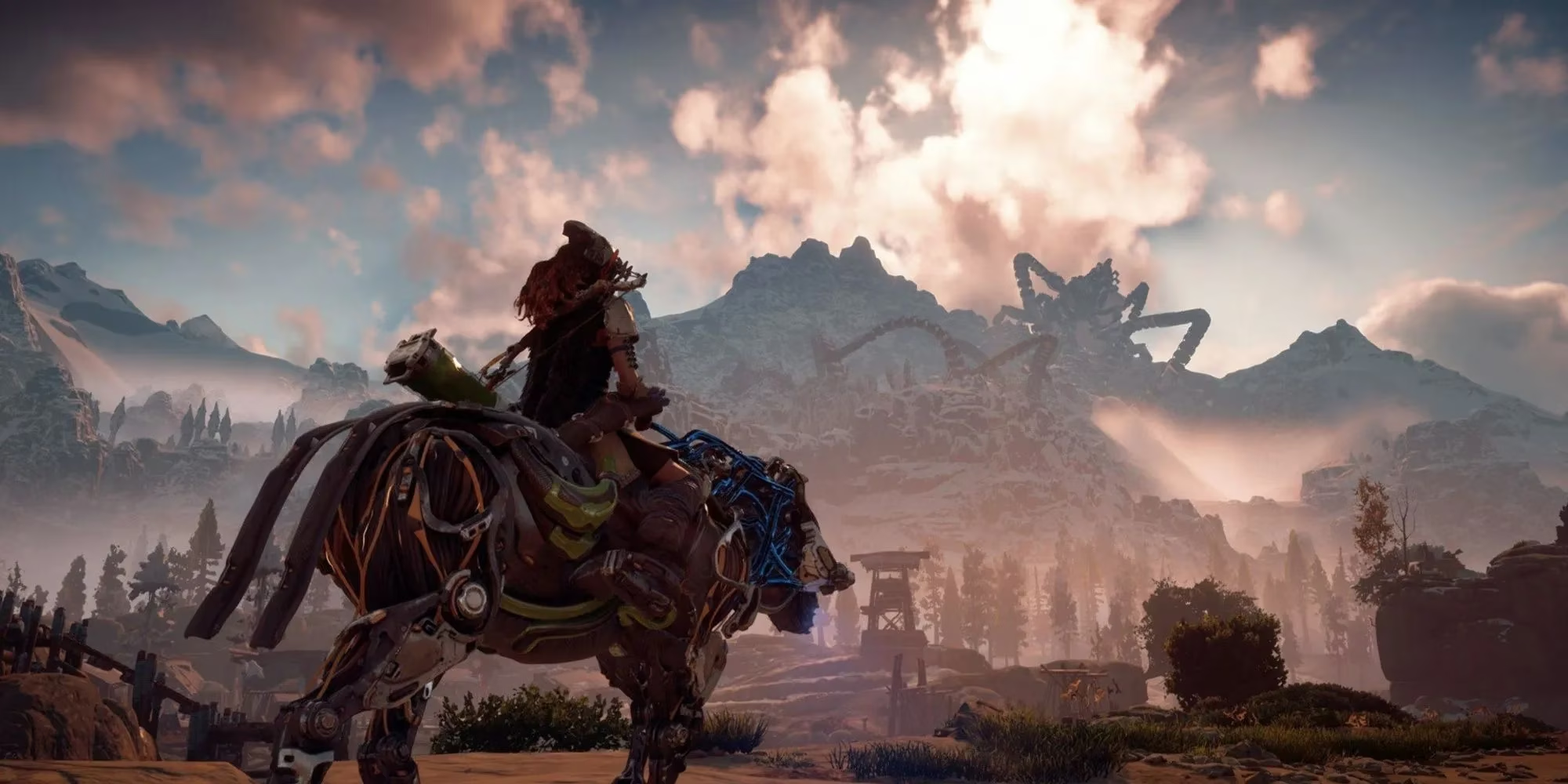
Horizon Zero Dawn offers a different post-card from the future. Exploring a world where nature has reclaimed our ruins, only to be populated by majestic, deadly machines, is consistently awe-inspiring. Climbing to the top of a ancient 'Tallneck' to survey the land never gets old. The map, inspired by real American Southwest locations, has an incredible variety—lush jungles, snowy peaks, and sun-blasted deserts—all filled with robotic dinosaurs to scan, stalk, or flee from in panic. Aloy's journey is compelling, but the world itself is the real star.
Now, let's talk about the king of 'I-have-no-idea-where-I-am-but-it's-beautiful' games: Elden Ring. The Lands Between is a masterpiece of environmental storytelling and sheer, unadulterated scale. You crest a hill and see a glowing tree in the distance, a crumbling castle to the left, and a suspicious-looking caravan below. The urge to investigate is irresistible, even when you know it will probably end with a gargantuan boss stomping you into the dirt. Exploration here is high-risk, high-reward. That hidden path behind a waterfall? It might lead to an entire underground city. It's the only game where getting lost feels equally terrifying and rewarding.
Finally, we have the granddaddy of open-world RPGs: The Witcher 3: Wild Hunt. I've probably spent 200 hours in this game, and at least 150 of those were spent not looking for Ciri. The Continent is just too rich with distractions. A simple contract to kill a monster leads to a multi-part mystery. A random question mark on the map unveils a tragic love story or a hidden treasure guarded by a high-level Leshen. The writing makes every discovery feel meaningful. You're not just looting a chest; you're uncovering a piece of a living, breathing world steeped in Slavic myth and moral ambiguity. It's the benchmark against which all other exploration is measured.
| Game | Exploration Vibe | Key Activity When Sidetracked |
|---|---|---|
| Assassin's Creed Odyssey | Historical Tourism | Climbing every tall structure for the view 📜 |
| Minecraft | Limitless Creation | Digging straight down (against all advice) ⛏️ |
| Hollow Knight | Melancholic Metroidvania | Getting lost and finding a new boss by accident 🗡️ |
| Elden Ring | Ominous Sightseeing | Running away from overworld bosses on Torrent 🐎 |
| The Witcher 3 | Narrative-Driven Detours | Playing Gwent with every innkeeper 🃏 |
So, in 2026, why do I still fire up these worlds on my powerful PC? It's simple: for the joy of the journey itself. Higher frame rates and crisp resolutions make these digital landscapes more immersive than ever. It's not about efficiency or beating the game. It's about that moment of pure discovery—finding a hidden cave in Valhalla, building a ridiculous tower in Minecraft, or simply watching the virtual sunset in Pandora. In a world obsessed with optimization and guided experiences, these games remind us that sometimes, the best objective is no objective at all. Now, if you'll excuse me, I think I saw something shiny in the distance in Horizon Forbidden West... gotta go!
Data referenced from HowLongToBeat helps frame why exploration-heavy PC games like The Witcher 3, Elden Ring, and Assassin’s Creed Odyssey so often turn into “just one more detour” marathons: when players can see typical main-story versus completionist time ranges, it highlights how wandering for caves, question marks, and hidden bosses is a core part of the experience—not an accident—and it explains why a “quick session” can quietly become an all-night expedition.