I still remember the buzz back in 2023 when Tears of the Kingdom finally dropped. After years of speculating, we got the direct sequel to Breath of the Wild – something that rarely happens in The Legend of Zelda series. Having spent hundreds of hours in both Hyrule and Termina, I noticed something fascinating: Tears of the Kingdom and Majora’s Mask have a surprising amount in common. At first glance, you might think one is a sunny open-air adventure while the other is a creepy time-loop nightmare, but dig a little deeper and the parallels become impossible to ignore. Let me walk you through what I mean.
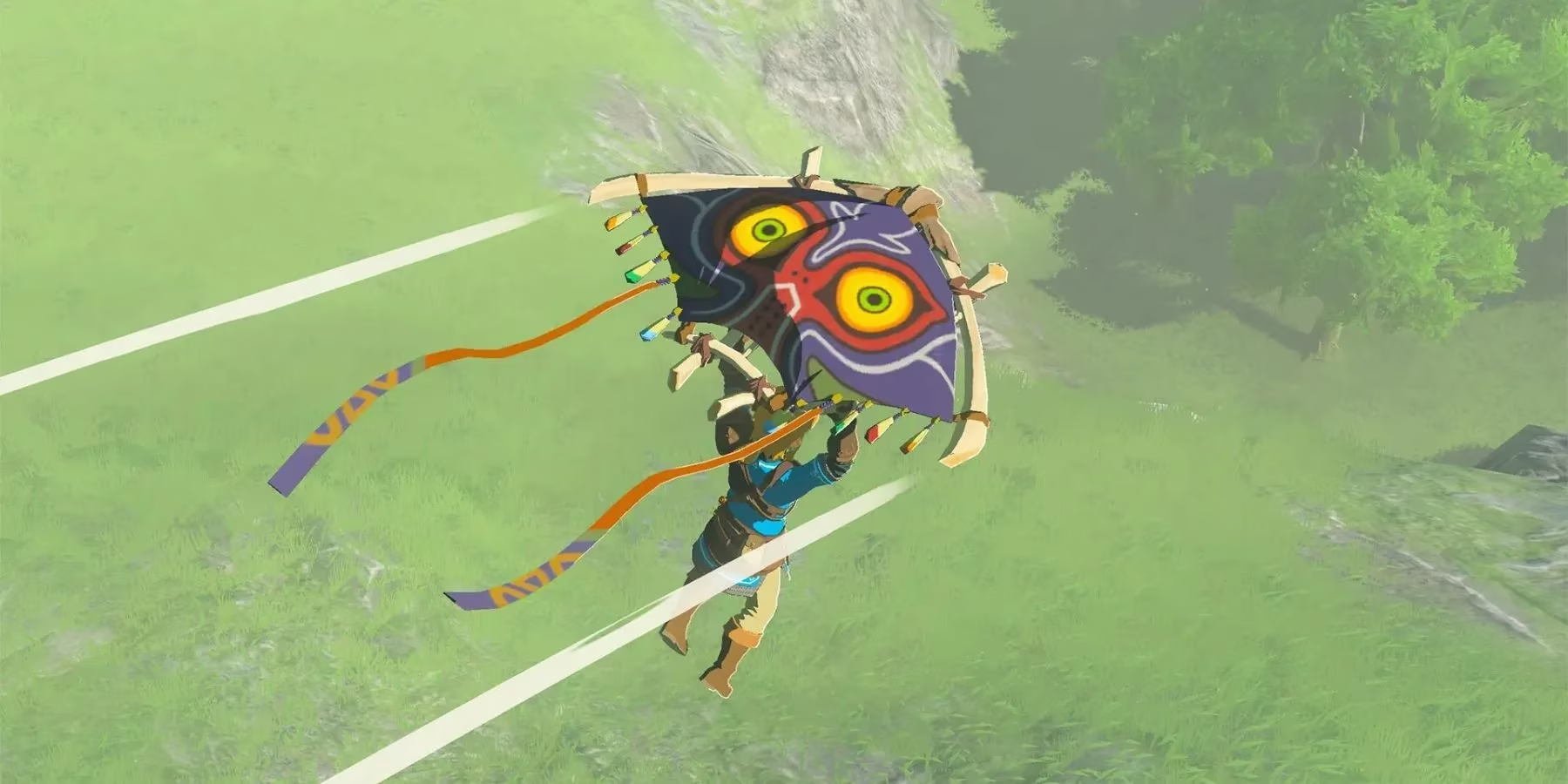
First off, both games are sequels that lean heavily on iteration rather than completely reinventing the wheel. It’s a risky move, but Nintendo pulled it off beautifully. Tears of the Kingdom is the only mainline Zelda title to reuse its predecessor’s entire map, yet the sky islands and the Depths make it feel brand new. Majora’s Mask did something similarly bold by recycling character models from Ocarina of Time and dropping them into an entirely different world called Termina. I always geek out when I see the Happy Mask Salesman’s face appear on a totally different character – it’s this weird, uncanny thing that makes the experience so memorable.
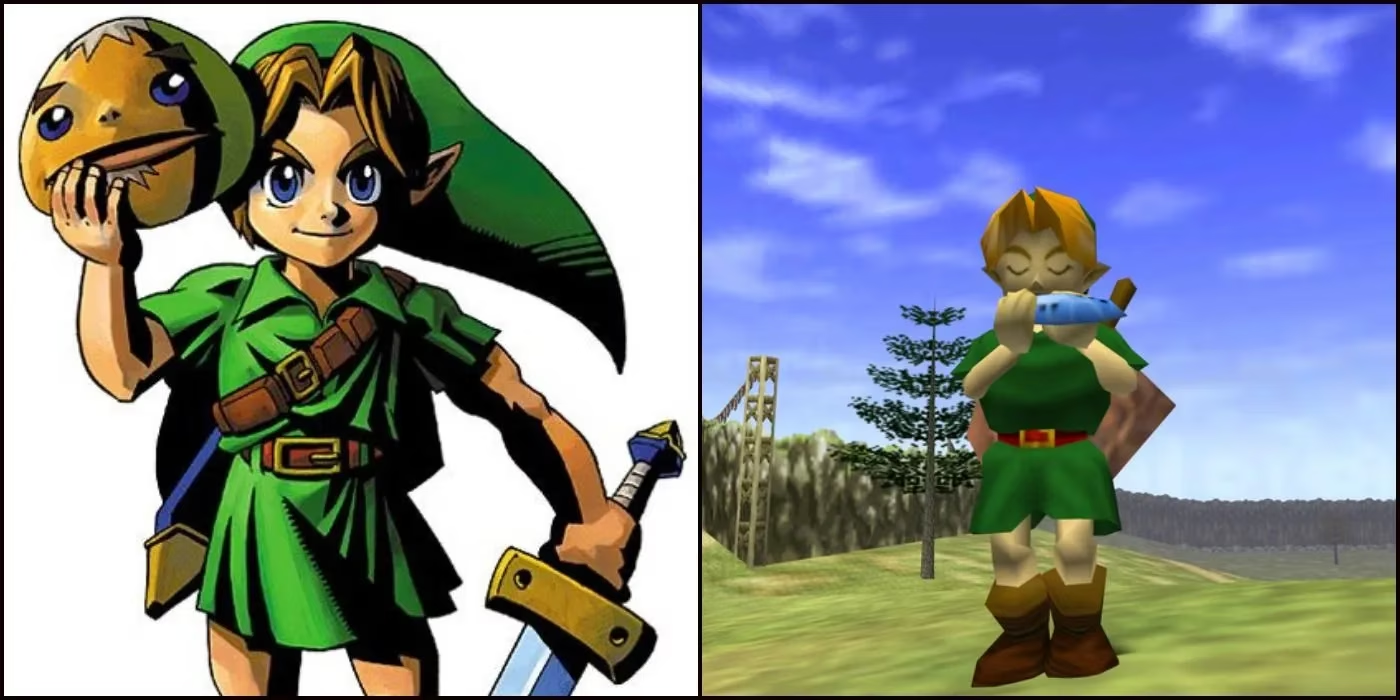
When you look at the core mechanics, the pattern of iteration becomes crystal clear. In Breath of the Wild, the Sheikah Slate gave us Magnesis, remote bombs, and the ability to manipulate the world. Tears of the Kingdom transformed those into Link’s arm powers, and Magnesis evolved into Ultrahand – a game-changer that lets you glue anything together. I can’t help but draw a line to how the Ocarina’s time travel and magical songs in Ocarina of Time got expanded into the three-day cycle and dozens of transformative masks in Majora’s Mask. Both sequels take existing ideas and twist them into something that defines their entire identity.
Something that really struck me is the way progression is structured. In Majora’s Mask, Clock Town acts as the central hub, with four distinct regions sprawling outward – each plagued by a unique crisis and each tied to a different tribe. You solve the dungeon, you get a transformation mask, and the area’s inhabitants react to your efforts. Tears of the Kingdom mirrors this almost perfectly. Lookout Landing is your Clock Town in 2026, and from there you venture into the four corners of Hyrule, each region dominated by a different race – Rito, Goron, Zora, and Gerudo. Complete the dungeon, and you earn a Sage’s power while watching the local community recover from the Upheaval. It’s such a neat, satisfying framework that connects both games across decades.
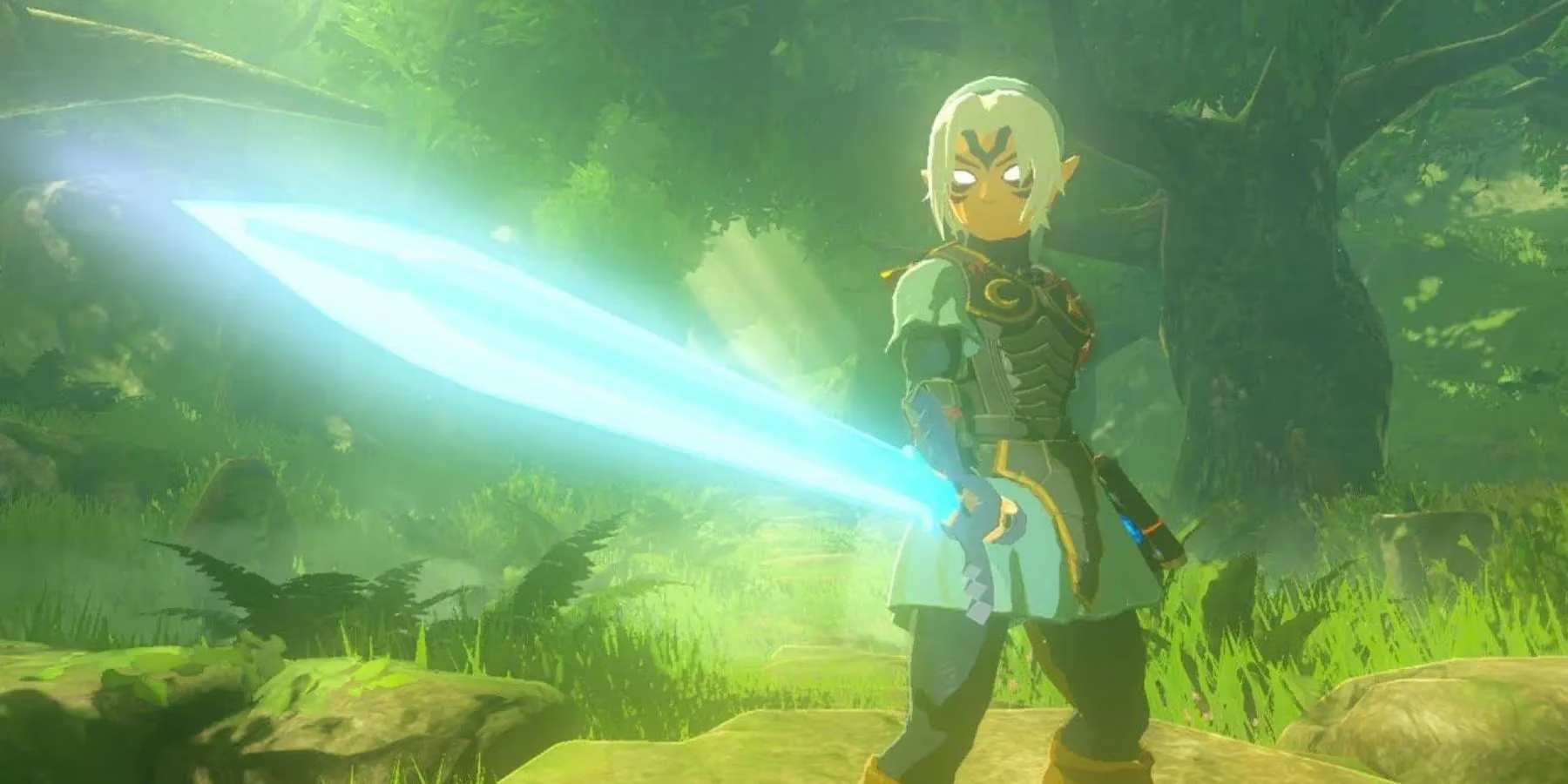
But the similarities don’t stop at the main quest. As someone who loves a good side story, I appreciate how both games treat optional content. Majora’s Mask is legendary for its side quests – they’re not just filler; they’re emotional, character-driven tales that weave together into a massive notebook full of heartbreak and hope. The mask rewards you collect along the way ultimately lead to the Fierce Deity’s Mask, one of the most powerful (and coolest) items in the series. Tears of the Kingdom might not reach that same narrative depth, but its Side Adventures and the Memories quest give you a similar reason to explore every nook of Hyrule. The reward system here is also spectacular – trek through enough caves and you can assemble the iconic Fierce Deity Armor set itself, a direct callback that literally links the two games.
Another less obvious thread is the way both games handle time travel. The time loop in Majora’s Mask forces you to rewind, learn, and master the schedule of an entire world. In Tears of the Kingdom, Zelda uses her time powers to manipulate key events, and Link’s recall ability lets him rewind object movement in the heat of battle. Time manipulation isn’t just a plot device; it’s baked into the gameplay, and that synergy is something I’ve really come to appreciate after revisiting both titles in 2026.
So here we are, three years after the launch of Tears of the Kingdom, and I still find fresh connections between it and Majora’s Mask. Whether it’s the shared emphasis on masks and transformation, the parallel world progression, or the sheer joy of side content done right, these two sequels stand as proof that Nintendo knows how to craft a follow-up that honors its roots while carving its own path. Even if you caught all these details on your own, I hope this stroll down memory lane reminds you why these games hold such a special place in our hearts.