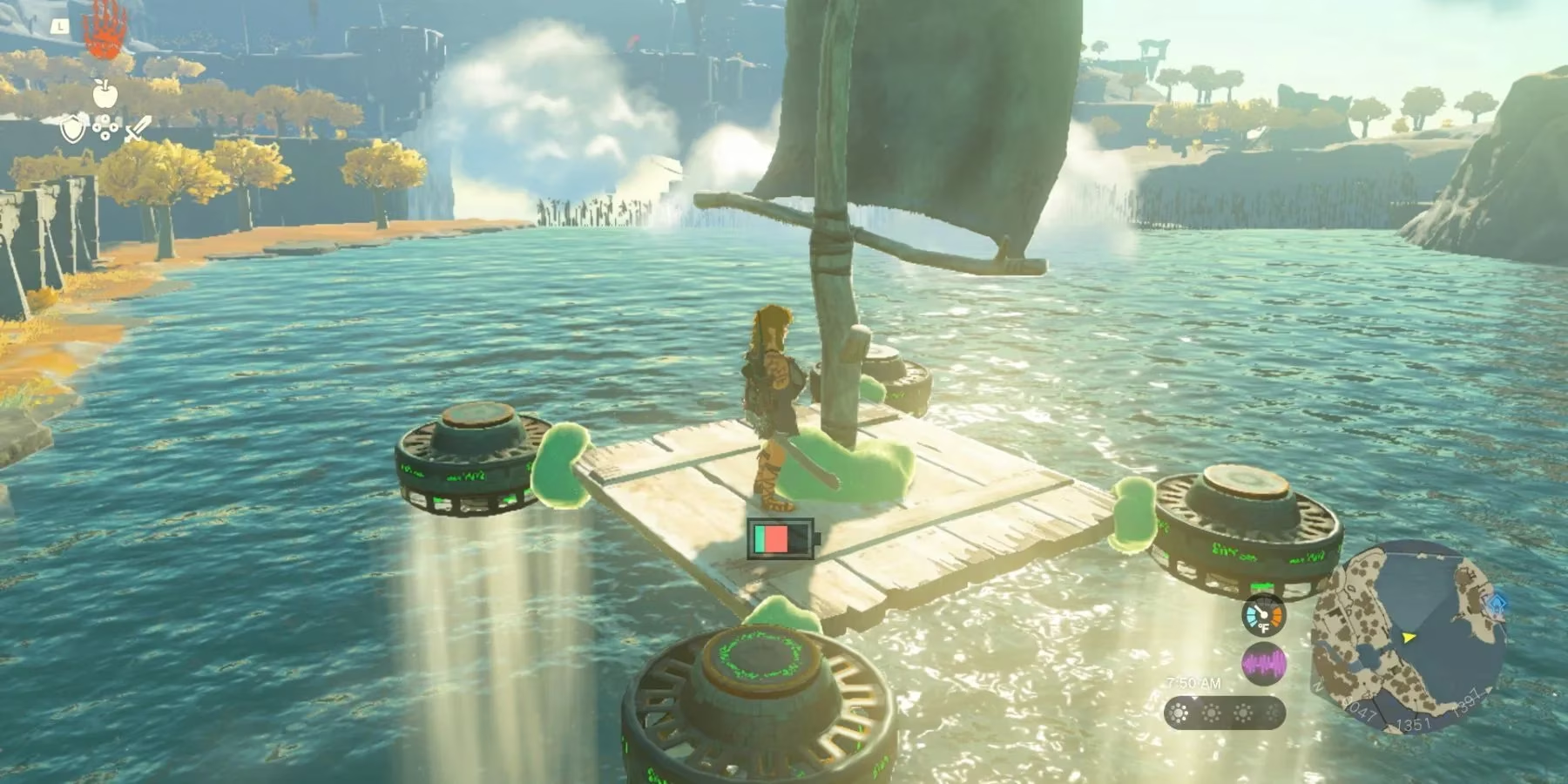
As the gaming world looks ahead to 2026, the legacy of The Legend of Zelda: Tears of the Kingdom continues to cast a long and formidable shadow. Following the revolutionary Breath of the Wild, Tears of the Kingdom proved that lightning could indeed strike the same kingdom twice, captivating millions with its Ultrahand, Fuse, Ascend, and Rewind abilities. These mechanics transformed Hyrule into a boundless physics playground, a creative crucible where player ingenuity became the most potent weapon. However, with Nintendo confirming that no DLC or direct sequels are planned and that the beloved Ultrahand will not return in the next title, a significant question looms over the horizon: how can the series maintain its newfound, chaotic soul while forging a distinct path forward? The developers have committed to continuing the open-world approach, meaning the next adventure must discover fresh, unpredictable systems to fill the void left by Tears of the Kingdom's on-the-fly crafting, ensuring moment-to-moment gameplay remains as vibrant and surprising as ever.
🔮 Borrowing from the Modding Community
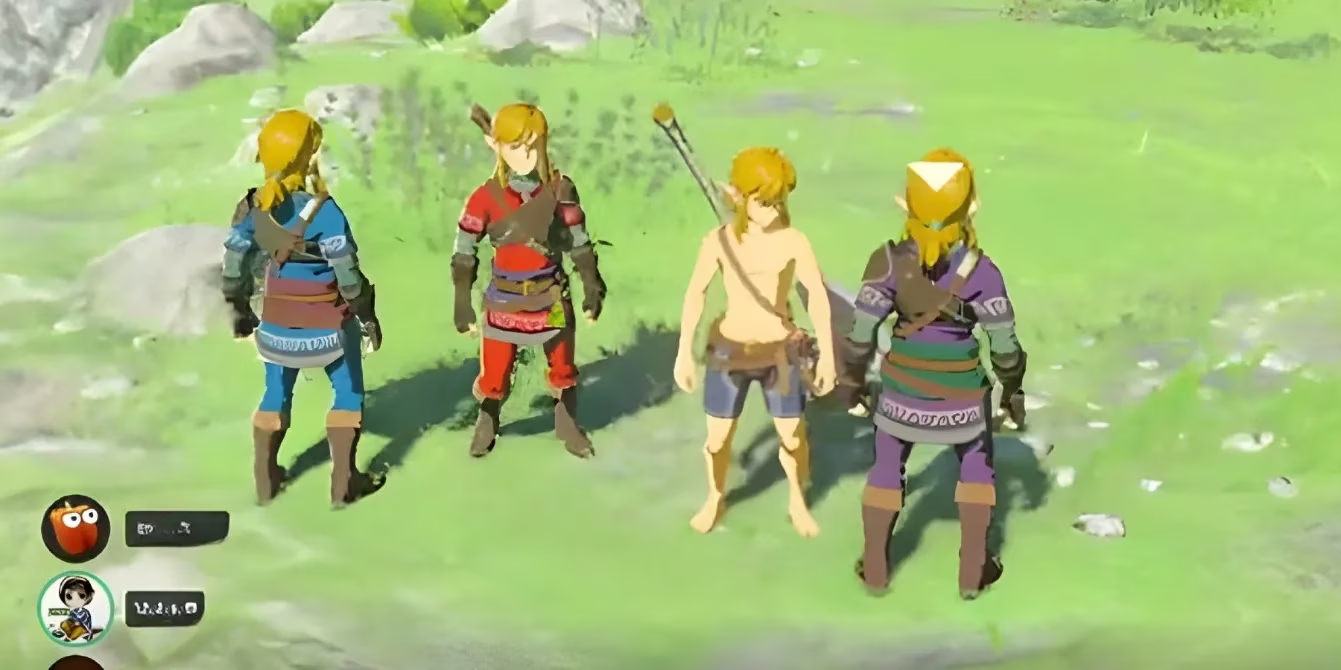
One fertile ground for inspiration lies in the vibrant world of fan-made modifications. For years, dedicated players have been experimenting with features that could be elegantly woven into an official experience. Multiplayer mods, for instance, have shown a persistent desire for cooperative play. A future title could integrate this in a campaign-friendly manner, perhaps finally making Princess Zelda a fully playable partner to Link in a mainline story—a move that would be as groundbreaking as the first 3D appearance of the Four Sword. Furthermore, the popularity of randomizer mods presents a compelling blueprint for replayability. These mods, which shuffle item locations and enemy placements, turn a familiar world into an ever-shifting labyrinth. An official iteration could incorporate such elements not just for post-game content but woven into the first playthrough through:
-
Dynamic World Events: Roaming mini-bosses or unpredictable weather phenomena that alter traversal.
-
Procedural Dungeon Elements: Certain shrine or dungeon layouts that shift, ensuring no two explorations are identical.
-
Evolving Enemy Encounters: Enemy camps that restructure and reinforce based on player actions.
This approach would make the world feel truly alive and reactive, a living ecosystem rather than a static map.
⚙️ Physics as a Permanent Foundation
Even without Ultrahand, the next game can and should double down on the intricate physics and property interactions that defined the last two entries. Breath of the Wild first delighted players with the ability to channel electricity through metal weapons or use fire to create updrafts. This systemic depth is a franchise cornerstone now. The next title could expand this into a more nuanced environmental reaction system. Imagine:
| Element | Potential New Interaction |
|---|---|
| Water | Creating temporary ice bridges that melt under heat, or using charged attacks to electrolyze water for puzzle-solving. |
| Wind | Manipulating sail-based vehicles or using gust arrows to redirect projectile attacks mid-flight. |
| Light | Using reflective surfaces not just for puzzles, but for stealth (casting shadows) or combat (blinding enemies). |
This would preserve the emergent "what if I try this?" spirit, making the world itself a toolkit. The crafting ethos of Tears of the Kingdom could evolve from freeform creation to contextual engineering, where players modify the environment or pre-existing structures with specific tools to overcome obstacles—like a locksmith creatively navigating a vault's mechanisms rather than building the vault door from scratch.
🏗️ The Evolution of Crafting and Building
While free, anywhere-anytime crafting may sunset with Ultrahand, its core concept can adapt. Weapon and vehicle modification could become a more deliberate, specialized activity. Picture visiting a Zonai Workshop or a Goron Forge where intricate crafting takes place, allowing for finer detail and more complex builds that would be cumbersome in the field. This could seamlessly dovetail with the introduction of persistent base-building mechanics. Establishing and defending a home settlement, like a restored Lookout Landing, could become a central pillar. Players could:
-
Recruit NPCs with unique skills (blacksmiths, farmers, scouts).
-
Construct defenses that utilize learned physics and elemental properties.
-
Craft specialized vehicles or gear from a home-base workbench.
This system would channel player creativity into a lasting legacy within the game world, a permanent monument to their journey. It would be an echo of Tears of the Kingdom's freedom, but focused, like a sculptor moving from freehand clay modeling to constructing a detailed architectural model.
🗡️ The Renaissance of Traditional Items
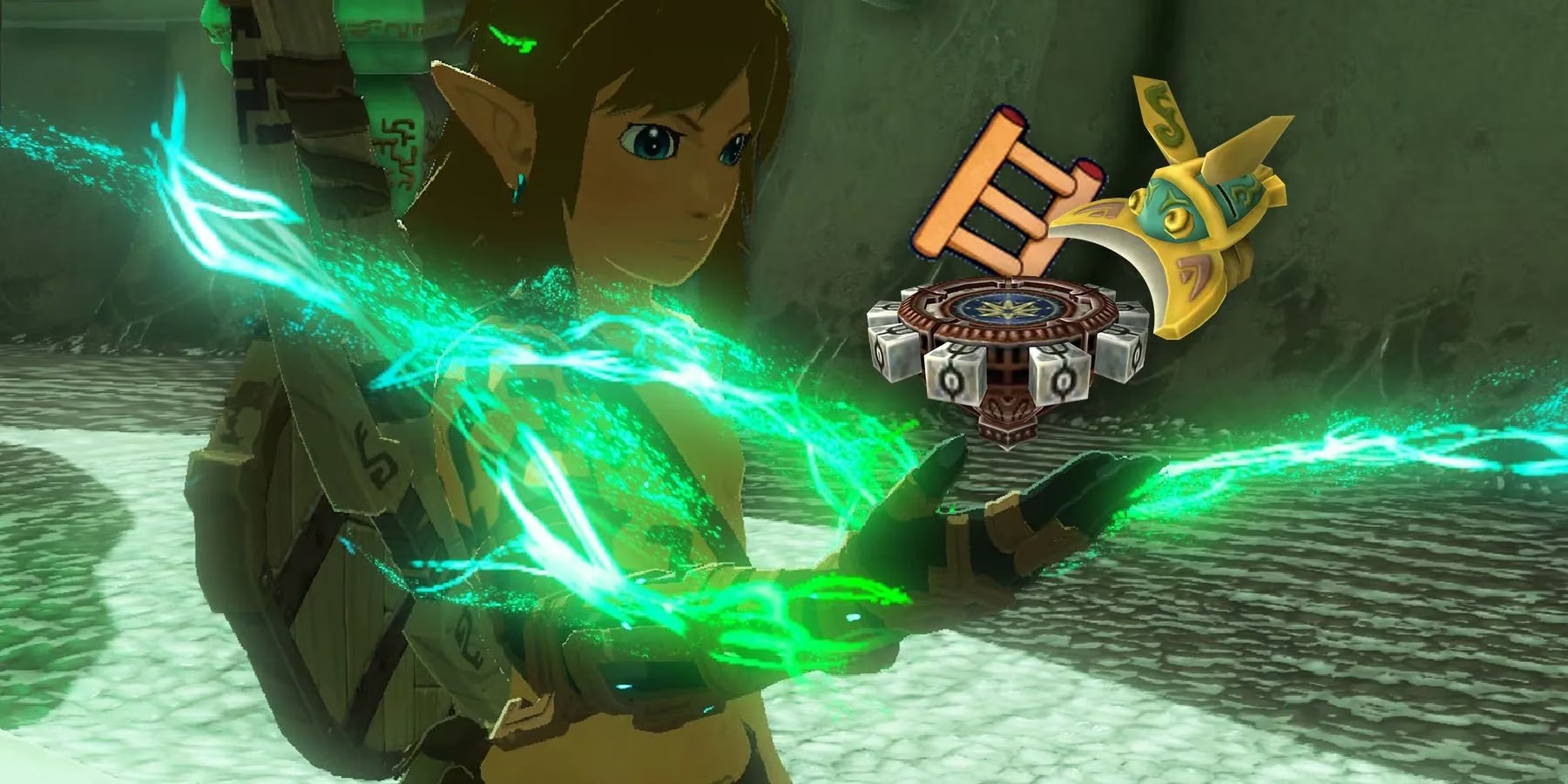
Perhaps the most exciting prospect is the modernization of classic Zelda items by infusing them with the open-ended philosophy of Tears of the Kingdom's powers. The next game could perform a magnificent synthesis, bringing back beloved tools and supercharging them with systemic depth. The result would be a toolkit as versatile as Ultrahand, but rooted in iconic fantasy. Consider these possibilities:
-
The Bow & Fuse 2.0: Retaining TotK's attachment system while adding classic ammunition like Thief's Rope Arrows for creating ziplines or Seed Arrows that sprout into temporary bounce pads or climbable vines.
-
Reimagined Bombs: Beyond simple explosions, bombs could create localized slow-time fields for puzzle-solving, anti-gravity bubbles to lift objects, or even implosion devices with a vacuum effect.
-
The Spinner's Return: This Twilight Princess item could return not just for rail grinding, but to enable a double jump or allow Link to ride vertical surfaces like a half-pipe, turning walls into new avenues of traversal.
-
The Double Clawshot: Combined with the now-standard climbing and gliding, this tool would enable breathtaking, pinpoint-accurate aerial maneuvers, making navigation a fluid, joyful dance.
Acquiring these items in a non-linear order would further personalize each player's adventure. The hole left by Ultrahand wouldn't just be filled; it would be transformed into a treasure chest overflowing with new, yet familiar, possibilities. The next Legend of Zelda faces the daunting task of following an act that many considered unfollowable. Yet, by looking to its community's innovations, deepening its physical world, refining its creative systems, and resurrecting its classic arsenal with a modern twist, it can craft an experience that feels both reassuringly familiar and thrillingly new. The goal is not to replicate the beautiful, chaotic sandbox of Tears of the Kingdom, but to plant its seeds in different soil and cultivate a garden of unpredictable wonder all its own—a world where mystery doesn't end when the credits roll, but evolves with every player's touch.