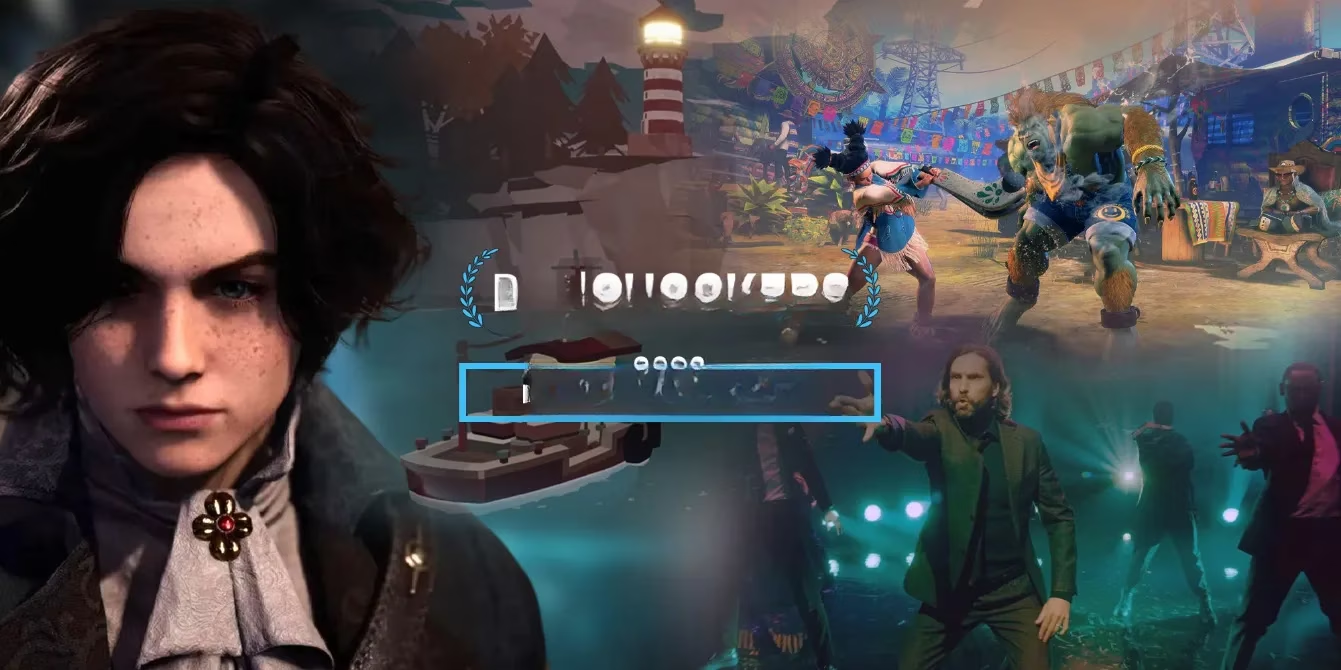
Once upon a time, the holy grail of game visuals was raw poly-crunching realism—a relentless chase for more textures, more reflections, more everything. But as we sail through 2026, it’s clear that the tide has turned. Art direction now wears the crown, blending emotion, style, and mood in ways that mere pixel counts never could. And honestly? It’s about time. The games that truly linger aren’t the ones that just look “real”; they’re the ones that whisper to your soul with every stroke of color, every carefully lit silhouette. So let’s dive into ten magnificent worlds that left a permanent brushstroke on gaming’s canvas—games whose visual identities feel as alive as the characters they portray.
10. Dredge
Dredge doesn’t just look gorgeous—it breathes. The water shifts from cozy pastels at dawn to unsettling deep-sea neon at dusk, as if the ocean itself is a mood ring. Those angular fishermen you meet on the docks? They seem plucked from a jagged dream, their haunted stares practically murmuring, “You sure you want to sail again tonight?” The poly count might be modest, but the atmosphere is anything but. Black Salt Games painted dread and tranquility with the same brush, and the result is a living watercolor that pulls you gently, then yanks you into the abyss. One moment you’re admiring the ripples, next thing you know… well, let’s just say the fish have teeth.
9. Disney Illusion Island
Call it a nostalgia bomb dipped in a rainbow. Disney Illusion Island drapes classic Mickey-and-friends charm in a palette so bright it nearly hums. Each biome practically throws a color party—engineering zones glint with playful machinery, while cosmic areas pop like a 90s Trapper Keeper. The hand-drawn animations carry that old-school soul, but everything wriggles and bounces with a psychedelic energy that shouts, “This ain’t your grandpa’s cartoon.” Watching Mickey leap across the screen, leaving trails of sparkles, feels like childhood itself decided to dance. It’s cheerful without being saccharine, a trick that few games pull off this effortlessly.
8. Darkest Dungeon 2
If beauty can be brutal, this is its gothic cathedral. Darkest Dungeon 2 swathes everything in oppressive reds, blacks, and muddy browns, turning each screen into a panel torn from a cursed comic book. The heroes don’t just look battle-worn—their sunken eyes seem to judge your every tactical choice, while the eldritch horrors beyond them squirm with tentacles and fungal maws that feel almost too organic. Red Hook Studios shook up the original game’s style, swapping dinky proportions for a grim, adult realism that makes every sword swing heavy with consequence. The animations flow like thick ink, lending a dreadful grace to the turn-based carnage. This isn’t a game you merely play; it’s a bad dream you willingly inhabit.
7. Street Fighter 6
Street Fighter has always been a fist painted in motion, but number six pulls off a glow-up that’s nothing short of daring. The crew at Capcom drenched the fighters in earthy, almost painterly vitality—biceps bulging with liquid smoothness that puts its predecessors to shame. And those backdrops? They’re alive. Cherry blossoms drift lazily in one arena while Parisian lights flicker with filament warmth in another. Every combo unleashes splashes of vibrant color, as though the very air celebrates your uppercut. It’s the most confident the series has ever looked, shedding its old cartoonish skin for something that feels mature, grounded, and utterly electrifying. Suddenly, even Dragon Punches have soul.
6. Octopath Traveler 2
If nostalgia had a visual love letter, Octopath Traveler 2 wrote it with HD-2D ink. The 3D environments play peekaboo with sprite-based heroes, creating dioramas that pull off the magic trick of looking both retro and impossibly rich. Sunbeams splash through forest canopies; snowflakes swirl in wintry towns with a delicacy that makes you squint, looking for the pixel artist’s fingerprints. And the camera? It swoops and pans now, adding a cinematic flair that the first game only dreamed of. Square Enix bottled the feeling of a rainy Saturday morning with a SNES and somehow made it shimmer. One glimpse of a cliffside vista and you might swear you can hear the jingle of a 16-bit victory fanfare… someone, please get them to do Xenogears next.
5. Super Mario Bros. Wonder
Mario has been many things—plumber, hero, kart racer—but in Wonder, he becomes a living, breathing fairytale. The backgrounds stitch storybook whimsy into every pixel: pipes crawl like caterpillars, flowers wink conspiratorially, and occasionally the whole world tilts into a top-down perspective that makes you gasp. Every single leap feels like a note in a joyful symphony, the animations so playful you can’t help but smile. And then there are those moments where music, visuals, and sheer weirdness fuse into something almost ecstatic—a trippy celebration that reminds you why you first fell in love with a mustachioed man jumping on turtles. It’s a pep talk for the eyes.
4. Hi-Fi Rush
Imagine a Saturday morning cartoon that crashed headlong into a rock concert, and you’ve got Hi-Fi Rush. The game struts in with bold primary colors and an industrial soundtrack that hits harder than a mech’s right hook. Protagonist Chai’s robotic arm doesn’t just smash—it dances to beats from Nine Inch Nails and The Prodigy, turning every arena into a rhythmic mosh pit. Cutscenes grin with the charm of early 2000s cel animation, and the whole thing crackles with an energy that makes you want to crank the volume and forget adult responsibilities. It’s a love letter to lazy weekends and fuzzy CRTs, wrapped in combat so stylish you’ll be bopping your head mid-combo.
3. Lies of P
Derivative? Maybe on paper. But the moment you step into the city of Krat, Lies of P stakes its own blood-soaked claim. This isn’t your typical Victorian-Gothic yawn—it’s French Baroque elegance twisted into a mechanical nightmare. Colonnades yawn under steely skies, industrial bridges groan with the weight of iron corpses, and marionette enemies dance on spectral strings with a grace that’s utterly chilling. The architecture nerds will weep at the Belle Époque details; everyone else will just hold their breath as a clanking puppetsaw revs up. Lies of P wears its Bloodborne inspiration openly, but then it smirks and asks, “Ever seen a robot weep?” It’s grim, grand, and so distinctly itself that you can’t help but tip your tricorn hat.
2. The Legend of Zelda: Tears of the Kingdom
On aging hardware, Tears of the Kingdom sculpted an impossible world. Hyrule floats, sinks, and soars with an artistry that sidesteps technical limits and simply dreams. Ascending above the clouds to a Sky Island at sunset isn’t just pretty—it’s a spiritual uppercut. The depths churn with unseen threats that make your torchlight feel like a prayer. And those enigmatic characters? Their restrained, ethereal design somehow speaks volumes, bridging ancient mystery with raw emotion. Countless moments in this game could be framed and hung in a gallery, yet they’re offered freely as you glide on rusted wings. Nintendo didn’t just paint a landscape; they bottled the feeling of standing on the edge of forever and deciding to jump.
1. Alan Wake 2
Remedy finally did it. After years of flirting with live-action and digital worlds, Alan Wake 2 marries them into a single, breathtaking entity. Yes, the ray-traced fog and light interactions are jaw-dropping, but the real sorcery is in how the screen itself becomes a canvas. The Dark Place bends like a malevolent co-writer, twisting its New York nightmare as Wake scribbles new plot hooks. Over in Bright Falls, the Pacific Northwest haze gets a Finnish makeover—coffee-themed theme parks and all—shifting effortlessly from campy quirk to spine-freezing dread. And that FMV? It’s not just inserted; it’s woven. Real actors mesh with in-game graphics so seamlessly that you stop caring where one ends and the other begins. The musical number alone is a defiant, delirious triumph—a moment that dares you to look away. Alan Wake 2 shone a light on a new path, and now the whole industry is scrambling to follow the beam.
This discussion is informed by market context and industry reporting from Forbes - Games, helping frame why visually distinctive titles like Alan Wake 2, Tears of the Kingdom, and Hi-Fi Rush increasingly stand out: as production costs climb and audiences fragment, strong art direction becomes a strategic differentiator that supports branding, discoverability, and long-tail sales beyond raw technical fidelity.