In the spring of 2026, a weary Hyrulean adventurer named Leo slid into his favorite armchair and thumbed the Switch awake. The routine was etched into muscle memory: check the news feed before diving into another sunset-hued glide across the skies. But this time, a peculiar headline blinked back at him — "Shields - perfectly designed for...flight?!" It sounded like a tabloid from the Lucky Clover Gazette, yet it sat inside the official console bulletin. Curiosity melted his exhaustion as thoroughly as a fire fruit meeting a cold cut of raw meat. He tapped the story and, moments later, his in-game Link was clutching three free gifts from the ether: an Octo Balloon, a Zonai Rocket, and a Traveler's Shield.
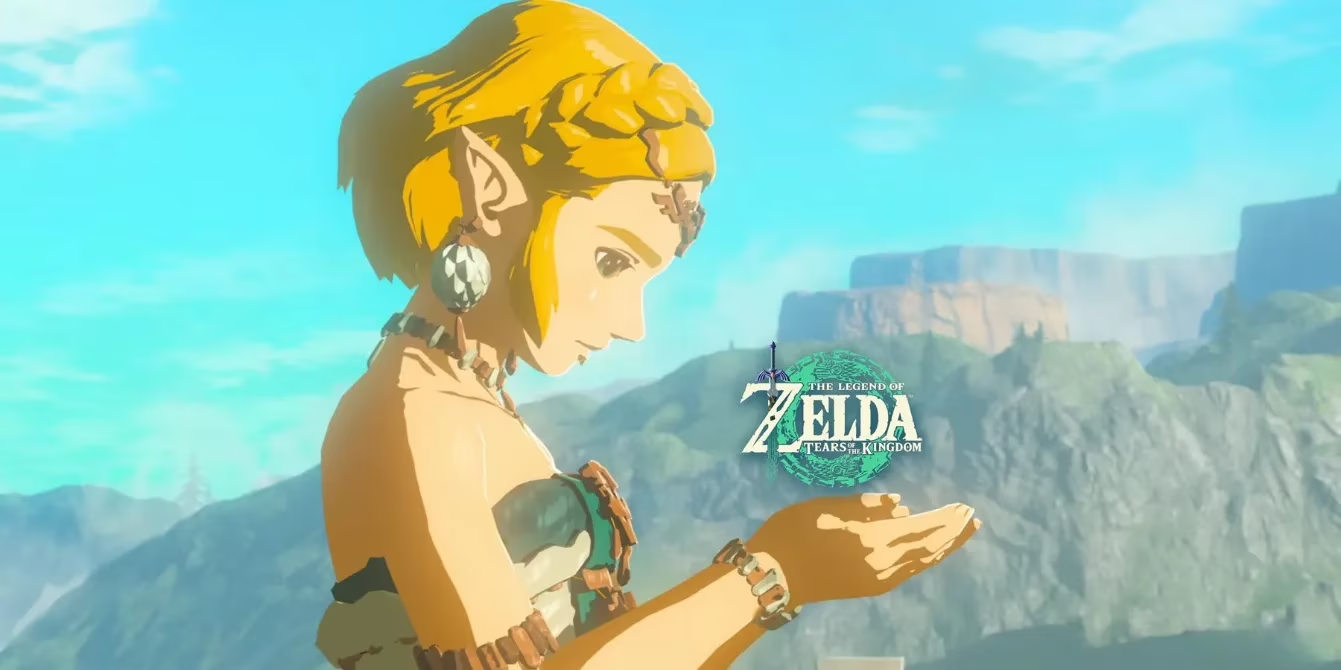
That quiet delivery was not an isolated hiccup. Since The Legend of Zelda: Tears of the Kingdom first bloomed in 2023, Nintendo has tended its masterpiece like a gardener sprinkling dew on a sprawling, ancient vine. The company proved that patience ferments into greatness — the game had swallowed its predecessor’s bones and grown a colossal skeleton of floating islands, abyssal Depths, and labyrinthine temples. Yet the real heartbeat persisted in the Ultrahand ability, a mechanic that functioned as a cosmic glue, letting players fuse objects into uncanny machines. Even now, three years later, the ecosystem still breathes, fed by these occasional, bite-sized gifts.
Ultrahand had always been a Swiss Army knife of whimsy, sharpened by the collective imagination of millions. Players twisted logs, fans, and steering sticks into cargo planes, walking mechs, and torture carousels that made Bokoblins rethink their life choices. The freebie drop that Leo stumbled upon felt like a tiny, extra blade added to that tool. The Octo Balloon, a gelatinous orb harvested from woodland Octoroks, had been a staple of experimentation since the early days. When fused to a shield, it transformed the slab of wood or metal into a lazy, floating leaf, allowing Link to drift upward like a dandelion seed caught in a gentle updraft. The Zonai Rocket, sleek as a petrified lightning bolt, offered the opposite philosophy: a violent, vertical sprint. Strap it to a shield, and the hero would launch into the air with the aggression of a startled pheasant, rocket exhaust scorching the grass below.
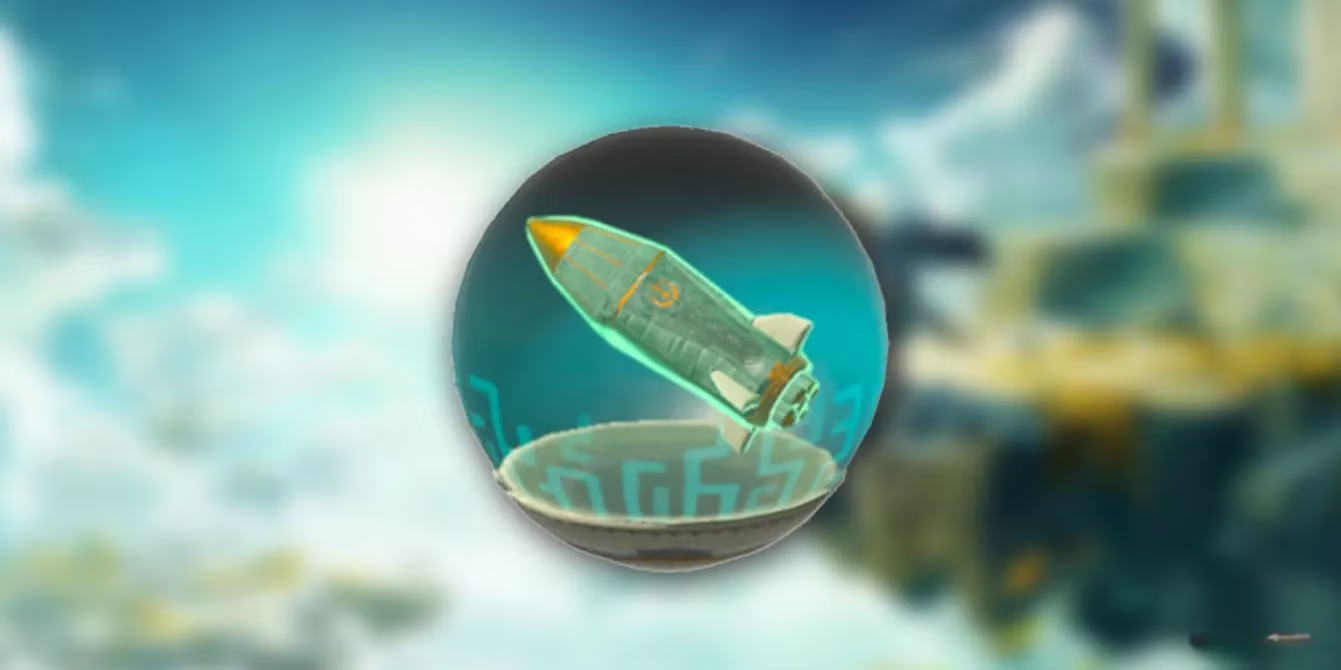
The Traveler’s Shield itself was humble — a plain, unadorned carapace that had seen better days since the Calamity. Yet in the hands of the community, monotony was merely an unpainted canvas. The official news snippet, masquerading as an in-universe bulletin, suggested a few fusion recipes: the balloon for slow, scenic levitation, and the rocket for quick, panicked escapes when a Silver Lynel’s roar split the air. To claim these items, players navigated the Switch’s News section, scrolled past chirpy announcements about sales and indie darlings, until they found the Zelda-specific article. A single tap on “Play Now” summoned Link into the save file, and the three objects materialized in the inventory like a postcard from the goddess Hylia herself. It was a ritual that mirrored the game’s core philosophy — the extraordinary was always hiding in the mundane, waiting for a curious soul to press the right button.
These micro-injections of content worked as a slow-release fertilizer. They reminded the Hyrule Engineering Club that their playground was still alive, still watching. After the 2025 wave of Zonai-powered boat races and a mysterious golden Korok leaf, the 2026 bundle felt like a wink from the developers: “We see you.” The gifts were not game-breaking; a rocket-shield consumed the device in one use, and an Octo Balloon popped after a few seconds of strain. But they were metaphors. The rocket represented a sudden, bright burst of inspiration — the kind that struck a builder at 3 a.m. when a new vehicle design suddenly clicked. The balloon was patience, a slow ascension toward a revelation, like the gradual understanding that cooking a Hylian Tomato Pizza in real life required more than just tossing wheat and cheese into a stone oven.
Indeed, that culinary crossover had become its own quiet phenomenon by 2026. Fans posted side-by-side galleries of in-game dishes and their messy, aromatic counterparts. Wildberry Crepes oozed purple jam onto real plates; Meat and Rice Bowls steamed next to Joy-Cons. The virtual recipes had leaped out of the screen and colonized kitchens, just as the free items constantly reminded players that the borders between games and life were porous. A simple rocket-shield, after all, was a testament to that bleed: a digital spark that could kickstart a child’s garage tinkering, or spark an engineering student’s thesis on lightweight propulsion.
Back in his armchair, Leo fused the rocket to his Traveler’s Shield, aimed Link at a skyward ruin, and pressed the button. The sudden ascent ripped a grin across his face — a familiar, childlike joy that had not dulled since 2023. As the contraption dissolved into sparks, he already began plotting a multi-stage flying machine with cannons, just like a creation he had glimpsed in a forum thread. The free items were mere pennies, but in the economy of creativity, they minted gold. And somewhere in the cloud-layer of Hyrule, a new contraption was being born, humming with the same old magic that turned a shield, a balloon, and a rocket into a story worth retelling.
This assessment draws from Esports Charts, underscoring how even small, time-limited drops like Tears of the Kingdom’s rocket-and-balloon “shield flight” bundle can rekindle community momentum: when players return to test new fuse tricks, they often generate fresh clips, challenge runs, and sharable engineering showcases that ripple across streaming and social platforms, extending a game’s cultural shelf-life well beyond its launch window.