I wander, a digital soul adrift in sprawling landscapes, and my greatest joy is not the grand quest, but the simple, profound act of turning a doorknob. The promise of an open world is hollow if its walls are merely painted backdrops. True immersion, for me, lies in the invitation—the silent, persistent invitation to cross a threshold and inhabit a space. A castle’s grandeur means little if I cannot pace its drafty halls; a city’s shimmer is a cruel joke if its neon-lit doors are all locked. I seek those rare worlds, crafted with a particular, almost obsessive generosity, where the architecture is not just scenery but sanctuary, puzzle, and archive. Where most buildings, from the humblest shack to the most imposing spire, yield their secrets to a curious touch. This is my chronicle of those generous realms, a personal testament to the art of the accessible interior, as it stands in the gaming world of 2026.
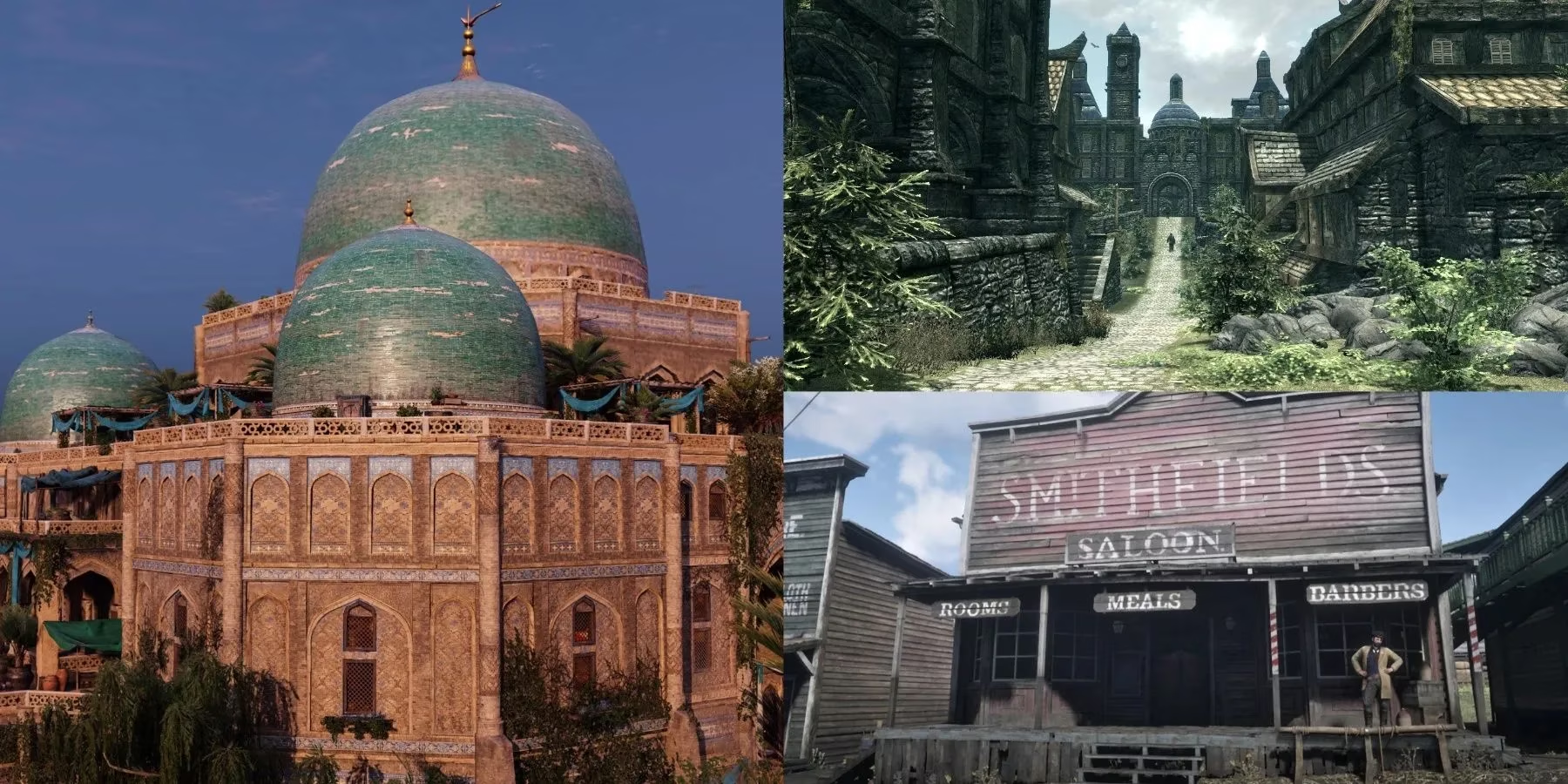
🏰 The Architects of History: Assassin's Creed: Mirage
My journey often begins in the past, and no series has made history feel more tangible. The Assassin's Creed worlds are palimpsests of human endeavor, and climbing their every surface is a thrill. But the true magic happens when I descend from the rooftops and step inside. In Mirage's rendition of Medieval Baghdad, the air itself feels thick with forgotten scholarship and intrigue. Yes, I can scale any wall, but the reward is entering places like the legendary House of Wisdom or the Palace of the Green Dome. To stand in a digital reconstruction of a library that shaped the world, or beneath a dome that history has erased, is a quiet, powerful form of time travel. These are not just landmarks; they are playable museums, their interiors brimming with stories that a mere facade could never contain.
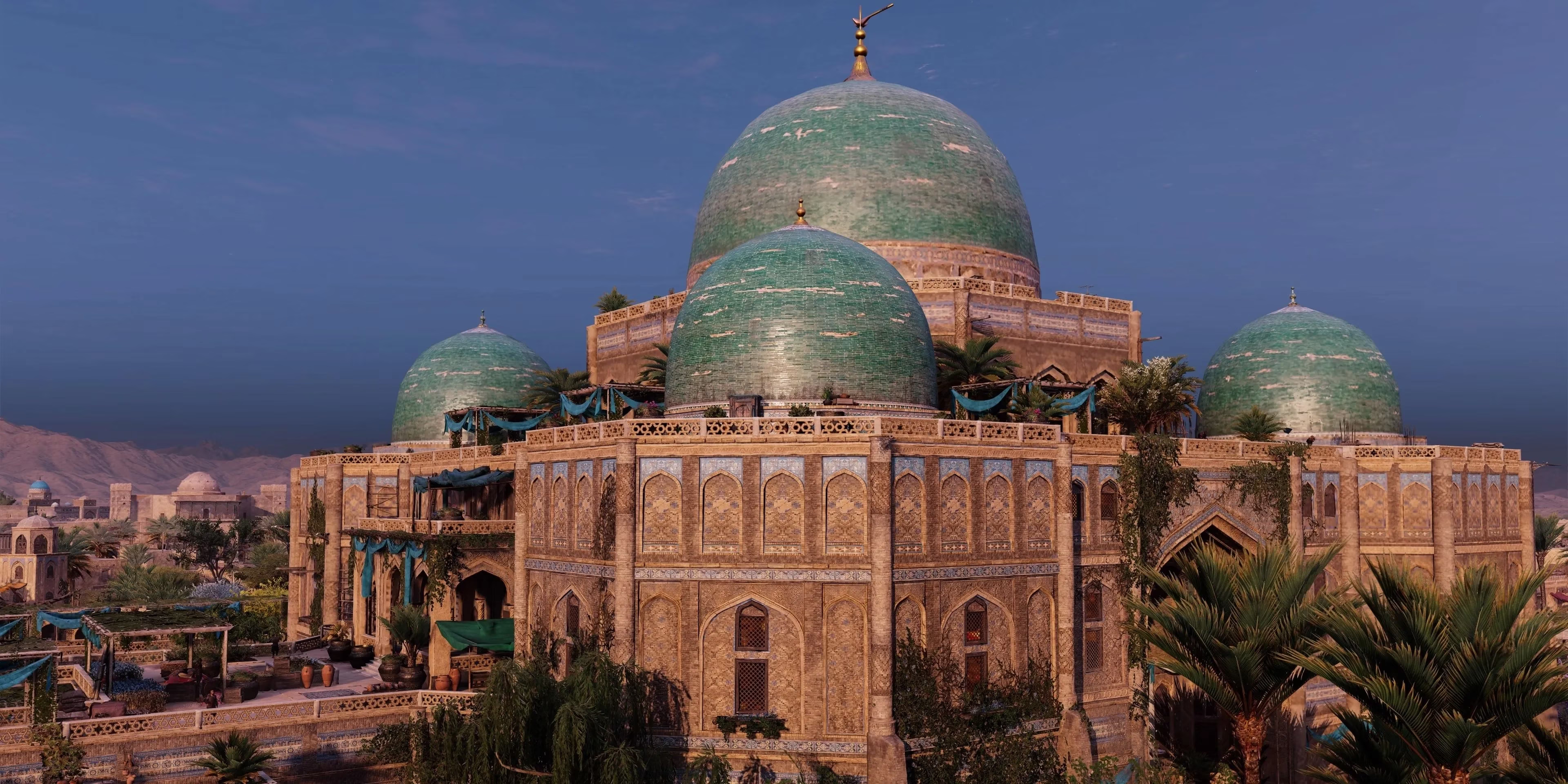
✨ The Builder's Canvas: Disney Dreamlight Valley
Then, there are worlds born not just of exploration, but of creation. Disney Dreamlight Valley presents a different kind of openness: every charming building is not only accessible but, in most cases, built by my own hands. The satisfaction is profound and personal. I gather resources, I save Star Coins, and I place the foundations for a friend’s home. Once the roof is on, that space becomes part of our shared story. I can walk in, rearrange the furniture, and bask in the cozy glow of a space I manifested. The only gentle rule? Respect the villagers' sleep. This world’s openness is an act of communal care; the interiors are the direct result of my labor, making each unlocked door feel like a personal achievement.
🌃 The Labyrinth of Neon: Cyberpunk 2077
From pastoral magic, I plunge into the vertical chaos of Night City. For all its initial turbulence, Cyberpunk 2077’s greatest legacy is its dense, multi-layered urban jungle. The skyline is a promise, and the game, in its current evolved state, largely keeps it. V’s life as a mercenary takes me through a staggering array of interiors:
-
Megabuilding Apartments: Cluttered, lived-in capsules of urban despair or ambition.
-
Corpo Offices: Sterile, high-altitude dens of power and betrayal.
-
Back-alley Clinics and Ripperdocs: Where chrome meets flesh under flickering lights.
-
After-hours clubs and bars: Each a unique biome of sound, style, and danger.
Most buildings serve a purpose, be it a story mission, a side gig, or a strange cyberpunk service. I’ve bargained in markets buried in alleyways and fought for my life in luxury penthouses. The city feels alive because its buildings are organs—functional, grimy, and often perilously accessible.

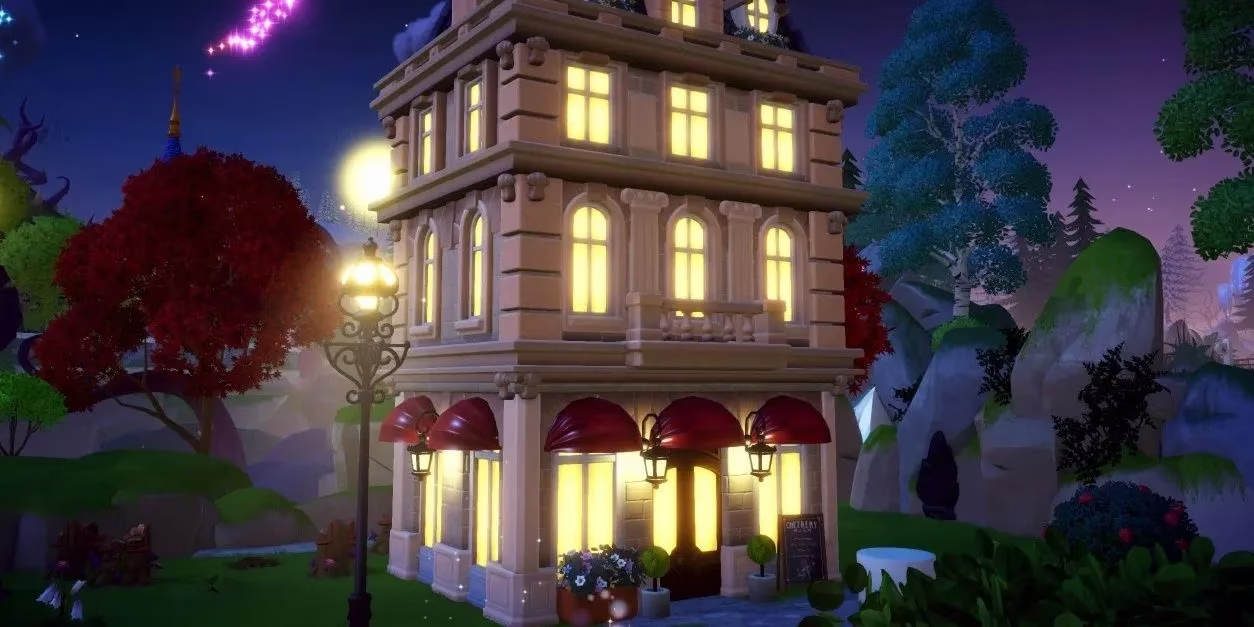
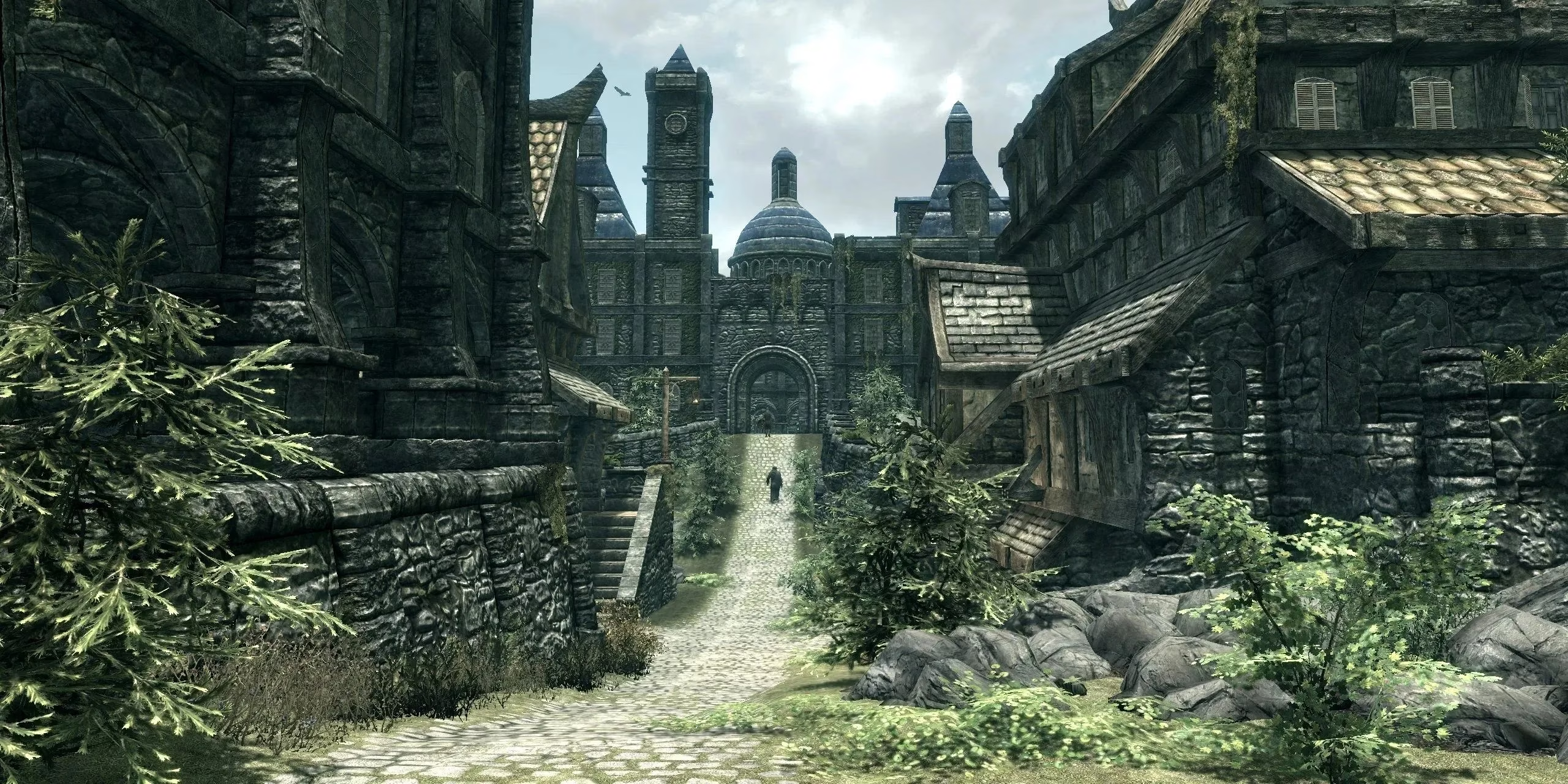
🐉 The Standard-Bearer of Exploration: The Elder Scrolls V: Skyrim
Ah, Skyrim. Even now, years later, it remains the benchmark. Bethesda crafted a world where my compulsion to explore is met with almost universal reward. The philosophy is simple yet revolutionary: if you see it, you can probably enter it. The variety alone is breathtaking:
| Type of Building | Examples | How to Enter (Often) |
|---|---|---|
| Civilian | Houses, Inns, Shops | Walk in, Pick a Lock, Get Invited |
| Institutional | Temples, Jarl's Longhouses, The Blue Palace | Walk in, Complete a Favor |
| Academic | The College of Winterhold | Pass an entry test |
| Military | Fortresses, Barracks | Fight your way in, Sneak |
| Ancient | Dwemer Ruins, Nordic Tombs | Discover the entrance, Often puzzle-locked |
Not all welcomes are warm. Some doors require a deft pick, a stealthy approach under cover of night, or a willingness to face draugr in the dark. But the attempt is rarely futile. Every interior holds potential: a hidden chest, a unique book, a side quest whispered by a resident. The world feels coherent and complete because its buildings are integral, lived-in spaces, not just set dressing.
☢️ The Ruins of Tomorrow: The Fallout Series
This design ethos extends to the atom-blasted wastes. The Fallout series, particularly from 3 onward, understands that post-apocalyptic storytelling happens indoors, amidst the rubble of the old world. Fallout 4, with its vast Commonwealth, is a masterclass in this. Nearly every crumbling facade hides a story:
-
Pre-War Buildings: Frozen moments of tragedy or mundane life.
-
Raider Strongholds: Gaudy, dangerous monuments to tribal power.
-
Secret Institutes: Sanitized halls hiding humanity's future (or doom).
Entering a building is an act of archaeology. I piece together the final days from terminal entries, skeleton placements, and environmental clues. The challenge is often twofold: getting past the door (which may be rusted shut, trapped, or guarded by mutants), and then surviving what lurks within. The reward is a visceral connection to the world’s history and a trove of supplies for surviving its present.

🤠 The Living Frontier: Red Dead Redemption II
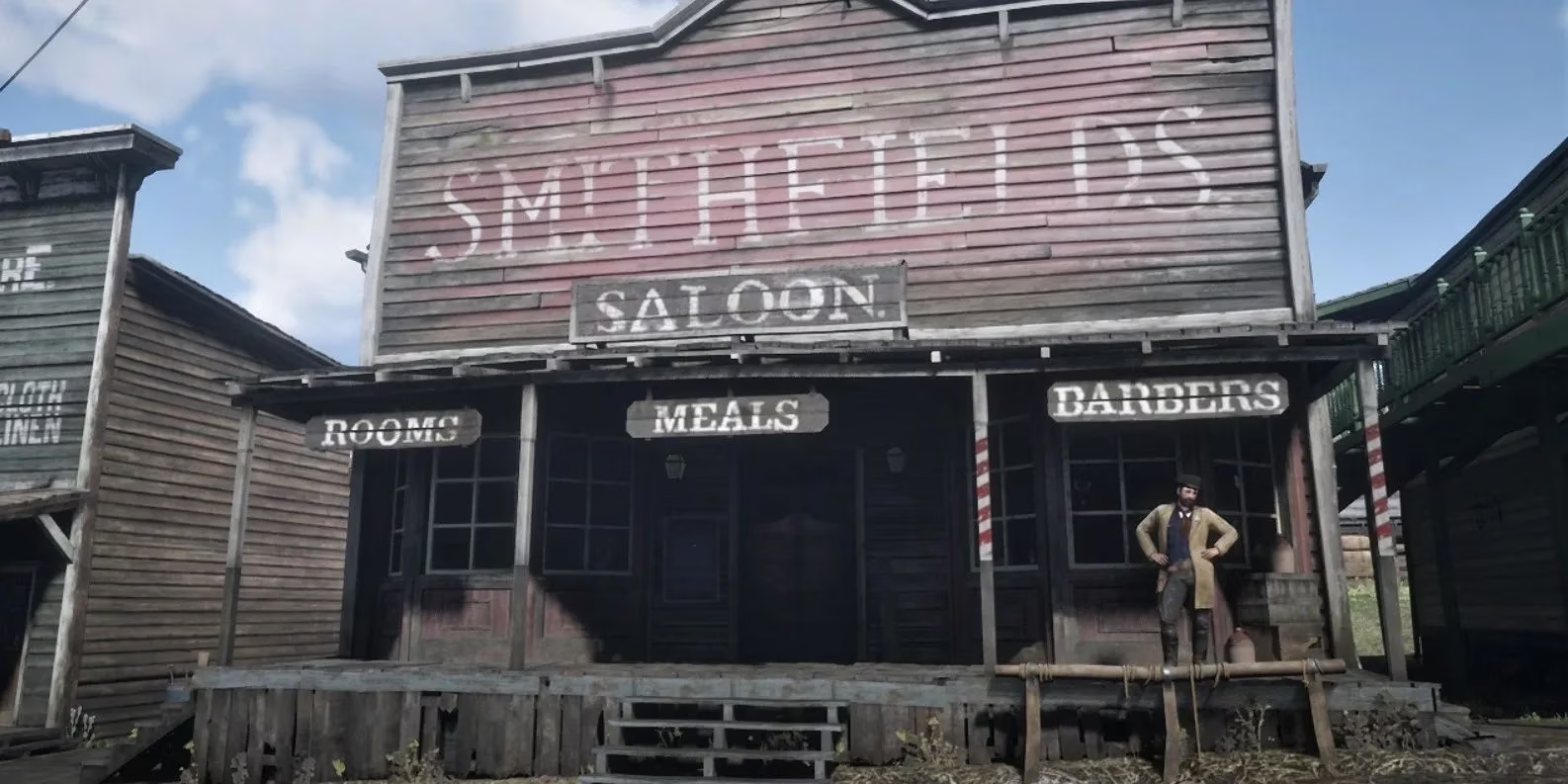
Rockstar’s epic western trades verticality for horizontal grandeur, and its buildings are anchors of civilization in the wild. From the muddy streets of Valentine to the opulent, gas-lit avenues of St. Denis, the world is dotted with structures that beg to be visited. The genre demands it: what is a western without saloons, banks, and general stores?
-
Saloons: For drinking, gambling, and inevitably, brawling.
-
Shops: For outfitting my character and my camp.
-
Homes & Plantations: Stages for drama, heists, and tragic gunfights.
-
Strange Shacks: Often hidden, holding macabre or humorous easter eggs.
Many buildings have no direct plot purpose, yet I can enter them anyway. I can watch a silent movie in a theater, get a haircut, or simply sit in a stranger’s parlor. This commitment to incidental space makes the world feel authentically alive, a place that exists beyond Arthur Morgan’s eyes, full of stories in every quiet room.
🎯 The Tactical Playground: Ghost Recon Wildlands
Finally, there are worlds where buildings are not just destinations, but tools. In Ghost Recon Wildlands, the entire Bolivian landscape is a tactical sandbox. Here, accessibility is a core gameplay mechanic. Every ranch house, every derelict factory, every village hut is a potential:
-
Strongpoint for defense against Unidad forces.
-
Infiltration target for a high-value capture.
-
Scouting perch to survey a cartel compound.
The thrill is in the utility. I don’t just enter a building to see what’s inside; I enter to use it. I breach a door to clear a room, I sprint through a house to break line of sight, I use its windows as firing positions. The environment and my interaction with it are one and the same. The buildings are accessible because my survival depends on them being so.
So, I continue to wander. These worlds, and others like them, understand a fundamental truth about curiosity: it is not satisfied by vistas alone. It is nurtured in corners, in closets, in the light falling through a virtual window onto a dusty floor. They offer the ultimate gift to a player: agency over space. To open a door is to assert my presence in that world, to declare, I am here, and I wish to see. In 2026, as worlds grow ever larger, I hope this generous philosophy of design—this commitment to the explorable interior—remains a guiding star for the architects of our digital realms. For in the end, a world is only as open as its doors.